
Borderlands 4: Switch 2 Port? Technical Hurdles & Possibilities
Last Updated: October 25, 2025
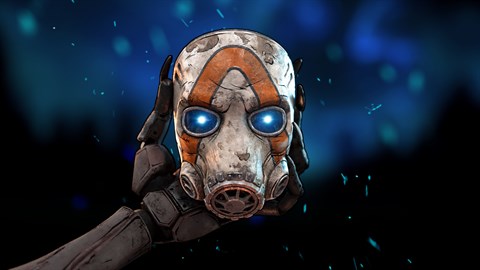
Vault Hunters are officially heading back to the chaotic frontier. Following its explosive reveal at Gamescom 2024, Gearbox Software's Borderlands 4 is locked in for a 2025 release, promising more guns, more loot, and more mayhem. But as the hype builds for its launch on PC, PlayStation 5, and Xbox Series X/S, a crucial question echoes among a dedicated part of the community: will we be able to take the chaos on the go with Nintendo's next-generation console?
While neither 2K nor Nintendo has confirmed a version for the highly anticipated "Switch 2," the possibility is a topic of intense speculation. A potential port represents a significant technical challenge and a major test for Nintendo’s upcoming hardware. Exploring the hurdles involved reveals why a successful launch on Nintendo's new machine would be a monumental achievement for both the franchise and the console.
The Next-Gen Mayhem Engine
The core of the issue lies in the sheer technical ambition of Borderlands 4. Built on the latest iteration of Unreal Engine, likely UE5, the reveal trailer showcased a significant leap in visual fidelity. We saw denser environments, more complex lighting and physics, and the series' signature particle-heavy combat dialed up to eleven. The "billion guns" philosophy isn't just about variety; it's a technical demand, requiring the system to render an endless array of elemental explosions, ricocheting projectiles, and unique weapon effects, all while juggling numerous on-screen enemies.
Translating this graphically intensive, next-generation experience to a hybrid console, even a powerful successor to the Switch, presents a unique set of challenges. Developers must strike a delicate balance between visual fidelity and stable performance, a task that becomes exponentially harder with a title designed to push the limits of current high-end hardware. Key obstacles would certainly include:
- Frame Rate Stability: Maintaining a consistent 30 FPS, let alone a loftier 60 FPS target, during massive firefights involving multiple Vault Hunters and hordes of enemies will be the primary benchmark for success.
- Resolution Scaling: Finding an optimal dynamic resolution that prevents a blurry image in both docked and handheld modes is critical. The visual clarity of loot and distant enemies is essential to the Borderlands experience.
- Asset Streaming: The game's fast-paced vehicle traversal and large, open zones demand rapid loading of world assets. This is a known challenge for systems that have to manage memory and read speeds differently than a dedicated home console with a high-speed SSD.
A History of Pandora on Nintendo
This wouldn't be the first time the Borderlands franchise has landed on a Nintendo platform. The original Switch received excellent ports in the Borderlands Legendary Collection, which included the first two games and The Pre-Sequel. These ports proved that the series' core gameplay loop could thrive on the go.
More recently, in October 2023, Borderlands 3 received a full, native port to the Switch. While it required significant visual compromises and targeted 30 FPS, its very existence demonstrated a commitment from developer Turn Me Up Games and publisher 2K to make the series work on Nintendo hardware. This success sets a precedent and raises expectations for a Borderlands 4 port on a more powerful successor console. However, the technical leap from Borderlands 3 to 4 is substantial, representing a full generational jump that will test the limits of the new hardware far more than its predecessor did.
Implications for Nintendo's Next-Gen Launch
The presence—or absence—of a major third-party game like Borderlands 4 in the "Switch 2's" launch window will speak volumes about the console's capabilities. While official specs remain unconfirmed, the industry widely expects a significant power upgrade over the original Switch. A successful, well-optimized port of Borderlands 4 would be a powerful statement, signaling to both players and other developers that Nintendo's new machine is a viable home for demanding, multiplatform titles.
Conversely, should a port be delayed or never materialize, it would serve as a reality check, highlighting that bespoke optimization will still be crucial for developers accustomed to the raw horsepower of the PS5 and Xbox Series X. For now, a potential port remains a complex performance puzzle. The teams at Gearbox and 2K have proven they value the Nintendo audience, but delivering an uncompromised Borderlands 4 experience will require a masterful blend of technical artistry and the full power of Nintendo's next-generation vision.