
Dynasty Warriors: Origins - Performance Debate & Generational Leap
Last Updated: October 29, 2025
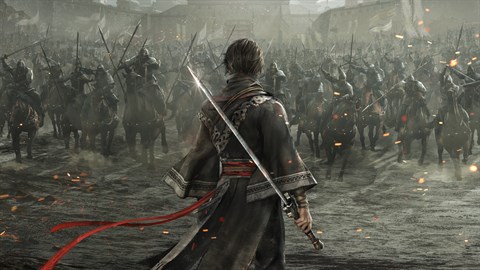
When Koei Tecmo and Omega Force announced Dynasty Warriors: Origins, the promise was clear: a true next-generation evolution for the iconic "one versus a thousand" hack-and-slash series. Launched in January 2025 for PlayStation 5, Xbox Series X|S, and PC, the game aimed to harness modern hardware to create the most massive and dynamic battlefields in the franchise's history.
This ambition, however, immediately reignited a classic debate for the action genre: the fundamental trade-off between epic scale and high frame rates.
A New Generation, A Familiar Challenge
As the first entry built from the ground up for the latest console generation, performance expectations for Dynasty Warriors: Origins were at an all-time high. For years, fans have debated whether the series should prioritize a fluid 60 frames-per-second (fps) experience or push the on-screen enemy counts to their absolute limit. With Origins, Omega Force leaned heavily into the latter, making the sheer density and chaos of the battlefield their primary objective.
The Dynasty Warriors franchise is defined by its ability to render massive armies clashing in real-time. According to the development team, delivering on this core tenet without compromise was paramount. Achieving the unprecedented number of soldiers that Origins boasts on screen required a careful balancing act between visual fidelity, artificial intelligence, and stable performance, leading to the implementation of different graphical modes on consoles—a standard feature for modern games.
The Developer's Philosophy: Scale is King
In statements leading up to the game's release, Omega Force clarified its design philosophy. The choice wasn't simply about hitting a performance target but about realizing a vision. "With Dynasty Warriors: Origins, we pushed the number of independent soldiers on screen to a level never before seen in the series," an Omega Force representative explained. "To maintain that massive scale and ensure the AI for every single unit is active and responsive, we had to provide clear options for players. Our 'Quality Mode' focuses on delivering this vision with the highest fidelity at a stable 30fps."
This highlights a classic development dilemma. For a game like Dynasty Warriors, where the screen is constantly filled with chaotic action, physics calculations, and dozens of character models, a stable frame rate is crucial to prevent jarring stutters. The team’s approach was to perfect a rock-solid 30fps experience for its primary visual mode, arguing that a fluctuating frame rate would be far more detrimental to immersion than a consistent one. This decision placed the emphasis squarely on the epic, army-spanning battles that define the series.
Hardware Realities and Player Choice
While the PlayStation 5 and Xbox Series X are powerful machines, rendering thousands of individual AI-driven characters remains a monumental task. To cater to the divided player expectations, Omega Force successfully implemented a 'Performance Mode'. This popular option offers the coveted 60fps experience by dynamically scaling back the resolution and, in some intensive scenes, slightly reducing background detail or on-screen enemy density.
The reception to these options has been largely positive, underscoring a mature approach to modern game design. Players who prioritize visual splendor and the full weight of the "1 vs. 1,000" experience can opt for the cinematic Quality Mode. Those who demand the fluid responsiveness of a higher frame rate for fast-paced combat can choose the Performance Mode, which holds up remarkably well even during the game's most frantic encounters. This puts the power of choice directly into the hands of the player, effectively settling the long-standing debate by accommodating both sides.
The Verdict on the Battlefield
Ultimately, the true test for Dynasty Warriors: Origins was its final execution, and it delivered. The game proved that a locked, well-implemented 30fps can feel smooth and responsive, especially when paired with excellent motion blur and tight input response. More importantly, the availability of a stable 60fps Performance Mode satisfied the demands of action game purists.
The developers' commitment to prioritizing the core gameplay loop of massive, epic battles was a clear statement of intent that paid off. By leveraging modern hardware to enhance the series' signature scale while still providing the option for high-performance gameplay, Dynasty Warriors: Origins successfully set a new benchmark for the Musou genre. The debate over frame rate versus scale may never truly end, but Origins has proven that on the modern battlefield, players no longer have to choose a side—they can have both.