
Formula Legends Review: A Brilliant Concept, Flawed Execution
Last Updated: October 26, 2025
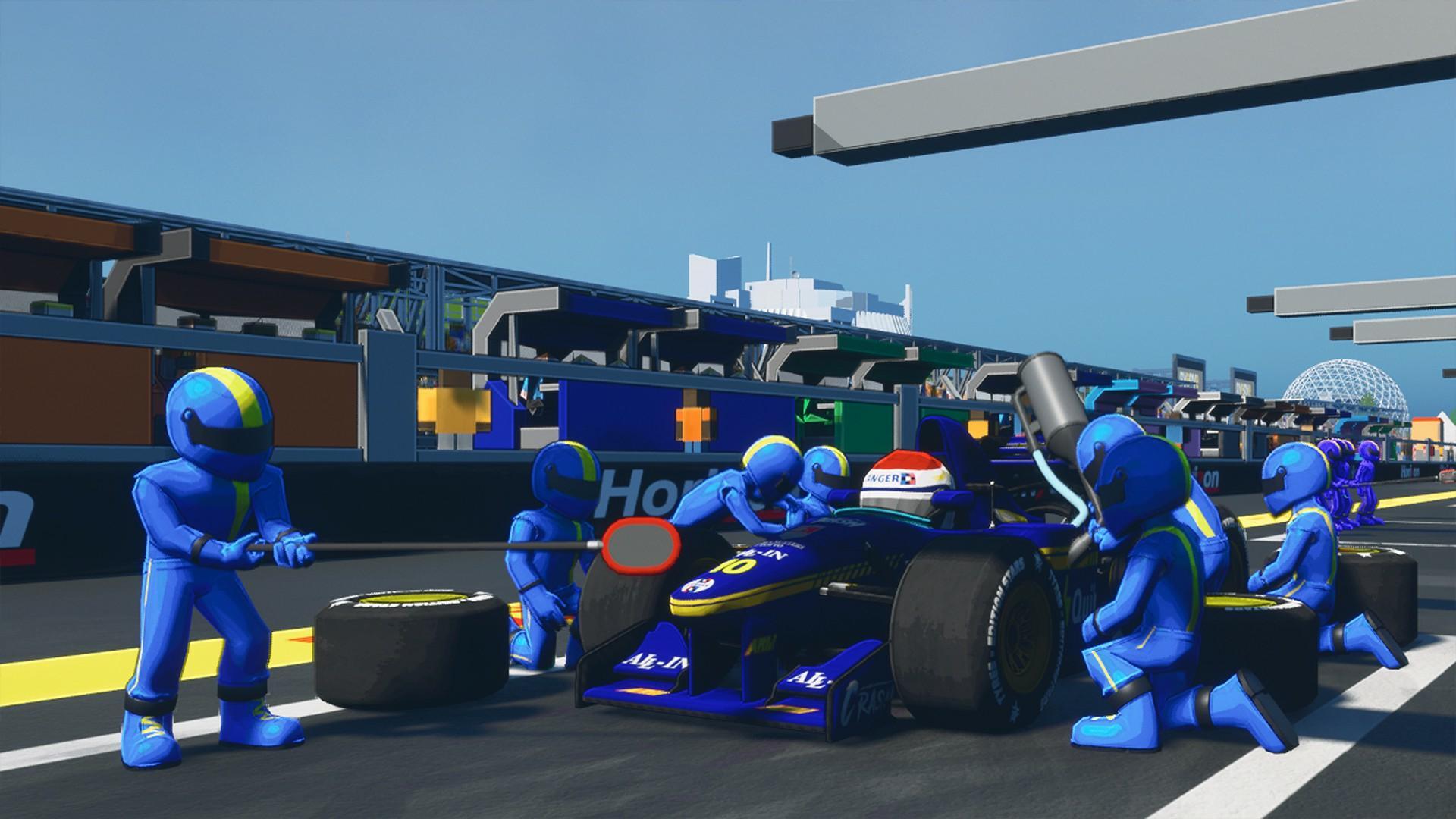
In the crowded grid of racing simulations and arcade racers, a new title needs a powerful hook to take pole position. Formula Legends roars onto the track with an irresistible premise: a loving, off-brand homage to the thrilling history of Formula 1, allowing players to race through different decades of motorsport. From its retro-inspired menus to its stylized cars, the game radiates a distinct personality and a wealth of imaginative content. It’s a vision executed with a significant dose of charm, promising a unique journey through the annals of racing.
However, a brilliant concept can be quickly undone on the tarmac. While Formula Legends scores high on ambition and aesthetic appeal, its on-track performance is where the tires lose their grip. The game launched with a challenging, often laggy handling model that demands immense patience to master. This core issue is compounded by frustratingly unbalanced AI competitors whose erratic behavior detracts from what should be a stellar competitive experience. This review breaks down how Formula Legends balances its undeniable strengths against critical gameplay shortcomings that hold it back from the winner's circle.
A Vision of Charm and History
At its heart, Formula Legends is a testament to creative game design. The concept of an "off-brand" F1 experience liberates it from the constraints of official licensing, allowing the developers to craft a playful and inventive interpretation of the sport. As confirmed on its official release, the game’s central theme is a race through time, challenging players to master reimagined circuits and command legendary cars from different eras. This isn't just superficial polish; it permeates the game's aesthetic, sound design, and career progression, creating an inviting world that feels both familiar and refreshingly new.
Beyond its charming facade, Formula Legends boasts an impressive pile of imaginative content. The wealth of tracks inspired by classic circuits and the diverse roster of vehicles celebrating decades of motorsport innovation are a huge draw. This creativity is crucial for longevity, ensuring the experience remains engaging over many hours of play. For fans of F1 history and racing games in general, the promise of this inventive journey represents a significant draw, offering a vibrant alternative to more conventional simulations.
On-Track Woes: The Unforgiving Handling Model
While the conceptual brilliance of Formula Legends is clear, the true test of any racing game lies in how the car feels. Here, the game encounters its most significant hurdle: a widely discussed and often "laggy" handling model. This manifests as delayed inputs and a general lack of responsiveness, making it difficult for players to feel truly connected to their vehicle. In a sport defined by split-second decisions, this flaw fundamentally undermines the experience, turning skillful driving into an uphill battle against the controls.
Community discussions since launch, particularly around the game's steering, confirm that this isn't an isolated issue. The handling possesses a steep and punishing learning curve that requires significant adaptation from the player. While some may relish the unique challenge, many will find this initial friction too high a barrier to entry. Instead of feeling intuitive and satisfying, the game’s core driving mechanics require a lengthy "warming up" period, diverting attention from the otherwise excellent track design and charming presentation.
Grid Frustration: The AI Balancing Problem
Adding another layer of difficulty to the on-track experience are the "frustrating" AI racers. A competitive racing environment relies on AI opponents to be fair, challenging, and believable. Unfortunately, Formula Legends struggles mightily with this, featuring what can only be described as a tremendous AI balancing problem. This is not a matter of simple difficulty but of erratic and often unfair behavior.
Players will frequently encounter AI that is overly aggressive, causing unnecessary collisions, or AI that seems to ignore the rules of physics with unrealistic "rubber-band" speed on straights. This unpredictable behavior can transform a thrilling battle for position into a series of exasperating encounters that feel more like a lottery than a test of skill. When combined with the difficult handling model, it creates a punishing gameplay loop. Mastering the controls is one thing; doing so while contending with illogical rival drivers is another, and it’s a balance Formula Legends currently fails to strike.
Conclusion: A Flawed Gem with Podium Potential
Formula Legends stands as a compelling example of a game with an exceptional concept and creative execution. Its identity as a loving homage to F1 history, brimming with charm and inventive content, sets it apart in a crowded genre. The sheer ingenuity on display is a significant achievement, offering a fresh and engaging perspective for racing enthusiasts. However, the on-track experience is currently held back by fundamental flaws that prevent it from realizing its full potential.
The unresponsive handling and frustrating AI are not minor gripes; they are critical issues that impact the core of the game. While dedicated players may eventually tame the controls, these problems present significant barriers to a broader audience. Formula Legends has laid a fantastic foundation with its vision and creativity. Should post-launch updates and patches address these core gameplay mechanics, it has the potential to become a truly legendary title. As it stands at launch, it’s a beautiful tribute to F1 that’s unfortunately a challenge to enjoy from behind the wheel.