
Alien: Isolation's AI: A Masterpiece of Horror, Extended?
Last Updated: November 5, 2025
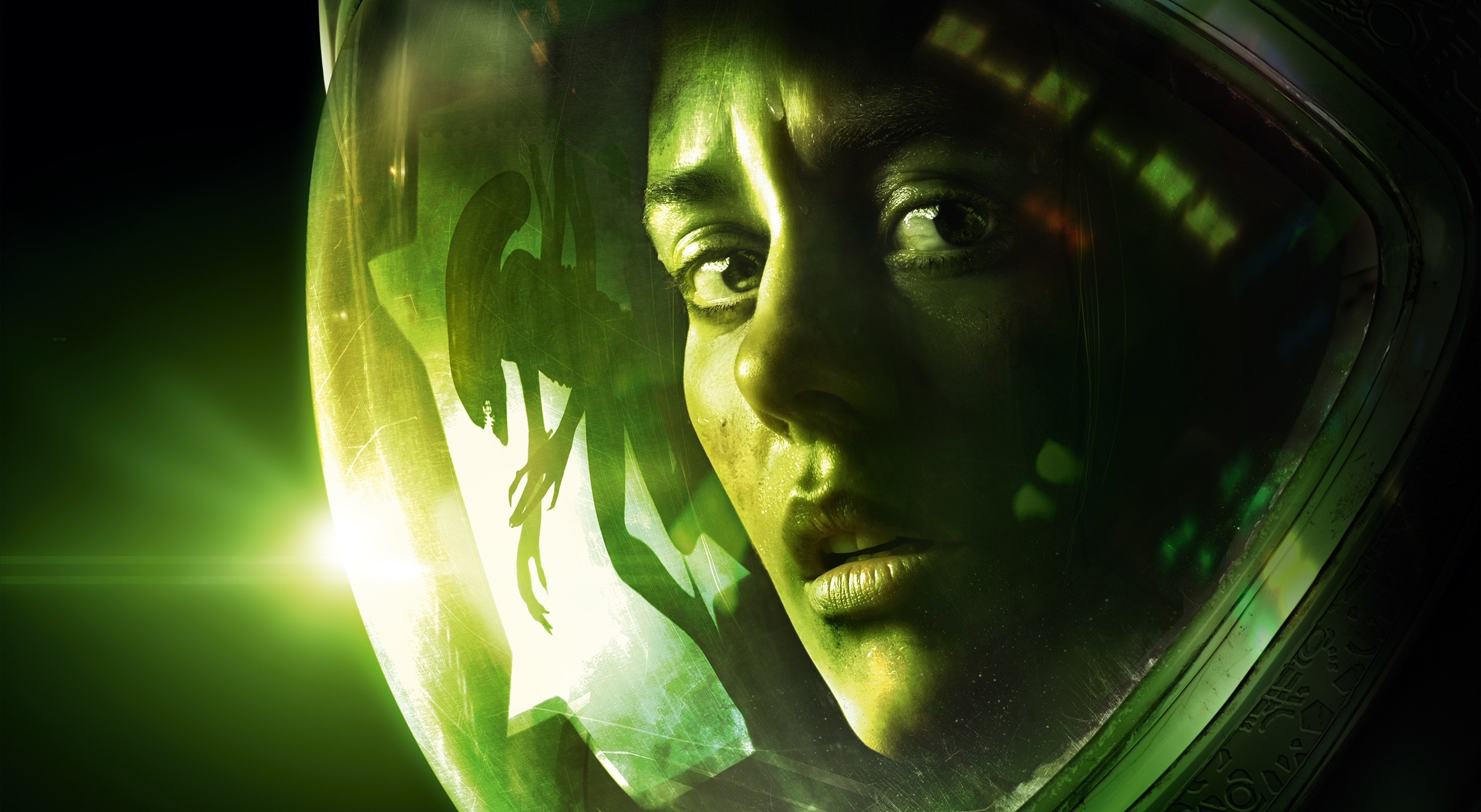
More than a decade after its launch, Creative Assembly's Alien: Isolation remains a towering monolith in the horror genre, its reputation secured by a single, terrifyingly intelligent Xenomorph. Yet, one of the game's most persistent criticisms—its demanding and often grueling length—has been entirely re-contextualized by a fascinating insight from its development team. A key writer on the project confirmed what many fans had long suspected: the game's extended runtime, which can easily stretch past the 20-hour mark, wasn't a case of intentional padding but an unintended consequence of the Alien's own brilliance.
The AI designed to be the ultimate, unpredictable hunter was so effective that it naturally warped the game's pace, forcing players into a state of hyper-caution that elongated every single objective. This piece of development lore illuminates the long-standing debate over the game's pacing, suggesting that players weren't just fighting a monster, but the very system that made it an icon.
An AI Too Smart for Its Own Good
The core vision for Alien: Isolation was to finally deliver the fantasy of being hunted by the single, unstoppable creature from Ridley Scott's 1979 film. To achieve this, Creative Assembly developed a revolutionary AI that deliberately avoided predictable, scripted patterns. According to writer Will Porter, this groundbreaking success was directly responsible for the game's often-criticized length.
"We ended up with a game that was, arguably, too long," Porter admitted in a 2022 interview, years after the game's release. He explained that the Xenomorph was simply "too clever," creating a gameplay loop that fundamentally altered player behavior.
This statement provides the crucial missing piece to the puzzle of Isolation's design. At launch in 2014, the game's length was a major talking point. While many survival horror titles clock in around 8-12 hours, Isolation's marathon campaign felt exhausting to some. Porter's comments confirm this wasn't a choice to pad the experience with repetitive objectives, but a natural outcome of the core mechanics. When faced with a truly unpredictable predator, players instinctively slow to a crawl. They spend more time hiding, obsessively checking the motion tracker, and taking agonizingly long routes to avoid any potential contact. The AI didn't just create tension; it fundamentally dictated the pace of the game in a way the developers hadn't fully anticipated.
The Director and The Drone: Deconstructing a Perfect Organism
To understand why the Alien was so effective, one must look at its famed 'two-brain' AI. The system consisted of a macro-level 'Director' AI and a micro-level 'Drone' AI.
The Director was omniscient, possessing full knowledge of player Amanda Ripley's location on Sevastopol Station. Crucially, however, it wouldn't simply send the Alien straight to her. Its primary function was to manage tension. It would give the Drone—the physical Xenomorph on screen—hints, 'scents', and directives, telling it which general area to patrol. The Drone would then operate with full autonomy, using its own senses of sight, sound, and smell to hunt within that zone.
This created the terrifying illusion of a creature that was always thinking, learning, and adapting. It wouldn't fall for the same trick twice. If you consistently used a noisemaker, it would learn to investigate the source of the throw, not just the impact. Hide in the same locker too often, and it would start proactively checking them. This dynamic, unscripted behavior is what made the game so legendary, but it's also what made it so long. Players couldn't memorize patrol paths. They had to genuinely outwit a thinking opponent—a process that is inherently time-consuming, stressful, and fraught with trial and error.
A Masterpiece or a Marathon? The Pacing Debate Revisited
Upon its release, the critical reception for Alien: Isolation was overwhelmingly positive, but almost universally caveated with comments about its pacing. While the atmosphere, sound design, and AI were lauded as masterful, many felt the experience was stretched too thin. The mid-game, in particular, was cited for its structure, often involving long treks back and forth across the station to complete objectives, all while being stalked.
The developer insights reframe this entire debate. What many perceived as artificial padding may have been a necessary framework built around an AI that naturally prolonged every task. A simple goal like "get to the other side of the medical bay" could morph into a 45-minute ordeal of nerve-wracking suspense. The effectiveness of their main antagonist meant that traversing the massive, intricate world of Sevastopol Station was a slow, methodical process. The game's length is not a design flaw, but rather a testament to the resounding success of its central pillar: the Alien itself.
The Enduring Legacy of Sevastopol's Hunter
A decade on, Alien: Isolation is a legend. Its influence is evident in numerous titles that attempt to create persistent, unscripted threats, yet the Xenomorph remains the gold standard for enemy AI—a benchmark against which all other video game monsters are measured. The community's appreciation has only deepened, with many now arguing its demanding length is a core part of its identity, contributing to the exhaustive, soul-crushing experience of being prey. The game's celebrated port to the Nintendo Switch and mobile devices further cemented its status as a timeless classic.
The revelation from its writer adds a fascinating final layer to this legacy. It transforms a perceived weakness into a badge of honor. The game is long because the monster is smart. The pacing feels arduous because the struggle for survival is real. It serves as a powerful lesson in game design about the unintended consequences of creating truly dynamic systems. When an AI is designed to be the perfect hunter, the resulting game will inevitably become the perfect, protracted nightmare—and fans wouldn't have it any other way.