
GTA 6 on Steam Deck: Technical Analysis & Feasibility in 2024
Last Updated: November 4, 2025
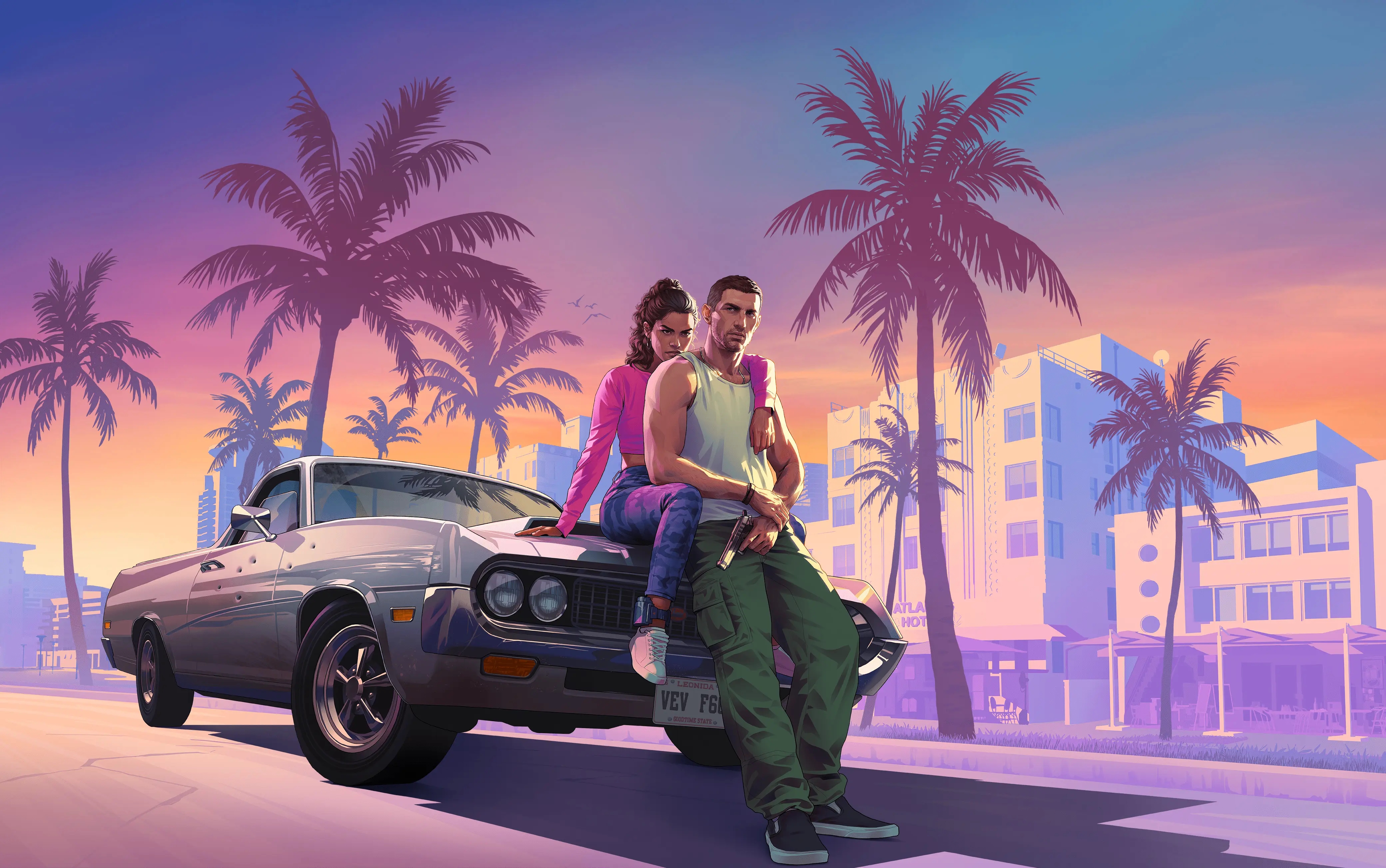
The hype surrounding Grand Theft Auto 6 is a force of nature. With Rockstar Games confirming a May 26, 2026 release for PlayStation 5 and Xbox Series X|S, the conversation has reached a fever pitch. But for a massive and growing segment of the PC gaming world, one crucial question eclipses all others: will this generational milestone be playable on the Steam Deck?
The dream of taking the sprawling, satirical state of Leonida on the go pits the immense ambition of Rockstar's next opus against the compact power of Valve's handheld. While the initial reaction might be to dismiss the idea, the landscape of handheld PC gaming has matured. A deep dive into the technical realities reveals a narrow, challenging, but not entirely impossible path to a portable GTA 6 experience.
The Allure of a Handheld Leonida
The Steam Deck, along with competitors like the ASUS ROG Ally and Lenovo Legion Go, has fundamentally altered the expectations of PC gamers. Untethering high-fidelity experiences from the desktop is no longer a novelty; it's a standard. We've seen sprawling RPGs like Baldur's Gate 3 and demanding action titles like Cyberpunk 2077 become staple handheld experiences, thanks to community tweaks and developer support.
It's no surprise, then, that players are determined to bring the next evolution of the open-world genre to their favorite portable device. The concept of exploring the vibrant, sun-drenched streets of Vice City and beyond, getting into high-speed chases, and witnessing Rockstar's dense narrative from a couch, a train, or a plane is a powerful proposition. For many, the Deck is their primary gaming platform, making GTA 6 compatibility a critical hope.
A Monumental Technical Hurdle
Optimism, however, must be tempered by the sheer technical wall that is GTA 6. The debut trailer showcased a level of visual fidelity, environmental density, and physics that appears engineered to push even the PS5 and Xbox Series X to their absolute limits. These consoles feature powerful, dedicated hardware that significantly outclasses the custom AMD APU powering every model of the Steam Deck, including the OLED version.
Rockstar Games has a legacy of creating graphically intensive titles that serve as benchmarks for new hardware generations. Their last major release, Red Dead Redemption 2, remains a demanding game that requires significant compromises—often a mix of medium-to-low settings and FSR upscaling—to achieve a stable 30 FPS on the Steam Deck. GTA 6, a game built from the ground up for more powerful current-gen consoles, will widen that performance gap considerably.
The primary challenges for the Steam Deck are clear:
- CPU Bottlenecks: The incredibly dense NPC populations, complex AI systems, and advanced physics simulations shown in the trailer will be extraordinarily CPU-intensive. The Deck's Zen 2-based CPU, while impressive for its form factor, will be the main bottleneck, struggling to process the sheer volume of world simulation required for a smooth experience.
- GPU Demands: Advanced lighting, potential ray tracing effects, and high-resolution textures will demand immense graphical horsepower. The Deck's RDNA 2 integrated GPU is a marvel of efficiency, but its raw power is a fraction of what's available to the dedicated GPUs in the PS5 and Xbox Series X.
- Memory and Storage: Modern open-world games require incredibly fast asset streaming to render vast, detailed environments without disruptive loading screens. GTA 6 will undoubtedly demand a fast NVMe SSD and a large amount of VRAM. The Deck's unified memory architecture will be stretched to its breaking point, and players with older 64GB eMMC models will face an insurmountable barrier.
The Path to Playability: Time, Tweaks, and Technology
Despite the daunting challenges, the dream isn't dead. The path to getting GTA 6 running on a Steam Deck hinges on three crucial factors, with the most important being time.
As is tradition for Rockstar, the PC version of GTA 6 will arrive later than its console counterpart, likely in late 2027 or beyond. This delay, while frustrating for desktop players, is the single greatest advantage for the Steam Deck. In that time, several things can work in the handheld's favor.
First is Rockstar's PC port itself. Historically, Rockstar provides an exhaustive list of graphical and performance settings. The ability to manually dial back texture quality, shadow resolution, draw distance, and, most critically, NPC and traffic density, will be non-negotiable. A playable experience will require sacrificing the dense, bustling world seen in the trailer for a much sparser version.
Second is the continued evolution of upscaling technology. Achieving a playable framerate will absolutely require AMD's FidelityFX Super Resolution (FSR). A stable 30 FPS will likely necessitate rendering the game at a very low internal resolution (perhaps 540p or even lower) and using FSR's "Performance" or "Ultra Performance" mode to upscale it to the Deck's 800p/720p screen. The implementation of FSR 3, and potentially its Frame Generation feature, could be the key to smoothing out performance, though CPU limitations may still pose a significant challenge.
Finally, the tireless work of Valve and the PC gaming community cannot be understated. Over the year-plus following the console launch, Valve will release countless Proton updates and driver optimizations aimed at improving performance on the Deck. Likewise, the community will inevitably create mods and custom configuration files designed specifically to get the game running on low-spec hardware.
The Verdict: A Difficult but Plausible Future
Will Grand Theft Auto 6 run on the Steam Deck? The answer is a qualified "almost certainly." It will not be the pristine, 60 FPS visual showcase experienced on high-end PCs. Instead, it will be a testament to compromise.
The most realistic scenario for Steam Deck players is a 30 FPS target with frequent dips, achieved through a combination of minimum in-game settings, aggressive FSR upscaling, and community-developed performance mods. It won't be pretty, but it should be playable. The question is not if it will run, but what visual and performance sacrifices will be required to make it happen. For the millions of gamers who have embraced the handheld PC revolution, that's a price they will be more than willing to pay.