
Pokémon Legends: Z-A Timeline Explained: When Does It Take Place?
Last Updated: November 13, 2025
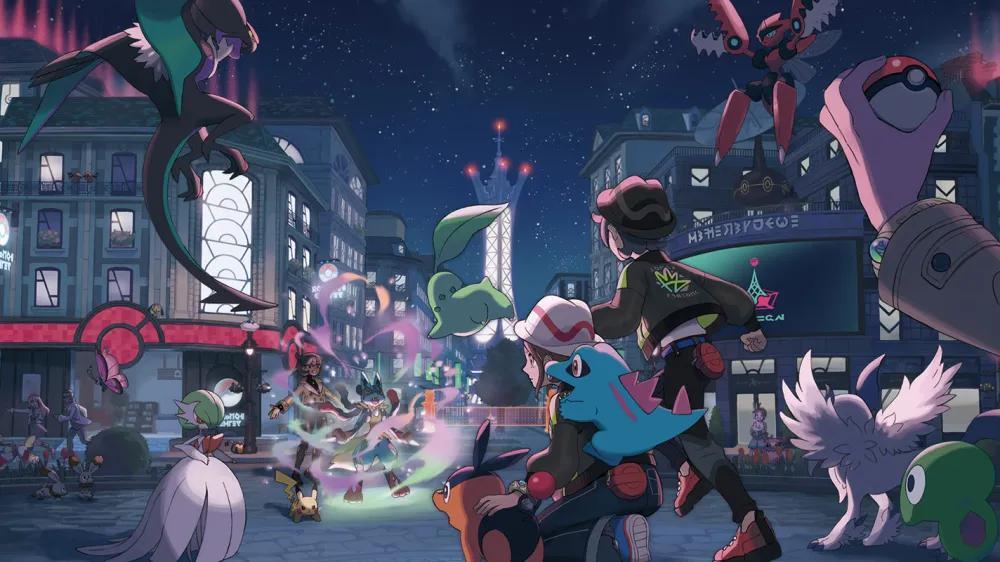
Since its electrifying reveal, Pokémon Legends: Z-A ignited fervent debate among fans over its placement in the vast Pokémon universe. Following the precedent of Pokémon Legends: Arceus, which sent players to the ancient past of the Sinnoh region (then Hisui), many anticipated a similar historical journey for Kalos.
However, with the game now in players' hands, we can definitively confirm that Game Freak took a bold step in a different direction. Pokémon Legends: Z-A is not a journey to the past, but a vision of the future, set in a period after the events of Pokémon X and Y.
The Return of Mega Evolution: A Definitive Chronological Anchor
The most significant piece of evidence anchoring the game's timeline is the celebrated return of Mega Evolution. This powerful battle mechanic, which allows specific Pokémon to unlock a temporary, enhanced form, was the signature feature of Pokémon X and Y. Its reintroduction in Z-A isn't just fan service; it's the game's foundational chronological marker.
In the lore of Pokémon X and Y, Mega Evolution was presented as a phenomenon rooted in ancient Kalos history but only recently rediscovered and harnessed by modern trainers. If Z-A were set in the distant past, the widespread knowledge and application of Mega Evolution would create a significant plot hole. Instead, the game treats it as an established, well-understood science, even introducing new Mega Evolutions for Pokémon like Victreebel. This confirms that the events of Z-A must take place in an era following the original rediscovery in X and Y, where the practice has been perfected and integrated into society.
Lumiose City's Grand Redevelopment: A Glimpse of the Future
The entire adventure of Pokémon Legends: Z-A is contained within a single, massive location: Lumiose City, the iconic metropolis of the Kalos region. The game's central premise is the "Lumiose City Urban Redevelopment Plan," a visionary project to create a harmonious space where humans and Pokémon can coexist. Unlike the wild, untamed landscapes of Hisui, the Lumiose City of Z-A is a master-planned, technologically advanced, and even futuristic metropolis.
This depiction of a city undergoing a massive, structured redevelopment solidifies its future setting. The sleek architectural blueprints, advanced technology, and the project's sheer scale all point to a significant passage of time since players last visited in Pokémon X and Y. The city is not being built from scratch but rather reimagined and evolved, with dedicated "Wild Zones" integrated into the urban design. This concept explores a future where Kalos has progressed technologically and socially, focusing on sustainable urban evolution. While some critics found the single-city setting visually restrictive compared to Arceus's open wilderness, it offers an unprecedented level of detail and a unique focus on urban exploration.
Connecting the Threads: AZ, Zygarde, and the Legend of Kalos
The "Legends" series is dedicated to exploring pivotal moments in a region's history, and Z-A is no exception. While it doesn't delve into the region's ancient origins, it explores a new, modern "legend": the city's transformation and its relationship with the region's deep lore. The story directly addresses the legacy of AZ, the ancient king, the aftermath of the Ultimate Weapon, and the ecological role of the Legendary Pokémon Zygarde, whose presence is heavily implied by the "Z" in the game's title.
Rather than retelling an ancient story, the narrative explores the consequences and future of these past events. The redevelopment plan itself is a response to the region's volatile history, aiming to create a future of peace and balance. This makes the "legend" of Z-A not one of ancient history, but of a groundbreaking moment in Kalos's modern era.
Evolving the 'Legends' Formula
Pokémon Legends: Z-A's future setting represents a significant evolution for the sub-series. It establishes that a "Legends" game is not confined to stories about the distant past. Instead, the title signifies a focus on a pivotal event that fundamentally shapes a region, whether it happened centuries ago or is happening in a new, forward-looking era. This flexibility opens exciting doors for future titles to explore different time periods across the Pokémon world, from ancient origins to distant futures.
The initial speculation of a Kalos region equivalent to the French Industrial Revolution was a compelling idea, but the game's choice to push forward in time provided a fresh experience. It traded rustic beginnings for polished, futuristic design, and untamed wilds for the curated nature of urban Wild Zones.
Gameplay in a Modernized Kalos
This unique post-X/Y setting delivers a distinct gameplay experience:
- Refined Mega Evolution: Players engage with Mega Evolution as a core and celebrated battle mechanic from the outset, with strategic depth built around its use in the game's challenges.
- Advanced Urban Exploration: The gameplay loop revolves around exploring the intricate districts of Lumiose City. Advanced traversal tools and the city's verticality make navigating the environment a central part of the adventure.
- Deepened Kalos Lore: The narrative offers a satisfying continuation for fans of X and Y, providing new perspectives on characters, the history of the great war, and the future of the Kalos region.
- A New Kind of Wild: The integrated Wild Zones offer a unique blend of nature and city, presenting distinct ecosystems and Pokémon encounters within the urban landscape, a stark contrast to the open fields of previous titles.
While the exact number of years that have passed since Pokémon X and Y remains ambiguous, the evidence is clear: Pokémon Legends: Z-A is a forward-looking adventure that builds upon the foundations of Generation VI to create a new, modern legend for the Kalos region.
Frequently Asked Questions About Pokémon Legends: Z-A
Q: When was Pokémon Legends: Z-A released?
A: Pokémon Legends: Z-A launched worldwide in 2025 for the Nintendo Switch family of systems.
Q: Is Pokémon Legends: Z-A an open-world game like Legends: Arceus?
A: Not in the same way. The game is set entirely within the vast, multi-layered environment of Lumiose City. While it offers a large, open map with immense freedom of exploration, it is a dense urban setting rather than a sprawling natural wilderness.
Q: What Pokémon appear in the game?
A: The game features a roster centered on Pokémon native to the Kalos region, with a special focus on those capable of Mega Evolution. It also introduces several new Mega-Evolved forms for existing Pokémon.
Q: Is Pokémon Legends: Z-A a sequel to Pokémon X and Y?
A: It is a standalone story set chronologically after the events of Pokémon X and Y, but it is not a direct sequel to the protagonist's journey in those games. It explores a new chapter in the Kalos region's history and expands on its established lore.
Q: Is there any downloadable content for the game?
A: Yes, a paid downloadable content expansion titled "Mega Dimension" was released, adding a new story chapter and more Mega-Evolved Pokémon to the experience.