
Supervive: The Rise and Fall of an Ambitious Brawler
Last Updated: November 11, 2025
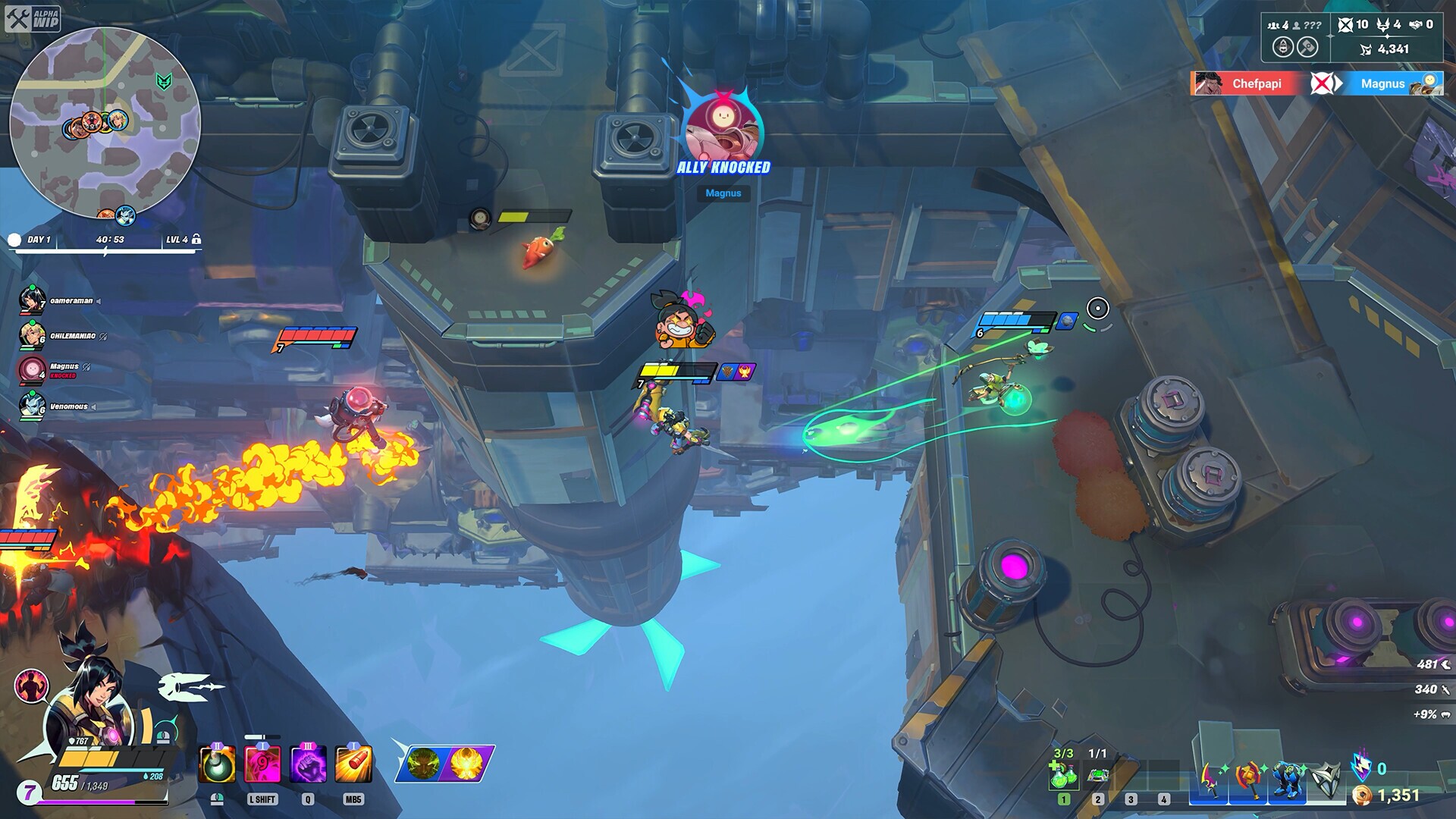
Supervive, the ambitious top-down brawler that aimed to revolutionize the MOBA genre with its action-heavy combat and dynamic verticality, has officially ended its journey. After a period of struggling with player retention during its early access phase, the developer, Theorycraft Games, ultimately made the difficult decision to shut down the game's servers. This article looks back at the promise of Supervive, the challenges it faced, and the ultimate outcome of its bold experiment.
From its initial reveal, Supervive was a breath of fresh air. It moved beyond the static lanes and jungles of traditional MOBAs, introducing multi-level maps and environmental hazards like high-speed trains. This created a fast-paced, almost chaotic brawling experience that garnered significant hype and captured the attention of players and influencers alike. The early momentum was undeniable.
The Initial Surge and The Harsh Reality of Player Retention
Shortly after its early access launch, Supervive saw an impressive peak of nearly 48,000 concurrent players. This figure proved there was immense interest in its innovative concept. However, as is common in the brutal landscape of live service games, this initial wave of curiosity did not translate into long-term retention.
Within months, the daily active player count settled into the low hundreds, a stark contrast to its launch-week high. While a dedicated core community remained, the numbers were not sufficient to sustain the game in a hyper-competitive market. This pattern—a sharp peak followed by a precipitous drop-off—highlighted the immense challenge of keeping players engaged in an early access title.
Several factors contributed to the game's struggle:
- The Early Access Stigma: While early access allows for public testing and development, it's a double-edged sword. Players today have high expectations, and many who encountered bugs, unrefined mechanics, or a lack of content moved on, unlikely to return even after substantial improvements were made.
- Content Cadence: Live service games live and die by the consistency of their content updates. During its development phase, Supervive couldn't deliver new heroes, maps, and modes at a pace that could compete with established giants in the genre.
- Fierce Competition: The MOBA and hero-brawler space is dominated by titans like League of Legends, Dota 2, and VALORANT. Carving out a sustainable niche requires a near-perfect launch and a massive, ongoing marketing push that is difficult for any new IP to achieve.
- Technical Hurdles: Community forums and discussions during the game's lifespan often pointed to performance issues and game-crashing bugs, which frustrated even the most dedicated players and created a barrier for newcomers.
A Bold Design That Couldn't Outrun the Market
Despite its eventual fate, the core appeal and innovative design of Supervive remain a case study in creative game development. Its fundamental principles were what set it apart and what its fans will remember most:
- Revolutionary Verticality: Unlike its flat-planed competitors, Supervive’s multi-level arenas added a genuine strategic Z-axis. Gaining the high ground provided real tactical advantages, while dropping into lower areas allowed for ambushes and daring escapes.
- Dynamic Environments: The map was a character in itself. The iconic high-speed trains forced players to constantly be aware of their positioning, turning the battlefield into a living, breathing, and dangerous entity.
- Action-Heavy Brawling: Combat was designed to be visceral and skill-based, rewarding quick reflexes and strategic use of abilities over passive farming. It successfully merged the tactical depth of a MOBA with the immediate, high-octane feel of a brawler.
These features were the foundation of a game with immense potential. They attracted a community that passionately believed in the project, with many expressing their devastation online when rumors of a potential shutdown began to circulate.
The Inevitable End and a Look to the Future
Ultimately, the developer's commitment could not overcome the financial and logistical realities of a dwindling player base. In a final announcement to the community, Theorycraft Games confirmed the servers would be taken offline, thanking the players for their support and passion throughout the early access period. They cited the inability to reach the self-sustaining player numbers needed for long-term development as the primary reason for the shutdown.
The story of Supervive is a cautionary tale, but it is not one of failure in design or imagination. It stands as a testament to a studio that dared to be different in a saturated market. While its servers may be dark, its legacy is a reminder of the brilliant ideas that continue to push the boundaries of game design, even if they don't always survive the fight.
Frequently Asked Questions
Q: Is Supervive still playable?
A: No, Supervive is no longer playable. The game's servers were officially shut down following its early access period, and it is no longer available for download.
Q: What kind of game was Supervive?
A: Supervive was an action-heavy, top-down brawler that innovated on the MOBA genre by introducing unique features like multi-level verticality, dynamic environmental hazards, and fast-paced, skill-shot-oriented combat.
Q: Why did Supervive shut down?
A: The game was shut down due to an inability to retain a large enough player base to be commercially viable. Factors contributing to this included the challenges of early access development, slow content rollout, technical issues, and intense competition from established titles in the genre.
Q: What was Supervive's peak player count?
A: Shortly after its early access launch, Supervive reached an all-time peak of nearly 48,000 concurrent players.