
Sapkowski: Witcher Game's Schools 'Completely Unnecessary'
Last Updated: October 31, 2025
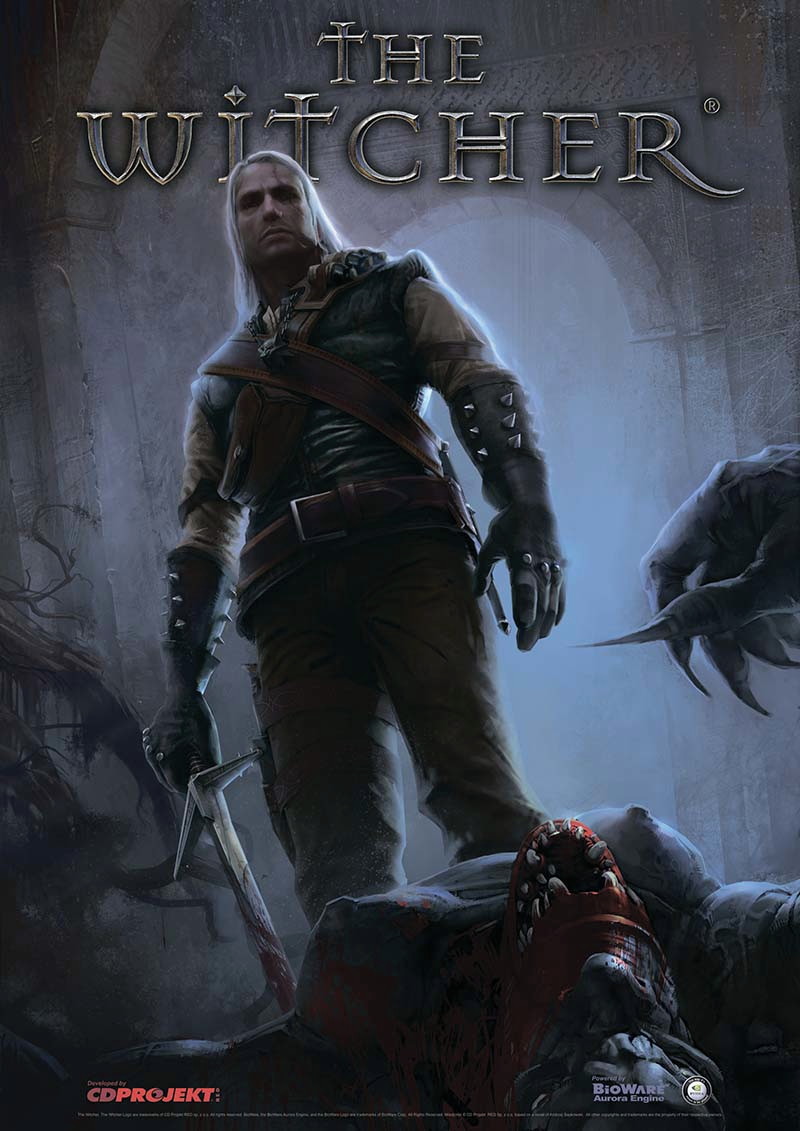
In a revealing look at the divide between a literary creator and their adapted works, Andrzej Sapkowski, the celebrated author of The Witcher saga, has voiced his regret over the very sentence that spawned one of the video games' most beloved lore elements: the different Witcher schools. During a panel at Vienna Comic Con, Sapkowski admitted he made a "mistake" by mentioning other schools in passing, labeling the extensive world-building CD Projekt Red built upon it as "completely unnecessary."
The comment provides a fascinating glimpse into the often-complex relationship between an author and the sprawling, fan-cherished universe their work inspires, highlighting a fundamental difference in creative priorities between the page and the pixel.
A World Built from a Whisper
For millions of gamers, the world of The Witcher 3: Wild Hunt is inseparable from the iconic armor sets of the Wolf, Cat, Griffin, Bear, and Viper schools. Subsequent content even added the Manticore and Forgotten Wolf schools. These distinct orders of monster slayers do more than provide stat bonuses and unique aesthetics; they are woven into the very fabric of the game's world-building, each with its own history, philosophy, and often tragic downfall.
Epic scavenger hunt quests send players across the Continent to unearth their lost diagrams, and the choice of which school's gear to don can define a player's entire approach to combat. To many, these schools are as fundamental to the world as the Law of Surprise. It is astonishing, then, to learn that this entire rich tapestry originates from what its creator considers a momentary, and regrettable, whim.
The Author's Lament
Speaking to fans, Sapkowski was candid about his feelings. He explained that a publisher once asked him if all Witchers came from Kaer Morhen. To add a bit of flavor, he wrote a single line suggesting other schools existed.
"I made a mistake in one of my books," Sapkowski stated. "I have to admit, I made a mistake. There was one sentence. One of the witchers said, 'We from Kaer Morhen, we are of the Wolf.' So, it came to me... 'Oh, shit. If there is a Wolf, there must be a Bear and a Horse.'"
He explained that after writing the line, he never expanded on it again. When CD Projekt Red took that seed and cultivated a massive forest of lore, he viewed it as an unnecessary addition to his world. "The guys from the video game... they made the schools. The Bear, the Cat. Completely unnecessary," he remarked, adding a jesting comparison to another famous fantasy world: "I never referenced any Witcher Gryffindors or Slytherins again." His perspective is that of an author who feels his original, more focused vision was sufficient.
The Needs of the Narrative
From CD Projekt Red's perspective, the expansion was not only necessary but brilliant. A sprawling open-world RPG requires systems of progression, customization, and exploration that a novel does not. The idea of different Witcher schools provided a perfect mechanical and narrative framework. It allowed the developers to create varied equipment sets that encouraged diverse playstyles, from the fast-attacking Cat School techniques to the heavy-hitting, defense-oriented style of the Bear School.
Furthermore, it enriched the world, suggesting a history far older and more complex than the story of Geralt and the School of the Wolf alone. It gave players a tangible connection to the past, allowing them to literally unearth and wear the history of forgotten Witchers. This act of discovery is a powerful tool in interactive storytelling, and the schools were the perfect vehicle for it. What was a fleeting thought for the author became a critical element of gameplay design and world-building for the developers.
An Undeniable Legacy
Ultimately, Sapkowski's feelings, while valid from a creator's standpoint, cannot undo the cultural impact of the games' interpretation. For the generation of fans who discovered Geralt of Rivia through their monitors, the School of the Cat is as real as the School of the Wolf.
The concept has become so ingrained that it is now shaping the franchise's future. The next mainline Witcher game from CD Projekt Red, codenamed "Polaris," has been teased with a medallion belonging to the School of the Lynx—a school that originated in fan-fiction before being adopted by the developer. This shows that the idea Sapkowski regrets has not only been embraced but is now a foundational pillar for the next chapter of The Witcher saga in popular culture. The author may regret the sentence, but the world has wholeheartedly embraced the universe it spawned. It stands as a powerful testament to how a single creative spark, passed from one medium to another, can ignite a completely new and beloved flame.