
Terminator Games: From 8-Bit to Bethesda's Dawn
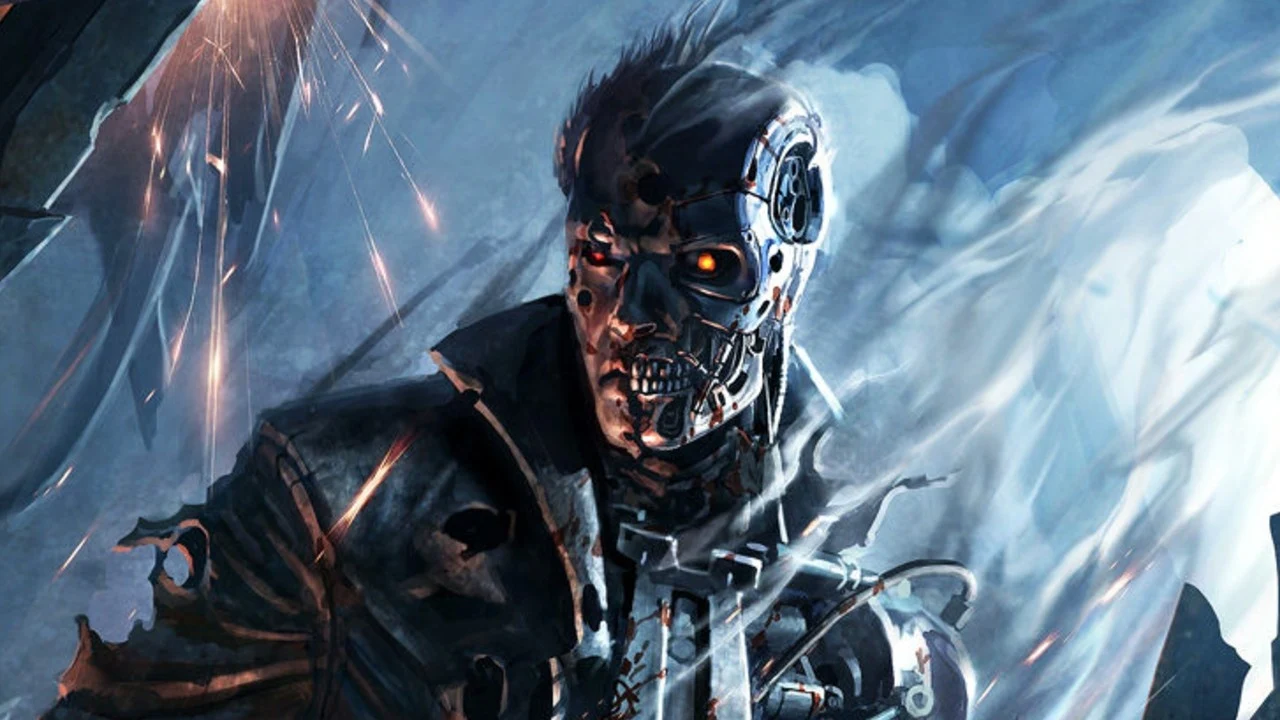
The cinematic masterpiece that is Terminator 2: Judgment Day, lauded by many as one of the greatest action films ever, presented a clear blueprint for interactive entertainment: explosive set pieces, relentless robots, futuristic warfare, and high-stakes chases. Yet, despite this inherent gaming potential, the franchise's journey through the digital landscape has been anything but straightforward. While a definitive T2 video game has remained elusive, a new contender, Terminator 2D: No Fate, aims to finally deliver the experience fans have craved since 1991, leveraging what's described as "cutting-edge technology from 2025." This ambitious effort prompts a deep dive into the long, often bizarre, and occasionally brilliant history of Terminator games.
Early Cinematic Brilliance, Rocky Digital Beginnings
The initial wave of Terminator 2 console games, released in the two years following the film's 1991 debut, faced an unenviable challenge. Developers, operating under tight deadlines, often worked from mere script drafts and reference materials, without the luxury of seeing the closely guarded film itself. This "flying blind" approach frequently resulted in disjointed, perplexing adaptations. Ocean Software's PAL-exclusive title, for instance, earned the moniker "bizarre mess," a sentiment echoed across several early releases.
The 1991 Game Boy adaptation by Bits Studio notably compressed T2's spectacle onto a monochromatic, chartreuse display. It blended side-scrolling run-and-gun segments with on-rails driving sequences, but suffered from perplexing circuit puzzles designed around a scene ultimately cut from the theatrical release – making them feel particularly out of place. Further compounding challenges, Arnold Schwarzenegger's likeness was unavailable for in-game use (a restriction that, remarkably, persists for Terminator 2D), leading to abstract character sprites. UK-based Bits Studio even reported feedback from the production company demanding "bigger bangs" for Linda Hamilton's character, Sarah Connor – a cultural miscommunication that momentarily led developers to believe they were discussing breasts, thankfully clarified by the final product.
A 1992 NES title, later ported to Sega Master System and Game Gear by Software Creations, improved upon its predecessors by scrapping the infamous circuitry puzzles, suggesting its developers finally had the benefit of seeing the film. This version featured a clever, if frustrating, mechanic: mirroring John Connor's in-movie scolding, players were forced to complete a mental hospital level non-lethally, shooting human enemies in the legs while crouching to avoid mission failure. By December 1993, the SNES and Sega Genesis received their versions, boasting superior hardware and extended development time. However, their late arrival meant they competed with visually stunning titles like Ecco the Dolphin and Star Fox, and arcade ports such as Street Fighter II, leaving them critically and mechanically underwhelming, despite an authentic opening scene featuring a nude Terminator in a biker bar.
Midway's Arcade Blitz: A Shotgun Blast of Nostalgia
True to form, a film featuring humanity's future savior enjoying arcade games found its own coin-op counterpart. Midway Games' Terminator 2: Judgment Day arcade game arrived in 1991, even before the movie left cinemas. This on-rails light-gun shooter allowed up to two players to embody the T-800, blasting through waves of endoskeletons in the 2029 future war before being sent back to the 1990s. The Cyberdyne offices became a chaotic "destroy everything" zone, complete with hazmat-suited staff inexplicably launching chemical flasks.
Key selling points included digitized likenesses of Arnold Schwarzenegger, Edward Furlong, and Robert Patrick, alongside authentic audio clips directly from the film. While the iconic voices were there, their context often bordered on comedic, such as the T-1000's chilling, yet oddly uncertain, "Are you John Conner?" The climactic steel mill showdown retained the liquid nitrogen and molten metal elements, but added a curious arcade twist: rappelling, gun-toting steel mill workers interrupting the robot brawl. Interestingly, some T2 cabinets were later converted to host Revolution X, an entirely different game involving Aerosmith and MC Hammer-clad stormtroopers.
Bethesda's Blueprint: How Terminator Forged an Open-World Legacy
While console and arcade markets boomed, PC gaming was undergoing rapid evolution. In July 1991, a new Terminator game arrived, but surprisingly, it wasn't tied to Judgment Day. Bethesda Softworks, then a lesser-known studio, opted to tackle the original 1984 film, which had surprisingly no game adaptation prior. This decision led to The Terminator (1991), an astonishingly ambitious title considered a foundational step towards Bethesda's future genre-defining RPGs like Fallout 3 and Skyrim.
Key innovations included:
- Players could choose to be Kyle Reese (protecting Sarah Connor) or the Terminator (pursuing her).
- An almost 1:1 recreation of central Los Angeles, spanning roughly ten miles – dwarfing even Skyrim's four-mile map.
- Early sandbox mechanics, allowing players to run or drive, acquire weapons (even through complex vehicular theft), and evade police.
- A primitive but groundbreaking first-person perspective in a three-dimensional space, predating Wolfenstein 3D by a year.
Its sequel, Terminator 2029 (1992), shifted focus to the post-Judgment Day war, offering improved graphics within a narrower, level-based scope. Players controlled a human resistance member equipped with a customizable cybernetic exoskeleton. Bethesda further refined the experience with The Terminator: Rampage (1993), a corridor-based shooter set in a 1984 Cyberdyne facility. While Rampage launched directly against the behemoth that was id Software's DOOM, its lead designer, Vijay Lakschman, would soon spearhead Bethesda's iconic The Elder Scrolls: Arena.
Todd Howard, now a household name in gaming, made his first producer credit at Bethesda on The Terminator: Future Shock (1995). This title revolutionized PC gaming:
- It showcased unprecedented amounts of 3D assets when most shooters still relied on 2D sprites.
- Crucially, it was the first PC game to utilize the mouse for looking around – an innovation Howard proudly champions, predating similar mechanics in Mac-based titles like Marathon.
Future Shock's planned expansion evolved into the standalone title Skynet (1996), which introduced multiplayer and refined visuals, offering expansive indoor and outdoor environments traversable by foot or vehicle. Skynet marked Bethesda's final foray into the Terminator license, as Howard pivoted towards high fantasy, leading to the highly acclaimed The Elder Scrolls: Morrowind.
Skynet's Unseen Influence: From T-1000 to Resident Evil's Nemesis
While the official Terminator game output slowed in the late 90s, James Cameron's creations continued to inspire. Capcom's burgeoning survival horror series, Resident Evil, borrowed significantly from the franchise. The relentless, shape-shifting T-800, initially appearing human before its metallic reveal, directly influenced Mr. X in Resident Evil 2. Even more explicitly, producer Shinji Mikami credits the T-1000 as the direct inspiration for the titular bioweapon in Resident Evil 3: Nemesis. Just as Cameron's T2 and Aliens masterfully shifted genres from horror to action, Resident Evil also found success in this pivot, culminating in the action-horror blend of Resident Evil 4.
The Rise and Redemption: Post-T2 Gaming's Uneven Path
The decade-plus wait for Terminator 3: Rise of the Machines (2003) presented another difficult challenge for game adaptations. However, this era marked a significant shift: Arnold Schwarzenegger finally allowed his likeness to be used, leading to promotion promising, "For the first time ever, fight as Arnold Schwarzenegger!" Unfortunately, this star power couldn't save Atari's Rise of the Machines console game, which was critically panned for subpar graphics, rampant bugs, and illogical AI that undermined the film's premise. PC players received Terminator 3: War of the Machines, a team-based multiplayer experience reminiscent of Battlefield 1942 but plagued by unconvincing, "wobbly store mannequin" death animations for humans.
Ironically, the Game Boy Advance version of Rise of the Machines emerged as the "least worst" adaptation. This isometric action title featured a clever detail: the T-850's sprite visibly deteriorated to show its endoskeleton as it took damage, though hilariously, health packs would cause its skin and clothing to "grow back." A year later, Terminator 3: The Redemption (2004) arrived, benefiting from extended development time. While critics lauded it as "The best Terminator game yet!" (often resulting in 7/10 scores), this modest praise wasn't enough to secure the franchise's viability for future gaming adaptations without new cinematic releases.
The 2009 release of Terminator Salvation marked a significant shift in Hollywood's approach to tie-in games. With the Halcyon Company owning the franchise and forming Halcyon Games specifically for the tie-in, there was a conscious move to treat video games as a lucrative entertainment medium in their own right, rather than mere merchandise. While the Terminator: Salvation game offered decent visuals and explosions, its narrative was forgettable, and Christian Bale notably did not lend his likeness or voice to John Connor. Despite mediocre console reviews, the mobile version fared comparatively well, showcasing its impressive scope for the burgeoning iOS and Android markets.
The Future is Now: A New Attempt at the Definitive T2 Experience
From the fragmented visions of early console developers to Bethesda's pioneering open-world experiments, and the uneven terrain of modern movie tie-ins, the Terminator game lineage is a saga of ambition, constraint, and unexpected influence. Now, with Terminator 2D: No Fate promising to finally deliver the ultimate Judgment Day interactive experience using advanced 2025 technology, the future of Skynet's digital legacy looks set for another pivotal chapter. Only time will tell if this latest effort can truly alter the timeline of Terminator games.