
Code Vein 2 Announced: Initial Reaction & Genre Context
Posted by In Game News - January 5, 2026 - PC Gaming
I was caught a little off guard when Code Vein 2 was first announced. Not in a bad way, mind you, but more like a pleasant jolt of recognition in an increasingly crowded genre. The original launched back when games "influenced by Dark Souls" were still a novelty, carving out its own niche by blending FromSoftware's grim mastery with the vibrant flair of traditional anime RPGs. Fast forward six years, and the landscape of soulslikes has exploded; the competition for your attention is fiercer than ever.
Yet, even amidst this deluge, there's always been a lingering affinity I've held for the name. And after an extensive preview session, I can confidently say that while Code Vein 2 doesn't dramatically reinvent the wheel, it meticulously builds on the strengths of its predecessor in almost every conceivable way. It's an evolution that fans will undoubtedly cherish, and here's the kicker: its all-new world and narrative mean you don't need to be intimately familiar with the first game to dive in and enjoy everything it has to offer. Consider this your invitation to the dramatic, exploration-heavy action RPG Bandai Namco officially describes it as.
Familiar Foundations, Faster Pace
Despite the official genre tag, let's be real: those broad-stroke soulslike fundamentals are absolutely here. You'll still find yourself seeking out Mistles as your periodic checkpoints, resting at them to replenish your vital healing supplies and, naturally, bringing nearly all the zone's enemies back to life. Your stats are a delicate dance between six core attributes and your carefully chosen equipment. And yes, when you inevitably meet your demise, you'll have one precious chance to scramble back to where you fell and reclaim your lost currency, known as Haze. It's a drill we know well, and it's executed with satisfying precision here.
The combat rhythm, if you played the first Code Vein, will feel instantly familiar, albeit with a noticeable bump in tempo. Things move a little faster, a little more fluidly right from the jump. You'll be building up 'bleed' on enemies with your attacks, which you can then 'cash in' using a powerful Jail attack (the new equivalent to Blood Veils) to restore your Ichor. That Ichor, in turn, fuels your Formae – an expanded take on the Gift system of skills and spells. It creates a wonderfully rewarding resource triangle that provides clear combat direction without ever feeling overly restrictive. I personally found myself tearing through groups of enemies with newfound speed in the open-ended dungeon zones, a testament to the heightened pace.
What's new in combat?
- New Weapon Types: Beyond the original one-handed swords, greatswords, hammers, halberds, and bayonet rifles, we now have twin blades and rune blades. I was particularly enamored with the rune blades, which are swung telekinetically around your character – truly tough to pass up!
- Expanded Formae: Bandai Namco promises more than 200 Formae to learn, offering a staggering array of skills. My personal favorite, Stalking Saber, sent my rune blades out to spin around foes, dealing constant damage while I fought unarmed.
- Jail Attack Enhancements: All four Blood Veil attack styles return, but they're joined by two exciting new options: a wide-sweeping scythe and a swarm of bats. I opted for the returning Stinger Jail, a long-range chain spear for impaling enemies and draining Ichor from afar.
- Defensive Flexibility: Swapping my shield for a bracer meant I lost the ability to block, but gained the power to parry and break enemy stances. While challenging at first, nailing a parry felt incredibly satisfying. Plus, you can freely swap these out, and there's even a Bloodborne-style quickstep available.
- Bequeathed Formae: These are your more powerful, niche options. I wielded a longbow for handy ranged attacks, but you could just as easily opt for a slow-inducing greataxe designed to shatter shields.
Unleashing Your Inner Revenant: Customization is King
Without a doubt, Code Vein 2's biggest strength lies in its truly exceptional level of customization. This journey begins right at the character creation screen, which boasts a gloriously in-depth editor. Seriously, I could have easily lost an hour just poring over my choices here. The nuance is incredible; eye customization alone lets you adjust everything from the basic sclera on each side, to the pupil style (with a three-part color system!), and even the way light reflects off them to achieve that perfect anime aesthetic. It’s a dream for players who love to express themselves.
Beyond aesthetics, your combat style is largely defined by your chosen Blood Code. Much like the first game, you start with some basic options, but gain additional variants from the companions you meet along your journey. The best part? You can switch these out at any point, instantly and dramatically altering your play style. Need more offense? Swap. Need more defense? Swap again. You can then further refine this with up to four 'boosters' that enhance your favored approach. This freedom means you're never locked into a single stat build, which is a significant advantage given the wider array of weapons and skills now at your disposal.
A Fresh Start in a Familiar Apocalypse
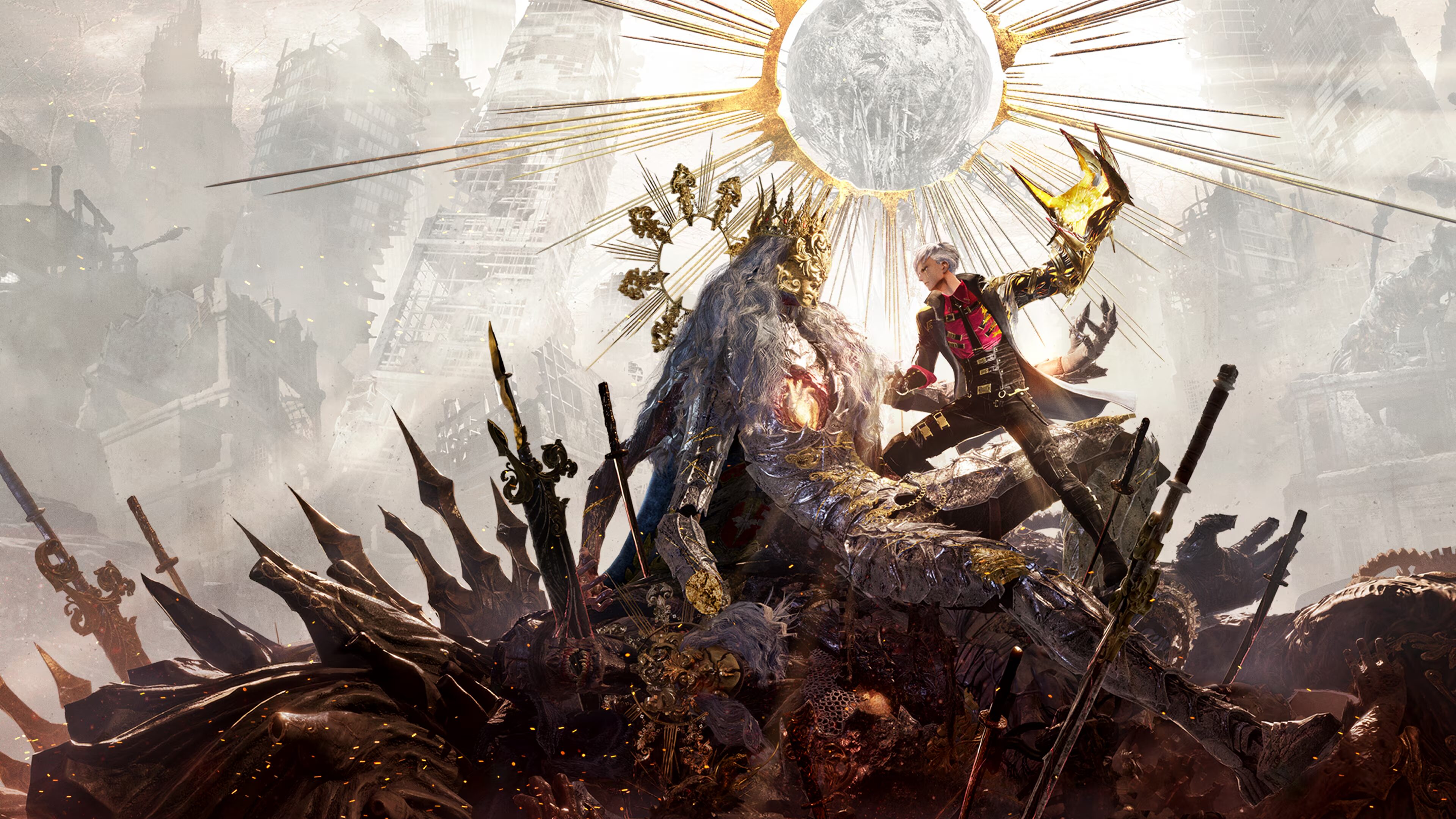
As mentioned, Code Vein 2 offers a complete narrative reset, serving as an ideal jumping-on point for newcomers. Many of the core concepts remain familiar: an apocalyptic setting, vampiric themes, and the ongoing struggle between blood-drinking Revenants and human hunters. This time, they're forced to cooperate in the wake of a phenomenon called the Resurgence, which mutates people into grotesque monsters. A failed attempt to seal it away instead birthed the chilling Lunar Rapacis – a moon-like entity that slowly erodes the very sense of self from unprotected Revenants.
You awaken 100 years later, revived from death by Lou, a Revenant who has fused half of her heart into your body. Your fates are now intertwined, and your mission is to help her master a unique ability: time travel. This allows you to journey back to the early days of the Resurgence, gather the sealed Revenants, and ultimately put an end to the threat before it utterly destroys civilization. It's a fantastic setup, and I'm genuinely hoping for more direct interplay between these timelines as the story unfolds.
Your Companions: More Than Just Backup
Each companion you encounter in Code Vein 2 brings more than just story; they unlock new Blood Codes and offer crucial functional support. You have options for how they assist you:
- On the Field: They can join you in combat, actively fighting enemies and helping to manage constant aggro, preventing you from getting overwhelmed.
- Assimilate: If you prefer to run solo, you can 'assimilate' them into your person, which passively enhances your own stats and abilities.
I found myself almost always bringing Josée along, and she made a tangible, helpful difference in fights without ever feeling like she was doing all the work. Even better, your companion can revive you when you fall. This 'restorative offering' acts as a brilliant second-chance buffer, allowing enemies to pose severe threats without the frustration of being one-shot. There's a clever cooldown mechanism, with each subsequent restoration providing less health and a longer wait, so it never feels like a 'get out of jail free' card. It’s a perfectly balanced mechanic that keeps the challenge high but mitigates cheap deaths.
The Verdict: Comfort in Evolution
It took me a little while to get back into the flow of Code Vein 2, especially given the years since the original and the sheer number of action-RPGs I've played in between. But once I did, I found myself enjoying it in precisely the same way I did its predecessor. This is definitively an evolution rather than a complete overhaul, with more depth and polish in virtually every aspect. For genre veterans, I'd liken the shift to the distinction between the methodical, measured pacing of the first Dark Souls and the more intense, mechanics-heavy precision of DS3.
This upgraded feel is most evident in the exploration, which is a notable step up. While the introductory dungeon is, naturally, quite linear, the Sunken Pylon region truly put my navigation skills to the test, tasking me with finding my way through several intricate floors of a giant, broken industrial complex. A brilliant quality-of-life feature is the ability to pull up highlighted footsteps showing your path through the zone – a godsend whenever I found myself thinking, "Did I already go this way?"
The story glimpses were stylishly presented, with dreamlike backstory sequences that are a refreshing step up from simply reading lore dumps. They even managed to evoke a slight pang of pity for the hulking Metagen Remnant boss towards the end of our demo, though that rapidly evaporated once she'd turned me into floor paste a couple of times! Code Vein 2 launches on Thursday, January 29, priced at $69.99 / £54.99.
If you enjoyed the original, I'm confident you'll appreciate what's going on here. While it doesn't break new ground, last year's The First Berserker: Khazan was a warm reminder that there's a satisfying comfort to be found in games that execute familiar mechanics exceptionally well. This is certainly a game I could happily sink into during the quieter months, losing myself in its rich customization and refined combat.
FAQs
Does Code Vein 2 require me to have played the first game?
No, Code Vein 2 features an all-new world and narrative with a story reset. While familiar concepts are present, you don't need any prior knowledge of the first game to enjoy its story and gameplay.
How does customization in Code Vein 2 compare to the original?
Customization has been significantly expanded, starting with a gloriously in-depth character creator. The Blood Code system allows for dramatic playstyle changes on the fly, and you can further enhance your build with up to four 'boosters,' offering more flexibility than ever before.
Are companions still a major part of the gameplay?
Yes, companions return and are more versatile. They not only unlock new Blood Codes but can actively join you in combat or be 'assimilated' to enhance your own stats. They also offer a valuable 'restorative offering' that revives you from death, making challenging encounters more forgiving without removing the threat.