
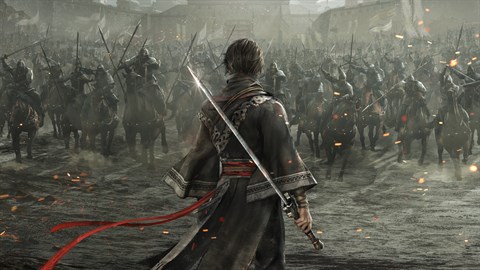
The Musou Renaissance: Why a Dynasty Warriors: Origins Trilogy is the Only Way Forward
The Bottom Line: Following the massive critical pivot of Dynasty Warriors: Origins, Producer Tomohiko Sho has confirmed that the current game’s deep-dive approach to the Three Kingdoms narrative is too dense for a single follow-up. We are looking at a potential trilogy to bridge the gap from the aftermath of Chi Bi to the fall at Wuzhang Plains.
For those of us who have been cutting through thousands of fodder soldiers since the PS2 era, the Dynasty Warriors franchise has felt like it was on life support for years. After the absolute train wreck that was the DW9 open-world experiment, Omega Force finally found its footing by narrowing its scope. Our analysis suggests that Origins didn't just save the IP; it redefined how Koei Tecmo views its storytelling pacing. By focusing heavily on the early years of the conflict, they’ve traded the "greatest hits" clip-show style of previous entries for actual narrative weight.
The Narrative Roadmap: From Chi Bi to Wuzhang
In a recent sit-down with Famitsu, Sho admitted that his original plan for a duology is already crumbling under the weight of the game's own detail. Origins ends at the Battle of Chi Bi—historically the midpoint of the era, but narratively the end of the "prologue" in many ways. To maintain the 1:1 character intimacy found in the current build, trying to cram the rest of the Three Kingdoms saga into one sequel would result in a rushed, incoherent mess.
| Release Phase | Historical Scope | Strategic Focus |
|---|---|---|
| DW: Origins | Yellow Turban Rebellion to Chi Bi | Rise of the Warlords & Alliance Building |
| Potential Sequel | Post-Chi Bi to Northern Expeditions | Establishment of Three Kingdoms (Shu, Wei, Wu) |
| Potential Finale | The Fall of Shu & Wuzhang Plains | Succession Wars & The Jin Transition |
Why This "Trilogy" Logic Makes Sense
We believe this shift toward a trilogy is the right move for three specific reasons:
- Character Burnout: In older titles, major players like Zhuge Liang or Sima Yi would appear, win a battle, and then the game would fast-forward five years. Origins allows for actual character arcs.
- Mechanical Depth: The new tactical layers and 1-vs-1000 refinements need room to breathe. If the sequel tries to cover 40 years of history in 10 hours, the tactical map becomes a gimmick rather than a feature.
- The "Visions" Factor: With the Visions of Four Heroes DLC dropping this week, Koei is testing the waters for how much players are willing to pay for expanded "what-if" content within this new engine.
The "Old Chestnut": Buy It or Lose It
Of course, it wouldn't be a Koei Tecmo project without a bit of pressure from the C-suite. Sho’s candid remark—"If this doesn't sell, there won't be a next one"—is a classic industry guilt trip, but in this case, the stakes are legitimate. After the DW9 disaster, the budget for Musou titles was clearly under scrutiny. Origins is a high-quality "re-reboot," and if the community doesn't show up for the retail numbers, we can expect the series to retreat back to low-effort, recycled asset spin-offs.
Our Take: Don't let the producer's "strained laugh" about the workload fool you. This is a studio that has finally remembered how to make a compelling action-RPG. We’ve seen enough "Empires" expansions and "Xtreme Legends" re-releases to know when the developers are actually inspired. The density of Origins is its greatest strength. If they have to split the remaining timeline into two more games to keep this level of polish, we say let them cook. Anything is better than returning to the hollow, empty fields of 2018.
What’s your stance? Are you ready for a multi-game commitment to the Three Kingdoms, or is the "Trilogy" talk just a way to justify more DLC? Sound off in the comments.