
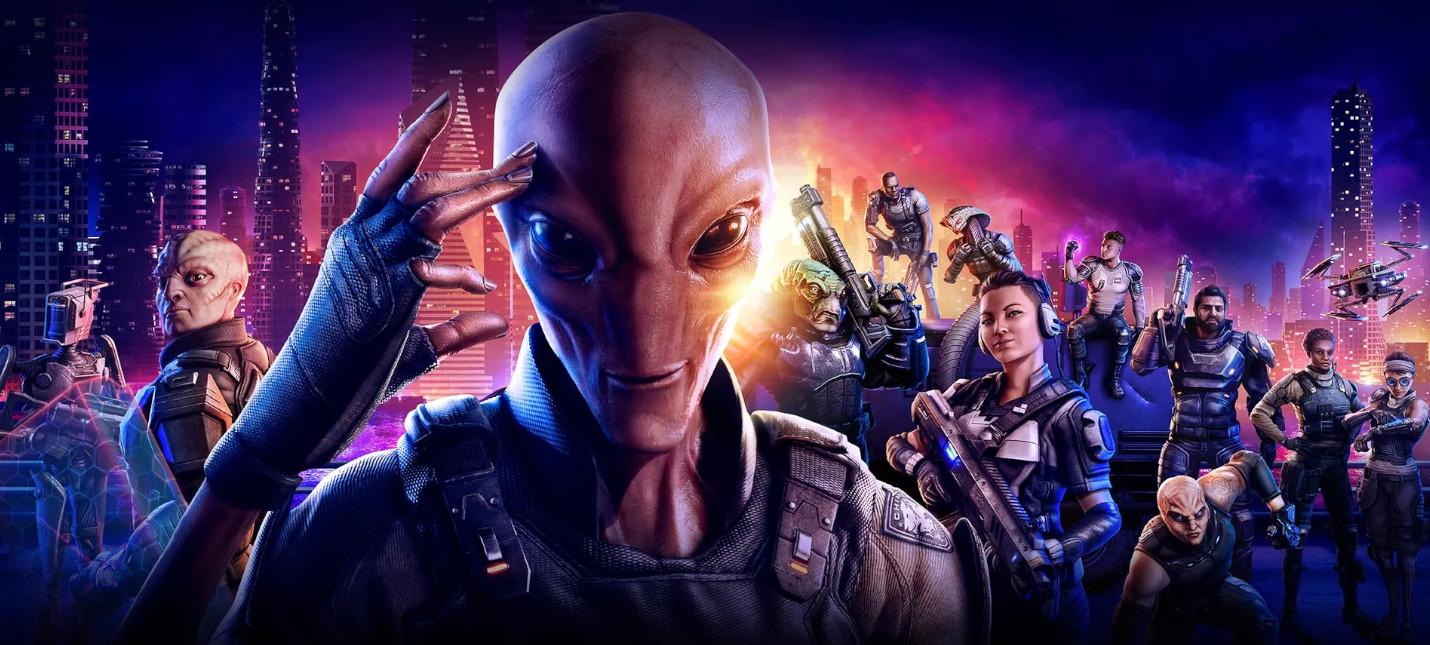
We’ve been in this game for over two decades, watching trends rise and fall, but few titles have been as unjustly maligned as XCOM: Chimera Squad. Released with minimal fanfare and an introductory price tag that should have garnered goodwill – especially in an era of endless hype cycles – it instead found itself skewered by critics and an alarmingly vocal segment of the player base. Our analysis, however, reveals a bold, innovative spin-off that not only challenges the XCOM formula but, in several critical areas, actually improves upon it.
The immediate backlash, often distilled into epithets like "watered down" or complaints about an "admin-like" strategy layer, missed the point entirely. Worse still were the vitriolic Steam reviews, accusing the game of being "SJW crap." This kind of reactive noise unfortunately overshadowed a game that dared to experiment, offering a unique tactical experience that complements the mainline Firaxis strategy games beautifully.
The Pod Problem: Why Chimera Squad's Breaching is a Game-Changer
Let's cut to the chase: the Achilles' heel of the mainline XCOM experience, particularly in XCOM 2, has always been the pod system. We've all been there: meticulously flanking an enemy, only to inadvertently trip an invisible line, activating two additional enemy clusters in a single move. Suddenly, your carefully planned mission spirals into a desperate, often unwinnable, firefight. This mechanic, while iconic, forces a tediously cautious, overwatch-heavy playstyle that, frankly, grinds our gears. It's a testament to XCOM 2's overall brilliance that we still vote for it in our annual Top 100, despite this persistent frustration.
Chimera Squad, however, throws out the pod system entirely. Every engagement is a contained, immediate knife fight. Instead of stumbling into ambushes, your squad initiates them with a visceral, slow-motion **Breach Turn**. Assigning your agents to dynamic entry points – be it blowing through a wall or rappelling through a skylight – each with distinct bonuses or penalties, creates an electrifying opening gambit. This initial volley allows you to prioritize high-threat targets, deciding whether to eliminate aggressive enemies before they fire back, suppress alert ones before they take cover, or capitalize on surprised foes. It's a gamble every time, trading potential damage for tactical advantage, and it delivers a "fuck-yeah" moment with every door kicked in, a stark contrast to the eye-rolling artificiality of an activated pod.
Interleaved Turns and RPG Evolution
The traditional "I go, you go" turn system, while fundamental to XCOM, would have rendered Chimera Squad's tighter, more focused encounters too easy given the powerful abilities your individual agents eventually unlock. The developers smartly pivoted to **interleaved turns**, weaving enemy activations between hero actions. This creates a relentless series of tactical deadlines, forcing players to prioritize and execute with precision. It's not about slowly clearing a map; it's about managing immediate threats and exploiting narrow windows of opportunity.
Furthermore, Chimera Squad departs from the random, role-defined soldiers of mainline XCOM. Here, every agent is a named individual, boasting a unique skill tree, a distinct backstory, and their own voice actor. This shift leans heavily into RPG territory, fostering a deeper connection with your squad and opening up new strategic possibilities based on their specific abilities and synergies.
The "SJW" and "Copaganda" Discourse: A Misguided Distraction
The clamor around Chimera Squad's dialogue, labeled everything from "SJW crap" to "millennial" and "Marvel-style," showcases a baffling ignorance of storytelling history. The snappy, back-and-forth banter is hardly a modern phenomenon; it’s lifted straight from the screwball comedies and hardboiled crime stories of yesteryear. The idea that quick-witted dialogue is somehow a recent, undesirable development is baffling to us, veteran gamers who’ve seen every iteration of character interaction.
Equally frustrating was the double-edged critique regarding its politics. Reactionaries bristled at the idea of humans and aliens coexisting peacefully after the events of XCOM 2, conveniently ignoring the narrative potential of such a premise. Meanwhile, some progressives dismissed it as "copaganda." Both arguments fundamentally misread the game. Chimera Squad is an anti-terrorist unit, not a conventional police force, operating within a post-revolution Reclamation Agency. The game's world-building, complete with "mextra-terrestrial" cuisine and "larval nuggets" cereal, is so overtly cartoonish and lighthearted that any attempt to extract deep, controversial political meaning is a futile exercise. This is G.I. Joe, with a snake-lady as a squadmate – not a political manifesto.
The Permadeath Question: An Experimental Edge
The "game over" condition upon a single squadmate's death is a sharp contrast to the mainline XCOM experience, where individual soldier loss, while painful, is often a calculated risk. While XCOM 2 players might lament the "death spiral" that occurs after losing a high-level unit on an Ironman run, Chimera Squad's approach forces a different kind of tactical discipline. It’s a design choice that, were this XCOM 3, might be damning. But as an **expandalone budget spin-off**, it's a perfect canvas for experimentation.
This experimental nature is precisely what makes Chimera Squad so valuable. It doesn't aim to replace XCOM 2, which itself utterly superseded Enemy Unknown in our affections. Instead, it serves as a delicious, well-paired dessert, offering a fresh tactical palette that enriches the overall XCOM experience. It’s a tight, focused, and genuinely fun tactical romp that, sadly, many players dismissed without truly understanding its unique strengths. We maintain that it deserved – and still deserves – a far more charitable assessment.