
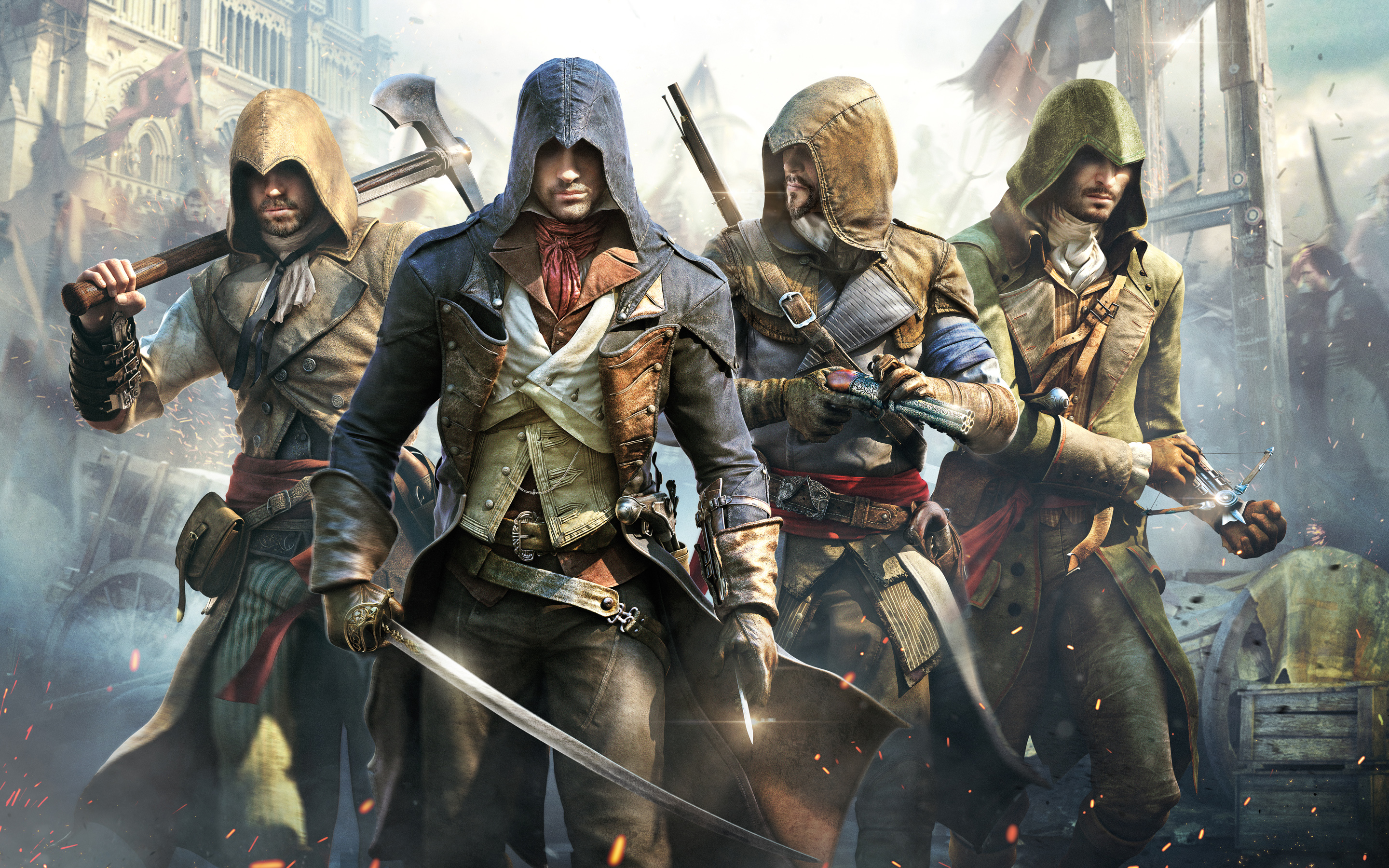
We're always digging, and sometimes even we unearth forgotten gems from the development trenches. This week, thanks to a recent chat with the GamesIndustry.biz crew and former creative director Alexandre Amancio, a tantalizing "what if" from Assassin's Creed Unity's development has resurfaced. The revelation? Unity almost shipped with a groundbreaking character creator that would have fundamentally reshaped the player's journey through the French Revolution, eschewing the boilerplate Arno Dorian for something far more personal. And frankly, we're still kicking ourselves that it never made it to launch.
Amancio, who also helmed Assassin's Creed: Revelations, revealed that early in Unity's lifecycle, the development team was weighing two distinct paths: the traditional, single-protagonist AC experience we ultimately received, or a radically more co-op focused title. Central to this riskier vision was an ingenious character creation system:
The Proposed "Ancestral Database" System for Unity:
- Instead of a fixed protagonist: Players would search a database of millions of potential ancestors.
- Dynamic lineage: Describe your desired ancestor, and the system narrows down the search to find a match.
- Unique perspective: Each player would get their own unique lens on the French Revolution's complexities, rather than a linear narrative through one character's eyes.
This wasn't just a simple character skin; it was a narrative paradigm shift. Amancio envisioned a game where "everyone's experience... is their own path through a complex event," a far cry from being thrust into the riding boots of a "Scarlet Pimple-esque nobleman." We can only imagine the emergent storytelling that could have flowed from such a design. The decision to revert to type, prioritizing recognizability over innovation, feels like a missed opportunity that echoes through the series to this day.
We remember our original reviewer, Alec Meer, lambasting Unity back in 2014 for "reverting to type despite its glitzy surface," and particularly criticizing the four-player co-op for simply duplicating Arno. "It is simply boring for everyone to be the same (not particularly interesting) character," he wrote. Amancio's recent comments confirm what many of us suspected: the game was meant to be more, and the lack of protagonist diversity in co-op was a direct consequence of the safer bet.
While we appreciate the logistical nightmare a "millions of NPCs" database entails – requiring a level of development investment and managerial forbearance usually reserved for mythic projects like Beyond Good and Evil 2 – the potential payoff was immense. It would have necessitated a narrative approach closer to an MMO or the branching origins of a game like Dragon Age: Origins, something far more resonant than the somewhat generic hero we got. This wasn't merely a hidden character creation system; it was the backbone of a wholly different Unity concept.
Amancio's desire for this systemic depth stems from his roots in Far Cry, a series he rightly identifies as having a greater appetite for unscripted chaos. His philosophy of "simple, small systems that interact to create emergence" is precisely the kind of modern game design thinking that could have elevated Assassin's Creed beyond its open-world sandbox formula. Even adding the bomb system to Revelations, which allowed players to manipulate crowds, hinted at this ambition to give players more agency and systemic tools.
Fast forward to the current era, post-Assassin's Creed Odyssey and with Shadows on the horizon. The series has leaned heavily into the open-world RPG loop, often criticized for becoming "a marathon of distraction" and a "reliably Ubisoftian tourist trap." We can't help but wonder: if Ubisoft had taken Amancio's proposed leap of faith with Unity, would the franchise have found a more distinct and innovative identity than its current path of pillaging history with an increasingly packed, yet often repetitive, itinerary?
Ultimately, the call for "recognizability" won out, a familiar tale in AAA development where safe bets often trump bold vision. While Unity and Revelations aren't always ranked among the top-tier Creeds, the underlying ideas Amancio championed were forward-thinking. We hope Ubisoft takes note. The lessons from Unity's almost-was could still pave the way for a truly modern Assassin's Creed – one where player agency and emergent narrative take precedence over a glitzy, but ultimately predictable, historical tour.