
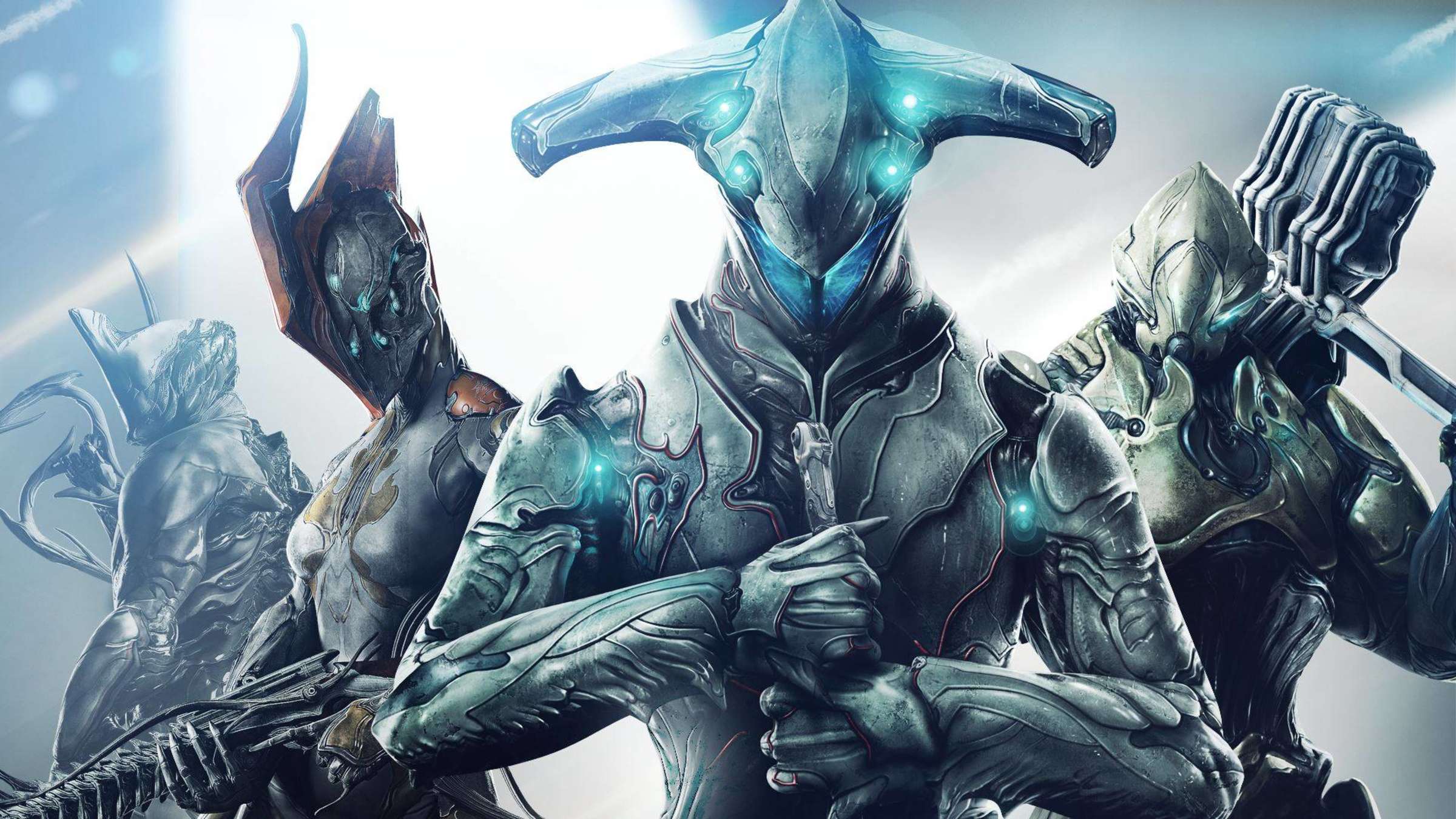
The Warframe landscape is gearing up for a significant overhaul, with Digital Extremes confirming major content drops, crucial reworks, and some difficult decisions during their recent Devstream 192. March brings "The Shadowgrapher," a new horror-infused update introducing our 64th Warframe, Follie, themed around inky artistry. Before that, February 11 delivers a much-anticipated Vauban rework and a stunning Dagath Deluxe skin. However, the biggest takeaway for veteran players? The long-debated wall-running redesign has officially been shelved, a pragmatic move that, in our analysis, likely sidesteps a potential community firestorm.
For years, the prospect of a fundamental re-evaluation of Warframe's wall-running system has loomed, often discussed with a mix of dread and curiosity within the community. During Devstream 192, Creative Director Rebecca Ford candidly put the issue to rest, eulogizing the rework's demise. "We gather here today to mourn the loss of the wall-running rework," Ford stated, acknowledging the effort but admitting it simply "didn't feel like it would be cooler." This wasn't a sudden flip; as CEO Steve Sinclair noted, changing core mechanics in "a big, big, big game" like Warframe is always fraught with peril. Pablo Alonso, Design Director, further elaborated that every iteration presented new compromises, often leaving the team with the distinct impression of "change for change's sake."
Frankly, we believe this was the right call. While some might lament the missed opportunity for a fresh take on movement, Warframe's parkour system, for all its quirks, is ingrained in its identity. A major disruption risked alienating a player base deeply accustomed to its nuances, potentially creating more frustration than genuine improvement. It's a testament to DE's evolving design philosophy that they're willing to cut a feature that wasn't hitting the mark, rather than pushing a controversial change onto the live game. Instead, the focus will shift to more subtle, quality-of-life (QoL) tweaks to existing movement elements like pull-ups and mantles, along with improved motion matching for smoother interactions. As Ford quipped, it's "the makeup on the dead body" – a practical enhancement rather than a risky full-body transplant.
With that challenging news out of the way, the immediate future looks bright for specific frames. February 11 marks the arrival of the Vauban Heirloom update, a significant power shift that, in Alonso's words, "went from retouch to rework." Vauban mains, prepare for some serious buffs:
- Grenades: More crowd control spread, indicating better utility in high-level play.
- Mine Variants (QoL): Four old mines condensed into two potent pairings:
- Offensive: Blends Flechette Orb's damage with Tether Coil's control. A solid combo for aggressive zoning.
- Utility: Mixes Vector Pad's speed boost with Overdriver's damage amplification. Expect some creative team play here.
- Photon Strike: Increased range, guaranteed blast status (hello, CC!), cheaper cost, and its augment now grants three shots instead of two. This significantly boosts his damage potential and reliability.
- Bastille: The enemy cap has been REMOVED. This is huge. Alonso admitted this change "scared me the most," and for good reason. No cap on Bastille elevates Vauban's viability in endless missions and Steel Path, making him a true crowd-control powerhouse once again. This is a game-changer for his meta standing.
The February 11 update also brings the Dagath Deluxe skin, featuring a striking design complete with a tiny flaming horse and an accompanying Gynfas Kaithe. This is a solid piece of cosmetic content for a relatively new frame, and the fiery horse adds a unique flair.
Looking further ahead to "The Shadowgrapher" in March, the changes begin right at the core of the Warframe experience:
- New Player Awakening Overhaul: A fresh start for new Tenno, hopefully streamlining the initial learning curve that can be notoriously steep.
- New Team-Based Game Mode: Accessible from the Vesper Relay near Venus. We'll be keen to see if this mode offers engaging new objectives or simply rehashes existing concepts. The potential for fresh mission types is always exciting.
Weapon enthusiasts also have much to anticipate, with expansions coming to several weapon families:
| Weapon Family | New Addition | Potential Impact |
|---|---|---|
| Coda | Bubonico variant | A new take on a powerful shotgun, likely maintaining its potent AoE. |
| Kuva | Ghoulsaw adoption | Bringing a unique melee option into the highly sought-after Kuva arsenal. |
| Tenet | Quanta laser cutter | A new flavor of secondary weapon, hopefully offering unique status or damage applications. |
On the grind front, Requiem Relic farming is also getting an overhaul, which is always a welcome QoL improvement for players constantly chasing Kuva Liches and Sisters of Parvos.
The true star of "The Shadowgrapher," however, is Follie, our 64th Warframe. While details are still largely under wraps, we caught a glimpse of her design, and the horror vibes are palpable. The theme of ink and painting, coupled with a special portrait mechanic to acquire her, is pure creative gold. Ford's hint that "Her inky brushes will paint reality to the canvas" suggests a unique ability set, possibly manipulating the environment or enemies with artistic flair. We're particularly excited by the horror aesthetic, a direction Warframe has proven it can excel in, and one that promises some truly unsettling and visually distinct gameplay.
Finally, for the fashion frame fanatics, a duo of deluxe skins is on the horizon. Ford's exuberant declaration, "Who's the best duo? Grendel/Gauss, yo, my boys," heralds snazzy, mecha-inspired designs. Grendel gets the Acceltra Deluxe, and Gauss receives the Masseter Deluxe. The cherry on top? A duo emote designed to perfectly capture their bromance. This is pure fan service done right, leveraging established character dynamics for engaging cosmetic content.
The full reveal for "The Shadowgrapher" is set for the next Warframe Devstream on Friday, February 27. Our read is clear: Digital Extremes is making smart, player-centric decisions, balancing ambitious new content with necessary reworks and, crucially, knowing when to pull back on features that don't serve the game's core identity. This looks like a strong start to 2026 for Warframe, cementing its position as a continually evolving free-to-play behemoth.