
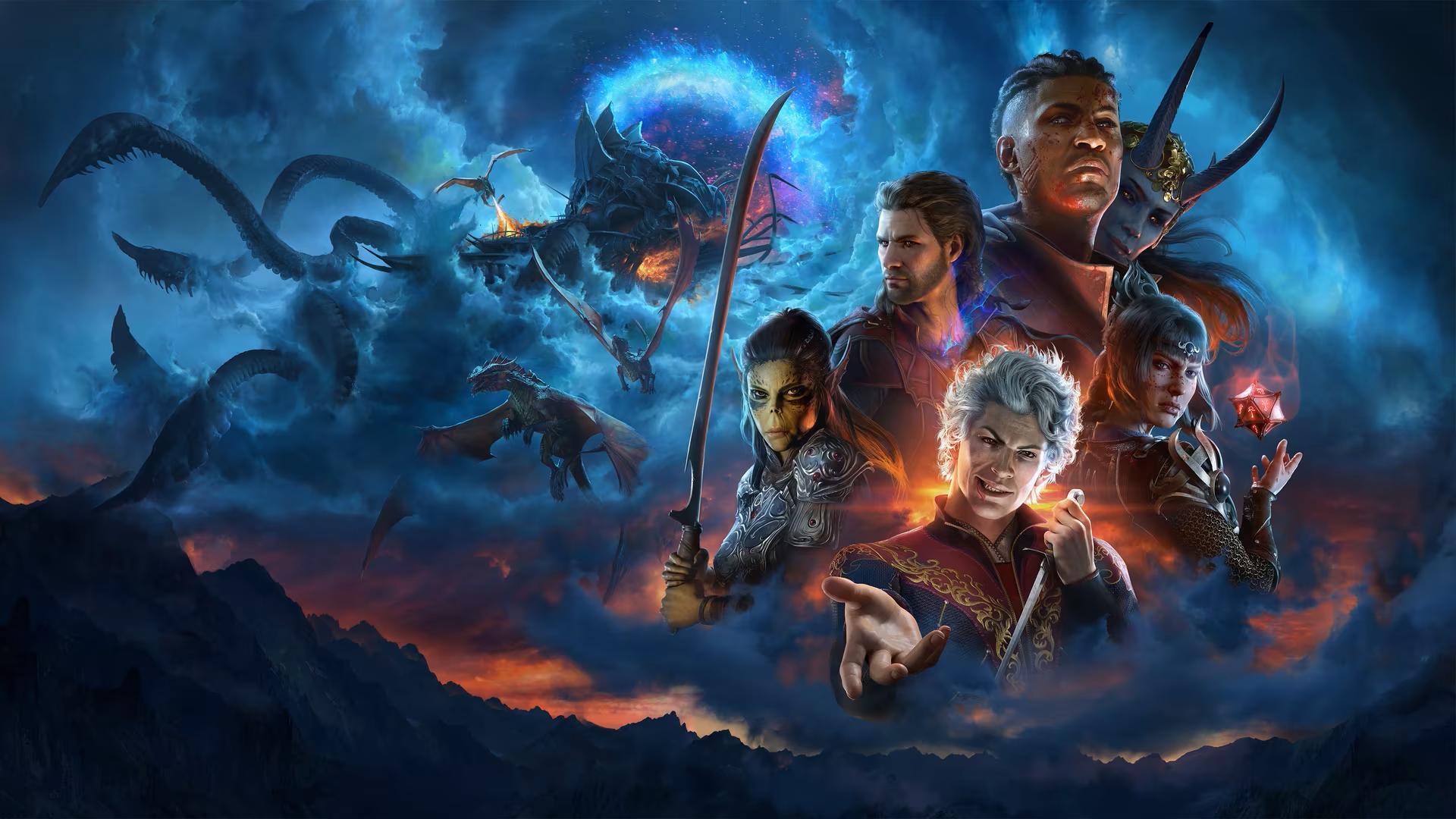
Wyll's Whispered Farewell: Why Baldur's Gate 3's Blade of Frontiers Deserved a Roar
Baldur's Gate 3 has undeniably etched its name in the annals of RPG history, but as the dust settles, a glaring omission has come to light: the underdevelopment of Wyll, the Blade of Frontiers. While fan-favorite companions like Shadowheart, Astarion, and Karlach have rightfully dominated player discussions and received extensive post-launch support, Wyll's narrative arc feels, to put it bluntly, like an afterthought. This isn't just a matter of personal preference; it's a systemic issue that Larian Studios themselves have acknowledged, highlighting development hurdles that left the Warlock's story feeling incomplete.
The Companion Hierarchy: Who Gets the Spotlight?
In the pantheon of Baldur's Gate 3 companions, a distinct pecking order has emerged. The initial data consistently shows:
- Top Tier: Shadowheart, Astarion
- Strong Contenders: Karlach
- Established Archetypes: Minthara (Gothic Baddie), Gale (Cutesy Romantic), Halsin (Iconic Trailer Presence)
Wyll, however, perpetually lingers in the background. Even for players who actively sought to integrate him into their party composition, the demands of Astarion's utility, Shadowheart's essential healing, and the need for a solid tank often relegated the "infinitely good" Blade of Frontiers to the bench. This isn't a reflection of player choice alone; it's a consequence of a narrative that, as evidenced by Larian's own statements, struggled to find its footing.
Larian's Admission: A Story "Half-Baked"
The concerns surrounding Wyll's underdeveloped arc were amplified during a recent Reddit AMA where senior writer Kevin VanOrd candidly addressed the situation. He admitted to wishing Wyll had received more content and a more fulfilling conclusion, attributing the issues to a significant restart of his recruitment and questing during Early Access. This late-stage overhaul, coupled with other development challenges, meant many of Wyll's story beats were finalized far later than ideal.
Key Development Hurdles for Wyll's Arc:
- Early Access Recruitment Restart: Forced a significant narrative pivot late in development.
- Cut Content: A pivotal encounter at the "Red War College" near Baldur's Gate was removed, impacting Wyll's intended involvement.
- Unexpected Illness: VanOrd's own extended absence during critical development periods hindered progress.
- Storyline Splintering: The decision to split Wyll's narrative into two distinct threads—the Mizora storyline and the Duke Ravengard storyline—may have diluted his overall impact.
"I think that Ansur's lair was Swen's idea," VanOrd recalled, "we did have the resources for a standalone dungeon, so we got to work on tying Wyll to the Wyrmway, but I couldn't get more than a dungeon boss out of it." This illustrates the piecemeal nature of Wyll's final integration, resulting in content that, by Larian's own admission, is "sparser than I'd have liked."
The Missed Opportunity: Agency and Endings
The core issue, as one Reddit user astutely pointed out, is Wyll's perceived lack of agency. His quests often felt subservient to the narratives of other companions, preventing him from driving his own story forward. This stands in stark contrast to Karlach, whose initial ending woes were eventually rectified with "the ending she deserves." Wyll, conversely, often finishes his journey much as he began: the Blade of Frontiers, with no meaningful evolution or a strong narrative endpoint. This feels like a significant missed opportunity to explore the complexities of a lawful good hero grappling with demonic pacts and the weight of expectation.
Looking Ahead: Lessons for Divinity: Original Sin 3
While Baldur's Gate 3's development on core content has largely concluded, the discussion surrounding Wyll offers valuable insight for Larian's future endeavors, particularly with Divinity: Original Sin 3 on the horizon. VanOrd himself expressed a desire to improve companion relationships, advocating for more inter-companion interaction and a more nuanced approach to player-companion bonding.
"Companion relationships," VanOrd stated, are an area he'd like to see improved, particularly in fostering deeper relationships between companions themselves, mirroring the bonds they form with the player. He also champions a more subtle ramp-up of player friendship and romance, ensuring relationship building feels natural and earned. This suggests Larian is keenly aware of the need to elevate their companion writing beyond what was achieved with Wyll.
Having personally logged over 200 hours in Baldur's Gate 3 after initial skepticism, our analysis is that Larian has a remarkable capacity for growth and innovation. If they can apply the lessons learned from Wyll's development to Divinity: Original Sin 3, particularly in crafting more robust and deeply integrated companion arcs, they may very well surpass even the towering achievement of Baldur's Gate 3. The key will be ensuring no character is left to fade into the background, their potential only hinted at, but never fully realized.