
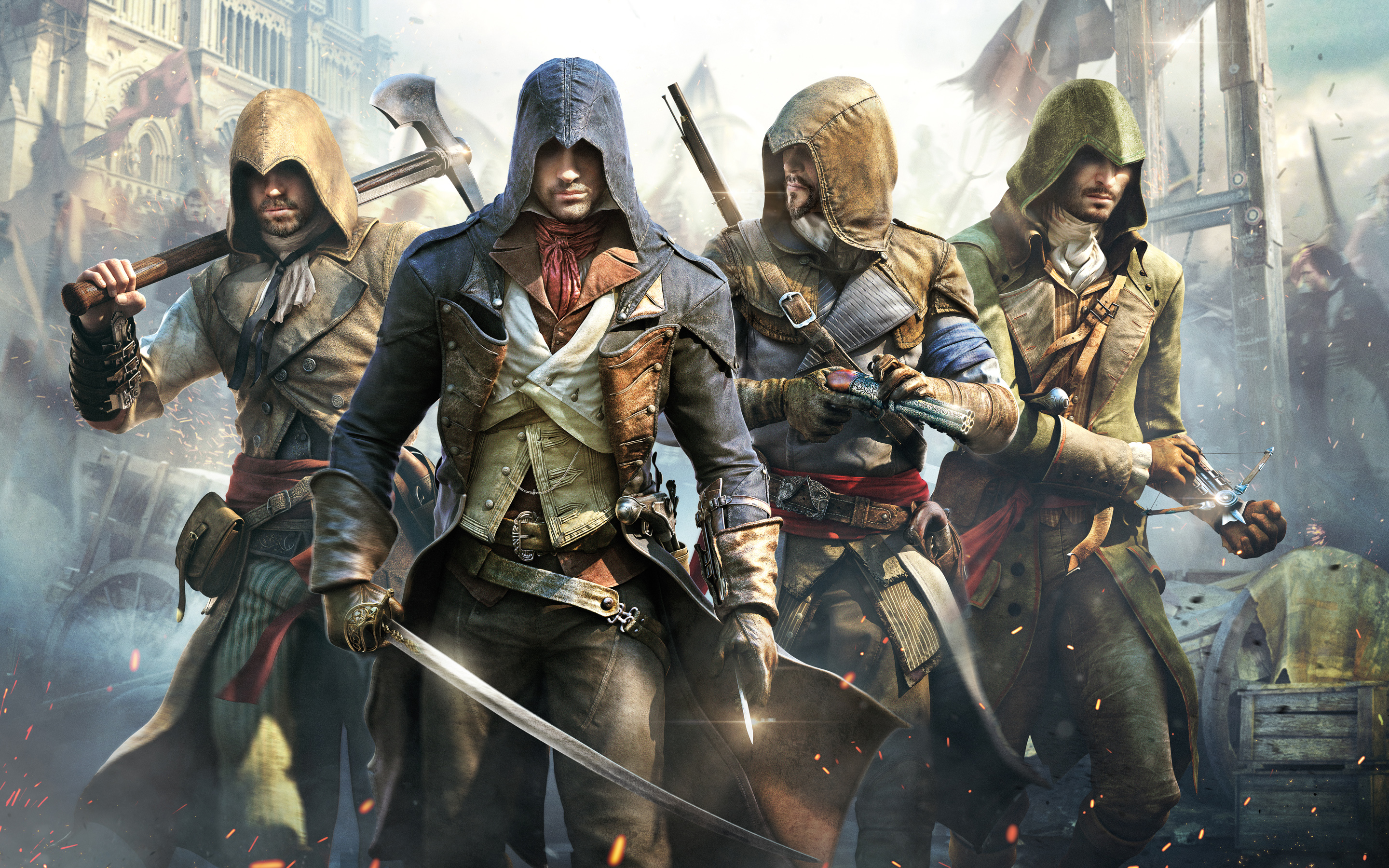
- **Troubled Launch, Quiet Redemption**: Assassin's Creed Unity launched in an "absolute state" of technical disarray in 2014, becoming a notorious punchline in gaming history, but has since received significant patches.
- **Stealth Reimagined**: It introduced crucial mechanics like a dedicated crouch button, separate freerunning controls, and harder combat, making it arguably the series' "first actual stealth game."
- **Paris: A Crowded Masterpiece**: The game offers an unparalleled, densely populated, and meticulously crafted depiction of revolutionary Paris, a focus often diluted in later, more expansive AC titles.
- **Quality of Life Improvements**: Ubisoft patched out the infuriating mobile app requirement for treasure chests, alongside numerous other fixes that improve the modern-day play experience.
- **Underappreciated Gem**: Despite its past, playing Unity today reveals a title that "holds up better than a lot of other Assassin's Creed games," offering a focused 40-hour experience rich with pseudo-historical spectacle and genuine stealth challenges.
Assassin's Creed Unity: Revisiting a Revolution, Ten Years On
Alright, fellow gamers, let's talk about a title that became shorthand for a disastrous launch: Assassin's Creed Unity. We all remember the framerate fiascos, the clipping calamities, the infamous "teeth and eyeballs" screenshot. When it dropped in 2014, Unity was, to put it mildly, an "absolute state." Yet, as the Lead Tech Analyst at In Game News and a veteran of countless digital battlefields, I'm here to tell you that ignoring Unity today is a mistake. This game has quietly undergone a significant transformation, proving itself a much more polished experience than its initial reputation suggests.
A Rocky Launch, A Redemption Arc (Mostly)
The launch was rough. We saw it all: floating NPCs, texture load-in delays, haycarts that acted as digital quicksand, and co-op connectivity issues that made a Templar conspiracy seem simple. Even running it on AMD hardware added an "extra dose of problems." Unlike more recent titles that received critical reconsideration post-patching, Unity remained largely a punchline. But Ubisoft did put in the effort. They even made the DLC free and, crucially, patched out the infuriating "second screen experience" madness of needing a mobile app for blue treasure chests. While a few lingering quirks persist – yes, some NPCs still hover, and TXAA can cause flickering – our recent playthroughs confirm that Unity "runs well – better than most of the open world games I've played recently."
Paris: The Unsung Star of the Revolution
Where Unity truly shines is its setting. This game is about Paris, period. With brief, focused excursions to Franciade and Versailles, it commits fully to bringing the French Revolution to life. Unlike the sprawling, hundreds-of-hours commitments of later titles like Valhalla, Unity and its Dead Kings expansion can be wrapped up in a satisfying 40 hours. This laser focus allows for an unparalleled depiction of a city that feels like a living, breathing painting. The sheer density of Unity's crowds is something you genuinely don't see elsewhere in gaming – mobs burning effigies, debating politics, singing "La Marseillaise" (even if historically a touch early for some missions, it nails the vibe!). The innovation of "downwards parkour" also allows for an incredible sense of verticality and seamless traversal, making Paris not just a backdrop, but a character in itself.
Stealth Redefined: Unity's Core Innovations
For me, as a veteran who appreciates mechanical depth, Unity was a game-changer for the Assassin's Creed series. It introduced the dedicated crouch button – a fundamental pillar for any actual stealth title. Coupled with separate controls for freerunning up and down, and a wealth of quickly accessible tools on the number keys, Unity finally empowered players with true stealth agency. Combat also got a much-needed difficulty bump; the automatic counter was replaced by a parry requiring a follow-up riposte, and bullets could drop you in a flash. This fragility fosters a genuine desire to engage with the stealth mechanics, forcing players to master berserk blades, smoke bombs for tactical disorientations, and Eagle Vision for intelligent target acquisition. This was the series finally leaning into its namesake.
Memorable Moments and Anachronistic Fun
Beyond the core mechanics, Unity delivers those classic, over-the-top pseudo-historical hijinks we've come to expect from Assassin's Creed. Take the hot-air balloon chase with Elise – a perfect setup reminiscent of Ezio piloting Da Vinci's tank. Or the brilliant inclusion of "rifts" that replace the oft-maligned modern-day segments, letting us parkour up an anachronistic Eiffel Tower in different eras, even dodging German planes in occupied Vichy France. These moments are pure spectacle and elevate the experience.
The Verdict: Is Unity Worth Your Time Today?
Released in 2014, Assassin's Creed Unity endured a social media trial that, much like Mass Effect 3 two years prior, outlasted any fair assessment of the patched game. While valid complaints existed, especially regarding its technical state and the lack of playable women in co-op, we firmly believe that playing Unity today offers a compelling experience. It's a reminder of what the series can be when it truly focuses on a single, impeccably realized city, backed by robust stealth mechanics. Don't let the ancient memes fool you; Unity might just surprise you with how well it holds up.