
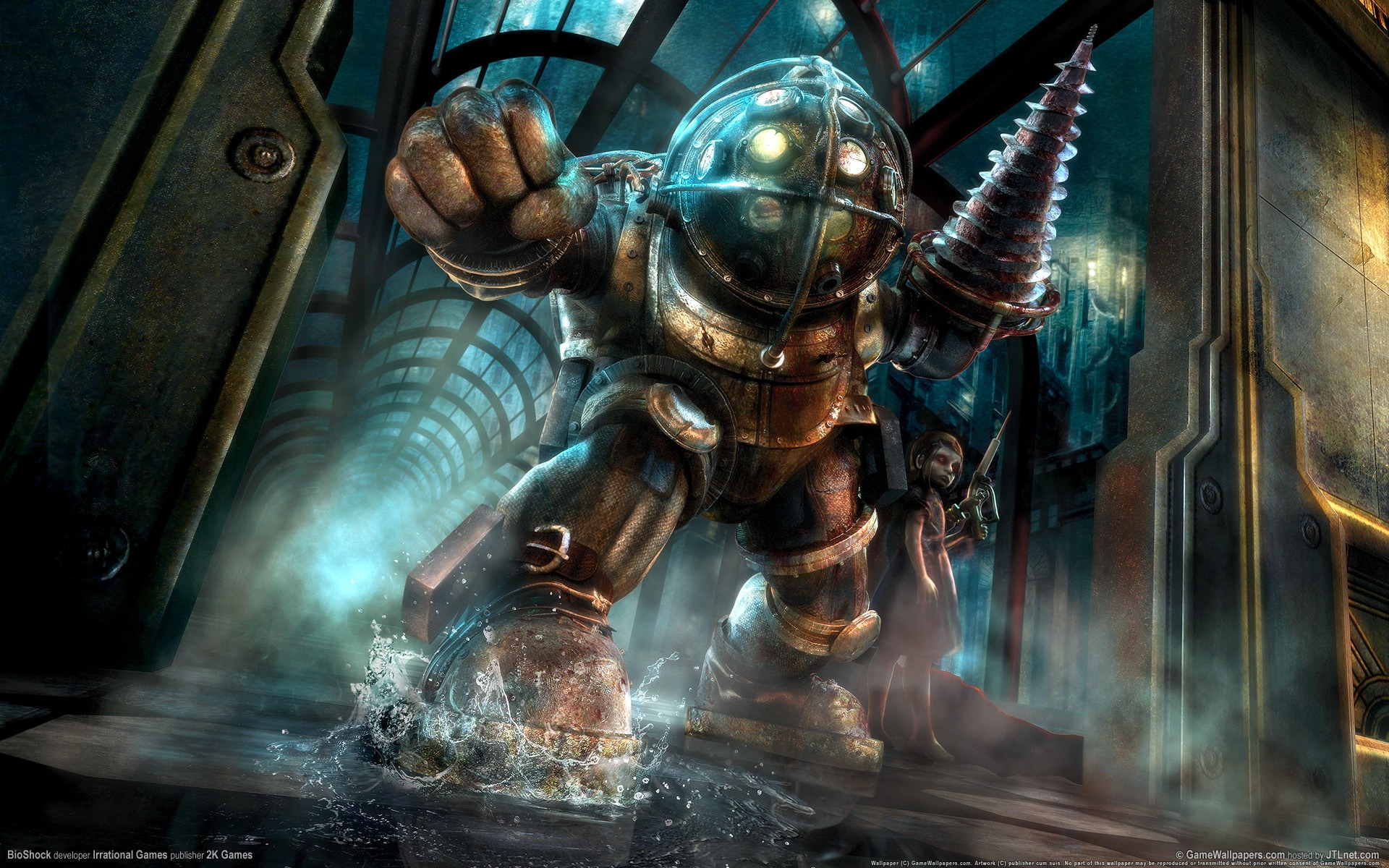
- The Verbinski Twist: Director Gore Verbinski planned to include both game endings in his scrapped adaptation to "mess with the audience's heads."
- Hard-R Ambition: The project was envisioned as an adult-focused horror with a $200 million budget, diving into the "Oedipal aspect" and the brutal reality of Little Sisters.
- Why It Died: Universal Studios pulled the plug in 2013 due to the high financial risk of an R-rated blockbuster; the film was just eight weeks away from shooting.
- Netflix Status: A new adaptation is currently in "active development" under director Francis Lawrence (The Hunger Games), though it has faced recent script changes and budget scaling.
- BioShock 4 Update: The next game is still in development at Cloud Chamber, now overseen by industry veteran Rod Fergusson (Gears of War, Diablo) following a project overhaul.
The $200 Million Heartbreak: Verbinski’s Lost Rapture
For years, the "What If?" surrounding Gore Verbinski’s BioShock has haunted gaming circles. New details from Verbinski himself clarify just how close we came to a definitive, big-budget take on Rapture. Working with writer John Logan (Gladiator, Skyfall), Verbinski wasn't just aiming for a generic adaptation; he wanted to translate the game's core "choice" mechanic into a cinematic mind-bender.
According to Verbinski, the film would have somehow incorporated both the "Happy" and "Nuclear" endings of the original game. While he didn't specify if this would be via dream sequences or a multiverse approach—keep in mind, this was years before BioShock Infinite popularized the "constants and variables" concept—the goal was to leave the audience's heads spinning. We believe this kind of narrative risk-taking is exactly what the franchise deserves, but it’s easy to see why a 2008-era studio choked on the $200 million price tag for a "Hard R" script.
"Demented Art-Deco" and the Oedipal Angle
Verbinski’s vision didn't shy away from the game’s darker themes. He planned to Lean heavily into the "demented art-deco aesthetic" and the disturbing relationship between Big Daddies and Little Sisters. "I was going to dive deeply into the Oedipal aspect and definitely keep it hard R," Verbinski noted in a recent Q&A. Despite having designs ready and being eight weeks from production, the project stalled out and was officially declared dead by Ken Levine in 2013.
Netflix’s Second Shot: Is It Stalling Again?
The baton has since passed to Netflix, but the path to Rapture remains treacherous. While director Francis Lawrence is still attached, the project has recently undergone "regime changes" and script edits to manage the scope and budget. Producer Roy Lee confirmed in September 2025 that the film is still in the works, but it’s clear the production is in a state of "stall and re-energize."
Our take? Adapting BioShock is a high-wire act. If Netflix tries to sanitize the setting or shave the budget too thin, they risk losing the "demented" soul that Verbinski was so keen to capture. Lawrence is a capable director, but he has his work cut out for him to navigate the corporate hurdles that killed the previous attempt.
BioShock 4: A New Captain at the Helm
While we wait for the silver screen version, the actual game franchise is undergoing its own "re-energizing." 2K recently overhauled BioShock 4, which has been stuck in the development trenches for nearly a decade. The big news here is the arrival of Rod Fergusson.
Fergusson is a veteran known for "finishing" big projects, having led the charge on Gears of War and Diablo IV. As he takes over Cloud Chamber, the hope is that he can finally wrestle this project into a releasable state. Between the film's budget woes and the game's decade-long delay, BioShock fans are used to waiting—but with Fergusson overseeing the game and Lawrence still on the movie, there's finally some movement in the lighthouse.