
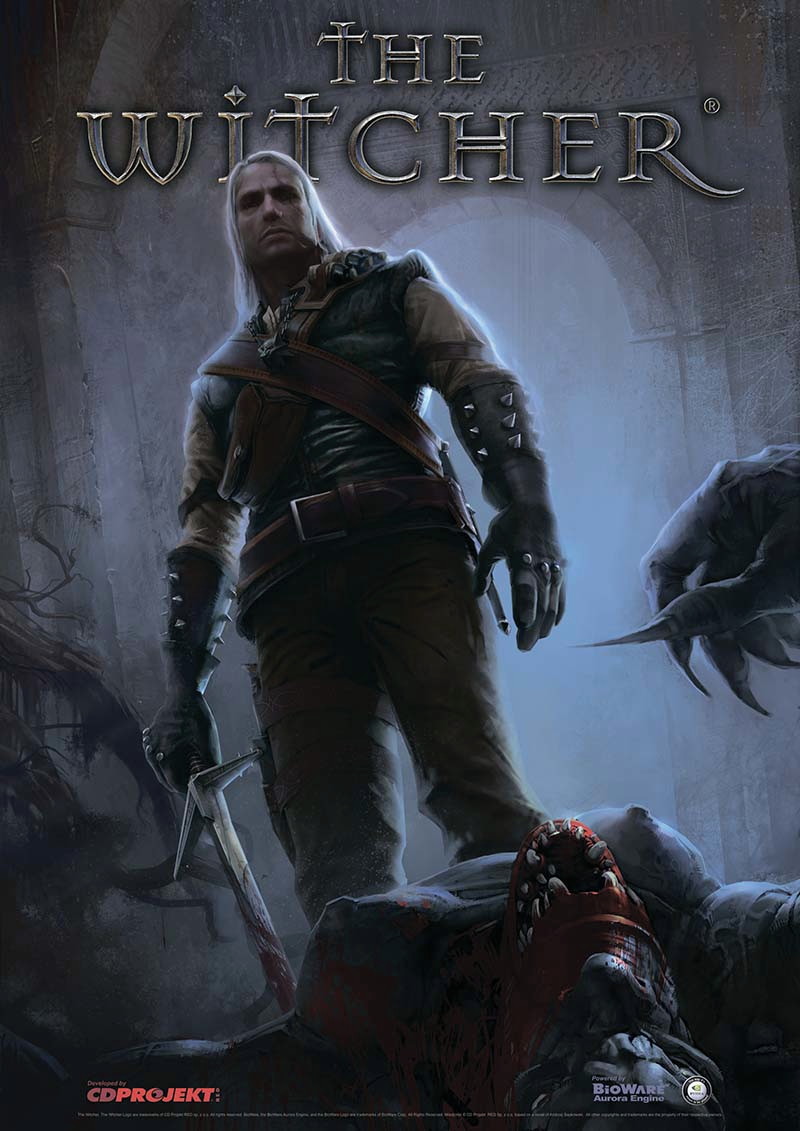
- The Witcher 1 Remake: Seemingly placed on the "back-burner" as CD Projekt Red prioritizes other projects.
- The Witcher 4 Development: Support studio Fool's Theory has joined the "massive development effort."
- The Witcher 3 DLC: Recurring rumors suggest Fool's Theory is also working on all-new DLC for The Witcher 3.
- Original Witcher 1 Ending: Lead story designer Artur Ganszyniec revealed the game's final CG cutscene was added without the story team's knowledge, a decision made by CDPR's board or co-founder Michał Kiciński.
- Story Team's Original Intent: The team wanted the first game to end with "an open question and open future."
- Impact on Witcher 2: The unapproved CG cutscene introduced the idea of "Witchers hunting down kings," directly shaping The Witcher 2: Assassins of Kings into a political narrative, leaving "not really room for exploring who Geralt is."
The Shifting Sands of Witcher Development
As veteran gamers, we've come to expect the unexpected from CD Projekt Red, and recent intel confirms the development landscape for the Witcher saga is as dynamic as ever. The much-anticipated remake of the original Witcher game appears to be on the back-burner, a strategic pivot that, while perhaps disappointing to some diehards, suggests a clear focus elsewhere.
The Witcher 4 & Fool's Theory
Our sources indicate that CDPR has brought in support studio Fool's Theory to bolster the "massive development effort" behind The Witcher 4. This move is significant; bringing in external talent on such a flagship title speaks volumes about the scale and ambition of the next installment. Adding to the intrigue, recurring rumors point to Fool's Theory also being behind potential new DLC for the ever-popular The Witcher 3: Wild Hunt. If these rumors pan out, we could be looking at a substantial expansion for an already legendary game, an exciting prospect indeed.
A Glimpse Into the Past: Witcher 1's "Secret" Ending
While the future of the Witcher series unfolds, original lead story designer Artur Ganszyniec has been pulling back the curtain on the past, revisiting Geralt's inaugural RPG adventure. His YouTube channel is a goldmine for fans, featuring a complete playthrough with invaluable commentary. But it was in the 26th and final episode (a huge hat tip to VGC for catching this) that Ganszyniec dropped a bombshell, redefining our understanding of the series' very foundations.
The Creative Chasm: Story vs. Board
At the 1:30:22 mark, right after what was intended to be the game's concluding "artwork cutscene," Ganszyniec reveals a profound disconnect between the story team and the studio's leadership. According to him, the final CG cutscene – a pivotal moment in the game as we all remember it – was added completely outside the story team's purview. "That's where we wanted the game to end, with an open question and open future... But while we were finishing the game, someone decided – the board decided or Michał Kiciński (co-founder of CDPR) decided – that we needed an animated outro for the game," Ganszyniec explains. Our take? This wasn't just a minor tweak; it was a fundamental alteration of narrative intent, imposed from the top down.
The Ripple Effect on The Witcher 2
The implications of this behind-the-scenes decision are monumental. The unapproved CG cutscene introduced the radical idea of Witchers actively hunting down kings, a premise that directly funneled into the narrative core of The Witcher 2: Assassins of Kings. Ganszyniec's words paint a clear picture: "The script for what we're seeing now, this animation, was created not really involving the story team. It was sort of... we weren't really paying attention." He elaborates on the consequence, stating, "That's why the second Witcher is very political and there's not really room for exploring who Geralt is, his family, his history and stuff like this." For those of us who've trudged through the entire trilogy, the stark thematic shift from the first to the second game was always palpable. Now, after all these years, we finally have the missing context, the reason why Assassins of Kings felt like such a departure from Geralt's more personal quest in the original.
Our Take on the Trilogy's Arc
This revelation provides critical insight into the trilogy's uneven narrative pacing. While The Witcher 2 delivered a tightly woven political thriller, it undeniably sidelined Geralt's personal journey, much to the chagrin of fans who craved deeper character exploration. It wasn't until The Witcher 3: The Wild Hunt that the series truly returned to its roots, placing Geralt, Ciri, and his found family at the epicenter of a high-stakes, deeply personal epic. It could be argued that Wild Hunt course-corrected, bringing the series back to the heart of what made Geralt such a compelling protagonist in the first place, perhaps a subtle acknowledgment of the original story team's vision.
Looking Forward
Despite the historical revelation, even Ganszyniec concludes he's excited to see how the remake of The Witcher turns out. It speaks to the enduring legacy of the game and the potential for a fresh take, even if its original ending wasn't entirely as planned.