
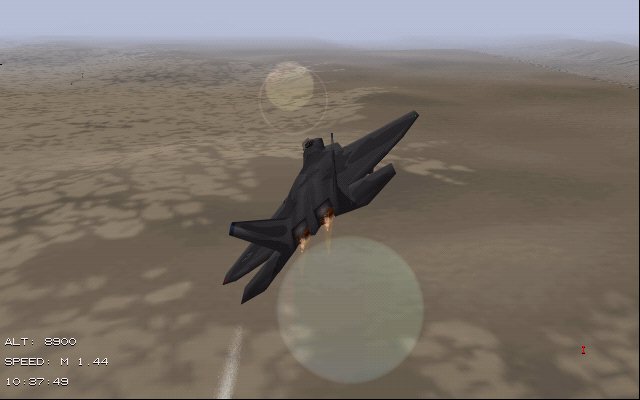
The King of '97 Returns: Why F-22 ADF is the Linux Win We Weren’t Expecting
The Bottom Line: Digital Image Design’s legendary 1997 combat flight sim, F-22: Air Dominance Fighter, is launching on Steam on February 17, 2026. This isn't just a lazy emulated port; it’s a rebuilt DirectX 9 engine optimized for 4K, 6DoF head tracking, and—crucially—flawless performance on Linux and Steam Deck. If you missed the golden age of MicroProse, this is your chance to see why we used to obsess over avionics and AWACS commands.
We’ve seen plenty of "classic" re-releases that are nothing more than a ROM wrapped in a buggy emulator. This isn't that. The team behind this revival has effectively reverse-engineered DID’s 1990s wizardry to run natively on modern hardware. For those of us who spent the late '90s trying to squeeze every frame out of a Voodoo2 card, seeing this run at a clean 4K with proper anti-aliasing feels like a fever dream.
The Technical Breakdown: Old Soul, Modern Bones
The developers haven't just dusted off the code; they’ve performed a full-scale engine transplant. By moving to a revamped DX9 codebase, they’ve bypassed the "legacy jank" that usually kills 90s sims on Windows 11. Our analysis suggests this move was specifically made to ensure compatibility with Proton and Wine, catering to the growing "Tux" gaming crowd.
| Feature | 1997 Original | 2026 Revival |
|---|---|---|
| Resolution | 320x200 / 640x480 | Native 4K Support |
| Tracking | Keyboard / Basic Joystick | Full 6DoF Head Tracking |
| Engine | Software/Glide | Revamped DX9 (Linux/Wine optimized) |
| Campaign | Static-Dynamic Hybrid | 90+ Missions (Red Sea Theater) |
| Mod Support | Minimal / Hex editing | Baked-in community toolsets |
Why This Matters for Linux and Steam Deck
The lead developer is reportedly a Fedora power user, which explains why the Wine compatibility is a priority rather than an afterthought. We’ve seen "Linux-compatible" claims before that fall apart the moment you hit a custom shader, but with playtesting happening on Fedora, the stability here is likely to be rock-solid.
The Steam Deck Reality Check: While it runs "smoothly" on Valve’s handheld, we need to be realistic about the "keyboard-clutter" factor. F-22 ADF was designed when sims used every single key on a 104-key board. Playing this on a Deck without a docked keyboard or a very aggressive Steam Input profile is going to be a steep climb. It’s playable, but expect to spend your first hour min-maxing your radial menus.
More Than Just a Cockpit: The AWACS Factor
What modern "sim-lite" games get wrong—and what DID got right—is scale. In ADF, you weren't just a lone wolf. You had the AWACS view, a god-mode perspective where you could watch the entire theater of war breathe in real-time. We believe this remains the game’s "X-factor." Being able to swap from the tactical "chess player" view to the "knight" in the cockpit at any moment is a mechanic that even modern titans like DCS or MSFS don't quite replicate with this level of accessibility.
- The Red Sea Theater: 4.5 million square kilometers of airspace across eight countries.
- SmartMuse Audio: A dynamic music system that reacts to your G-load and combat status—a feature that was decades ahead of its time.
- ACMI Replays: The original "pro-strat" tool. You can analyze your dogfights to see exactly where your energy management failed.
The Editorial Verdict
In an era of live-service bloat and "early access" sims that never actually launch, F-22: Air Dominance Fighter is a refreshing blast of competence. It’s a high-authority reminder of a time when PC games respected your intelligence and your hardware.
Is it nostalgia? Partly. But with 100+ QoL fixes and a developer who actually understands the Linux ecosystem, this is more than a trip down memory lane. It’s a blueprint for how classic PC software should be preserved. If you’ve got a flight stick gathering dust, February 17th is your excuse to clear some desk space. This is the definitive way to fly the Raptor.