
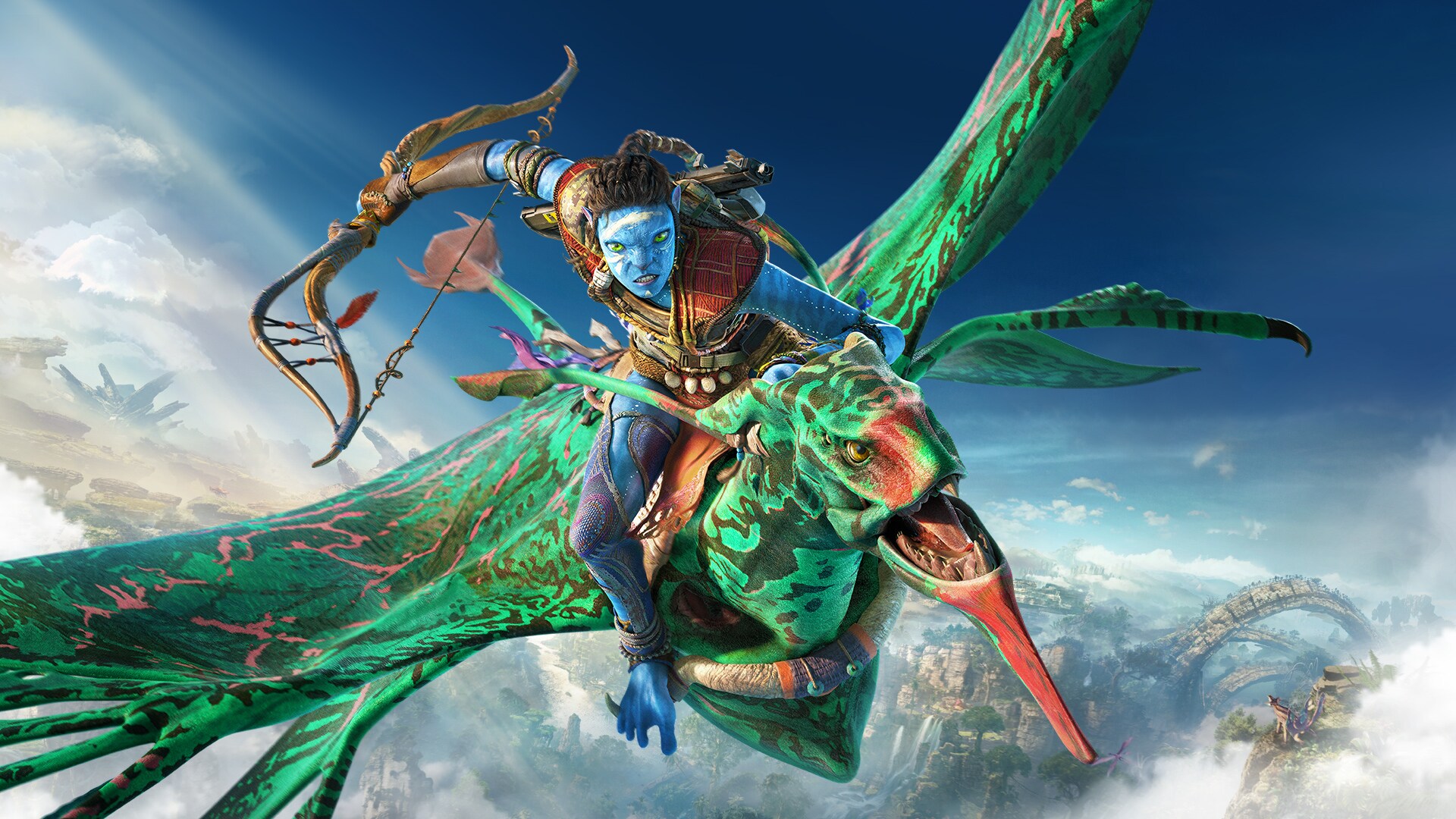
- "Avatar: The Game" (2009), a third-person shooter, launched alongside Jim Cameron's blockbuster, a full 14 years before "Frontiers of Pandora."
- This title emerged during a pivotal, pre-"imperial phase" for Ubisoft, reflecting a period of budget-constrained, Hollywood-dictated movie tie-ins.
- A standout feature was the early campaign choice to align with either the Na'vi or the corporate RDA, offering a unique narrative path typically absent in Avatar adaptations.
- Opting for the RDA transforms the experience into a "technicolour Vietnam movie," focusing on resource acquisition for corporate aims rather than direct warfare.
- Despite visible limitations—clumsy physics and less lavish animations compared to contemporaries like *Assassin's Creed II*—the game demonstrated ambition with its semi-open, "warren-like" jungle levels and freeform vehicle swapping.
- The game is not considered canon and largely faded into obscurity, its primary legacy being a historical stepping stone in Ubisoft's journey and a distant predecessor to the critically better "Frontiers of Pandora."
Unearthing Pandora's Forgotten Past: Revisiting "Avatar: The Game" (2009)
As Lead Tech Analyst here at In Game News, and a veteran gamer who’s seen more launch-day fumbles than I care to admit, we often look forward, dissecting the latest tech and upcoming titles. But sometimes, a look back offers crucial perspective. Today, we’re dusting off a relic: "Avatar: The Game"—Ubisoft's original take on Pandora, a full 14 years before "Frontiers of Pandora" entered the conversation. And let me tell you, this isn't the *Avatar* game most of you are thinking of.
A Snapshot of Ubisoft's Pre-Imperial Phase
Back in 2009, Ubisoft was on the cusp of its "imperial phase"—fresh off the groundbreaking *Far Cry 2* and *Assassin's Creed II*. Yet, "Avatar: The Game" feels like a genuine hangover from an earlier era. This was a time when licensed movie tie-ins were churned out on tight budgets, dictated by Hollywood's unforgiving deadlines. We'd seen Ubi beat the odds before, like with Michel Ancel's surprisingly solid *King Kong* adaptation. But this one? It visibly suffers from its circumstances. Ryder's animations are clearly less polished than Ezio Auditore's parkour, and Pandora's lighting, while ambitious, doesn't quite hit the spectacular highs of *Far Cry 2*'s African sun. It’s a stark reminder of where the publisher came from.
The Road Less Traveled: Embracing the RDA
What truly made "Avatar: The Game" intriguing, despite its rough edges, was a choice it presented early in the campaign. "Are you going to follow in the oversized footsteps of Jake Sully and embrace life among the na'vi? Or stick with the RDA, the corp that funded your journey here in the first place?" Our take? Given that another *Avatar* game where you play the baddies is likely never happening, we plumped for the latter. And honestly, the alternative wasn't particularly tempting. While *Frontiers of Pandora* allows na'vi players to truly become natives, Ryder's avatar was simply a very large, brightly-coloured soldier. You could mount a direhorse, sure, but when your weapons and abilities mirror your human loadout, you have to wonder what the RDA was even thinking with this program. "Just because your DNA is a one in a billion match doesn't mean you can be a princess," as Dr Monroe sardonically puts it. "Get moving, tiara."
A Technicolour Vietnam Movie
Playing on the human side, the game morphs into a vibrant, technicolour Vietnam movie. Your mission isn't to directly fight the Na'vi war, but to locate and secure "tuning crystals" to help the RDA cut off Eywa from her people. It's easy to feel like Martin Sheen venturing into the heart of darkness, surrounded by glowing flora and fauna that couldn't care less about your plight. Troops glower, airstrikes land around your head as you search for magical singing rocks. "You start growing a conscience," warns one jarhead, "and you'll end up on the dead end of a na'vi spear." Later, a commander bluntly states, "Don't start growing a brain, Ryder. If you don't have the lumps to do this, I'll find someone else." The constant pressure to ignore the moral implications and just *do the job* is palpable.
Brute-Forcing Pandora's Hostile Ecosystem
While built on *Far Cry*'s Dunia engine, this isn't an open-world sandbox in the modern sense. Its jungles are constructed like warrens, with multiple meandering paths. The ecosystem itself is relentlessly hostile: plants spew poison, thwack with vines, or explode like mines. Your flamethrower becomes your best friend, a necessary tool to brute-force your way through a natural world that despises you as much as it adores the Na'vi. You're constantly traversing the frontline, engaging in skirmishes between RDA troops and the blue folk, but it rarely feels like *your* battle; merely a choppy sea to navigate.
Ubisoft cleverly stuffs the jungle with vehicles you can hop in and out of at will. Want to pilot one of Cameron's iconic exosuits? Go for it. When a Na'vi spear punctures the fuel tank, just swap to a buggy and start running down viperwolves at inadvisably high speeds. Mastering the peculiar skillset Pandora demands, like steering a four-wheeled vehicle across a snaking tree trunk, is oddly satisfying.
Clumsy Execution, Endearing Ambition
Let's be clear: much of this is clumsily implemented. The physics modeling is limited, failing to convince you're turning a tight corner on rough terrain, let alone piloting a Scorpion gunship between floating islands. But Ubi's freeform approach to vehicle-swapping is undeniably endearing. It lends "Avatar: The Game" the feel of a solo *Battlefield* experience, albeit one populated with idiotic bots and second-rate assault rifles. As the short campaign progresses, you repeat objectives—the very definition of insanity, as a fella in *Far Cry* once said—and witness Hell's Gate leadership descend into paranoia. Scientists run "doomsday" diagnostics, attempting to trick a goddess.
Ultimately, you reach the Well of Souls. There's a light show, ominous rumbling, but the impact of the RDA's efforts remains unclear. Sigourney Weaver’s character offers a rather glib, "Eywa needed to see what we were capable of. And now she knows. Next time she'll be ready." Right. Cheers. Our take? That's lorespeak for, "This was a throwaway prequel, don't overthink it."
A Non-Canon Footnote
Unsurprisingly, "Avatar: The Game" isn't recognized as canon. Contemporary reviewers were unmoved, and Ubisoft hasn't made any effort to commemorate it. Perhaps its greatest contribution was as a stepping stone to the significantly better "Frontiers of Pandora," and as a stark reminder of the publisher's more humble origins. Though, funnily enough, Ubisoft *did* just retroactively add a third-person mode to "Frontiers of Pandora" with its new expansion. So maybe the old game got one thing right the first time.
As for "Able" Ryder, the protagonist? Given my commander's threat of a month of latrine duty if anything happened to his gunship—and the fact I crashed said gunship more than once—it's fair to assume Ryder spent the events of subsequent *Avatar* movies not clutching a machine gun, but a bottle of Toilet Duck. A fitting, non-canon end to a non-canon hero.