
L.A. Noire 15 Year Retrospective: MotionScan Technology in 2026
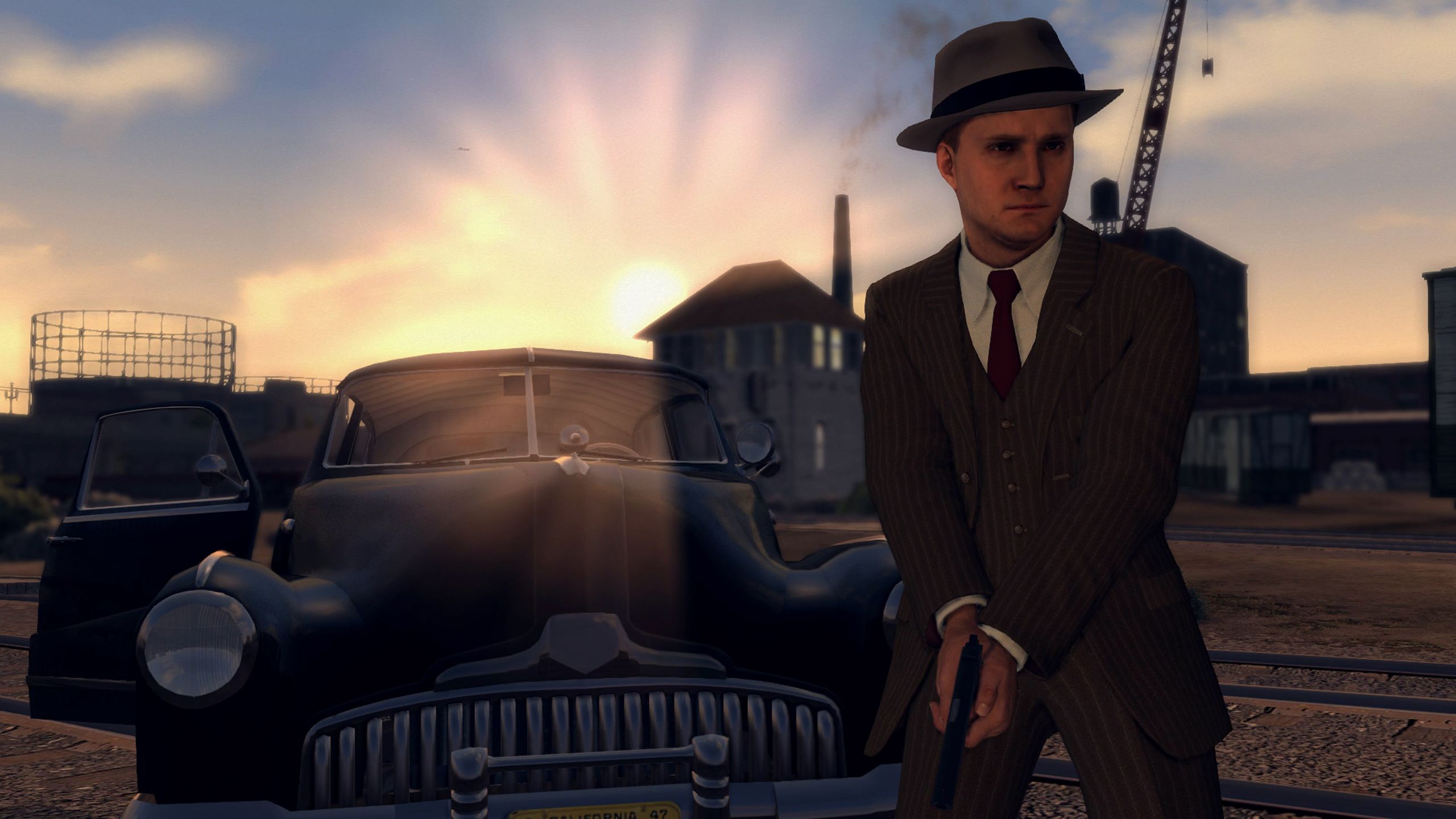
Gaming news regarding the enduring legacy of L.A. Noire remains a frequent topic of discussion in 2026, as the title marks its 15th anniversary. Developed by Team Bondi and published by Rockstar Games, this detective thriller set a high bar for narrative-driven video games upon its initial release on May 17, 2011. As we look back at the title, it is necessary to examine how the game’s unique interrogation mechanics and facial capture systems influenced the industry.
- Game: L.A. Noire
- Developer: Team Bondi
- Release Date: 2011-05-17
- Metacritic Score: 83
- Platforms: PC, Xbox One, PlayStation 4, Nintendo Switch, Xbox 360, PlayStation 3
LA Noire 15 Year Retrospective Analysis 2026
Reflecting on the title 15 years later, the production values of L.A. Noire represent a specific moment in the evolution of digital performance. When the game first arrived on the PlayStation 3 and Xbox 360, the primary draw was the promise of a murder mystery where the player acted as the judge of truth. The interrogation mechanic was built entirely around the player's ability to interpret facial cues. If a suspect darted their eyes or squinted, it provided a hint that they were withholding information or being dishonest. This system relied on the player's intuition, a departure from traditional action-heavy titles of that era.
For those interested in how historical titles shape current trends, you can read more in our retrospective analysis section. The game’s original interrogation responses—Truth, Doubt, and Lie—were later adjusted in the 2017 re-release. The “Doubt” option was replaced with “Accuse” to better represent the detective’s aggressive approach, a change that clarified the gameplay loop for many users.
Why Was LA Noire MotionScan Technology Revolutionary
The core of the game’s visual identity was MotionScan, a system created by Depth Analysis, which functioned as the sister company to Team Bondi. Unlike standard motion capture, which often focused on body movement, MotionScan was designed specifically to capture the nuances of human facial expressions. Using a rig of 32 HD cameras, the developers recorded actors to create high-fidelity 3D likenesses. This process was the video game equivalent of hand-drawn stop motion, ensuring that every twitch of an eye or shift in a lip was captured for the screen.
However, the technology came with significant logistical hurdles. Because the MotionScan data was neck-up only, the character bodies required separate animation, which occasionally led to a visual disparity between the highly realistic faces and the standard character movement. Furthermore, the sheer volume of data posed a challenge for storage. Oliver Bao, the former head of research and development for Depth Analysis, noted in archival interviews that the system collected approximately one gigabyte of data per second. To manage this, the team had to compress the footage heavily, with only 21 hours of the 75 hours captured actually making it into the final game. The total archive of footage reached 35TB, a massive amount of data for the hardware limitations of the early 2010s.
Storage and Platform Constraints
The technical requirements of the game were so demanding that the distribution methods varied significantly across platforms. The Xbox 360 version famously required three discs to accommodate the file size, which far exceeded the 8.5GB capacity of a standard double-layer DVD. PC players faced a similarly intensive installation process, requiring six DVD-ROMs to load the game onto their systems. The PlayStation 3 edition, utilizing the high-capacity Blu-ray format, was able to fit the game on a single disc. These storage constraints highlight the ambition of the project, as the developers attempted to bring cinematic realism to a medium that was still grappling with disc-based data limits.
Is LA Noire Facial Animation Still Impressive in 2026
In 2026, the question of whether the animation holds up is often answered by the clarity of the expressions. While modern titles utilize real-time engine rendering for faces, L.A. Noire’s scanned-in approach provides a distinct look that remains effective. Many players find that the micro-expressions, which were sometimes difficult to read during the initial 2011 playthroughs, are actually quite clear when viewed on modern high-definition displays. The effort to capture human performance frame-by-frame resulted in a level of detail that still stands out in the gaming history archives.
The game’s legacy is not just in its facial capture, but in its influence on how developers approach character interaction. By forcing players to look at a character’s face rather than relying on dialogue trees or UI prompts, L.A. Noire changed the expectation for narrative immersion. While Rockstar Games has not produced a sequel, the technology utilized in this project paved the way for the hyper-realistic motion capture standards that are now common in major AAA releases. The game remains a unique entry in the Rockstar catalog, blending the open-world structure of their other titles with a focused, investigative gameplay loop.
Frequently Asked Questions
Is L.A. Noire facial animation still impressive in 2026?
Yes, the frame-by-frame animation of scanned actors remains visually striking, with micro-expressions appearing even more pronounced to modern players than they did at launch.
Why was L.A. Noire MotionScan technology revolutionary?
MotionScan was revolutionary because it used 32 HD cameras to capture real-life actors' faces, creating full 3D likenesses that allowed players to read subtle emotional cues during interrogations.
Did Rockstar Games ever make a sequel to L.A. Noire?
No, Rockstar Games has not produced a direct sequel to L.A. Noire since its original release in 2011.