
How Spore Was Created: Origins of the Maxis Simulation Classic
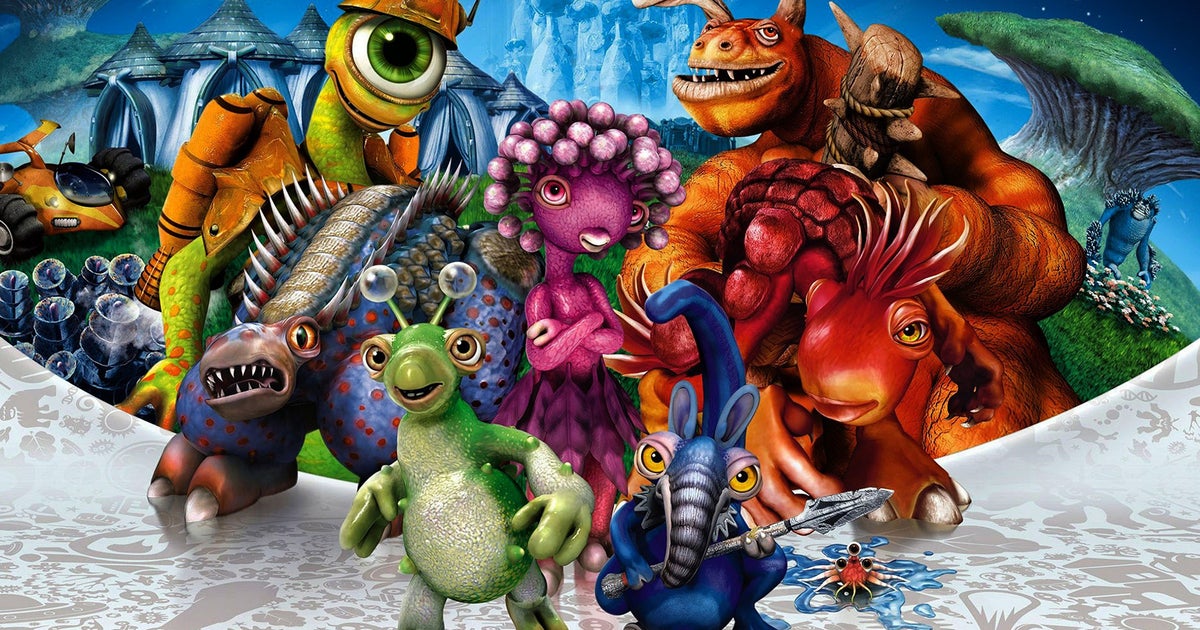
- Game: Spore
- Developer: Maxis
- Release Date: 2008-09-04
- Metacritic Score: 84
While modern titles like Minecraft, developed by Mojang for the Bedrock Edition, and the expansive world of Elden Ring: Shadow of the Erdtree define today's gaming discourse, the history of simulation games remains anchored by the unique design philosophy of Spore. Released in 2008 for PC, Spore stands as a distinct entry in the simulation genre, earning an 84 on Metacritic. Understanding how this title came to be requires looking at the unconventional inspirations that guided the team at Maxis during its creation.
Spore Game Development History and Origins
The journey of Spore began long before its 2008 launch. As we have documented here at In Game News, the project was born from a desire to create a game that spanned the entirety of existence, from a single cell to a galactic empire. The team at Maxis, under the leadership of Will Wright, spent years refining the procedural animation systems that would allow player-created creatures to move and interact with their environment in a believable way. This technical foundation was essential for the game's core loop, which relies on the player's ability to customize every aspect of their species.
Unlike many simulation games of the era, Spore was designed to be modular. The development team prioritized accessibility, ensuring that the complex biological and sociological systems were presented through an intuitive interface. This approach allowed players to build complex organisms without needing a background in biology or programming, effectively democratizing the simulation experience for a broad audience.
What Inspired the Development of Spore
The creative spark for Spore did not come from traditional gaming tropes. Instead, the developers drew heavily from physical toys and scientific media. One of the most significant influences cited by the original creators was the humble Mr. Potato Head. The team wanted to replicate the tactile satisfaction of attaching limbs and features to a base model, seeing it as the perfect metaphor for evolutionary biology. By allowing players to snap parts onto their creatures, the game turned the act of evolution into a play-based activity.
Beyond children's toys, the team looked toward the stars. The creators have noted that what cosmic documentary influenced Spore development was a specific 1970s film that focused on the sheer scale of the universe. This documentary provided a sense of perspective, moving from the microscopic level to the vastness of galaxies. This transition of scale became the structural backbone of the game, dictating the progression from the cellular stage through to the space-faring endgame.
The Role of Procedural Generation
Procedural generation was not just a technical choice for Maxis; it was a necessity. Because the game allowed for near-infinite combinations of creature parts, the team could not hand-animate every possible variation. Instead, they built a system that could dynamically calculate how a creature should walk, swim, or fly based on the placement of its limbs and the size of its body. This system ensured that even the most bizarre creations felt like living, breathing organisms within the game world.
For more on how simulation design has evolved, check out our simulation gaming news coverage.
Who Were the Original Creators of Spore
The team at Maxis consisted of industry veterans who were already well-versed in the simulation genre, having worked on previous iconic titles. Will Wright, the primary architect of the project, pushed for a design that emphasized player agency above all else. By removing rigid constraints on how a creature should look or behave, the developers allowed for a level of emergent gameplay that was rare for the time. The team focused on creating a "toybox" environment where the fun was derived from the act of creation rather than just the completion of objectives.
The collaboration between designers, programmers, and artists was centered on the concept of the "Sporepedia," a centralized database where players could share their creations. This social layer was ahead of its time, fostering a community-driven ecosystem that allowed players to populate their own galaxies with the creatures designed by others. This sense of shared discovery remains a core component of the game's lasting appeal on PC.
Technical Challenges and Solutions
Developing a game that scaled from a petri dish to the entire galaxy presented significant technical hurdles. The team had to optimize the engine to handle the transition between different gameplay modes—Cell, Creature, Tribal, Civilization, and Space—without breaking the player's immersion. Each stage required distinct mechanics, yet they all had to feel like part of a cohesive whole. The success of this integration is reflected in the game's enduring Metacritic score of 84, a testament to the technical coordination required to pull off such an ambitious scope.
You can find more analysis of classic PC titles in our retro gaming archive.
Frequently Asked Questions
In our ongoing coverage of industry history, we often receive questions about the origins of classic simulation titles. Here are the most common inquiries regarding the development of Spore.
How was the game Spore created by Maxis?
Spore was created by Maxis using procedural generation techniques, allowing players to design creatures that evolve through various stages of life.
What inspired the development of Spore?
The development of Spore was inspired by a mix of simple children's toys like Mr. Potato Head and a 1970s cosmic documentary that visualized the scale of the universe.
Who were the original creators of Spore?
Spore was developed by the studio Maxis, led by creative visionary Will Wright, who sought to simulate the entire history of life and civilization.