
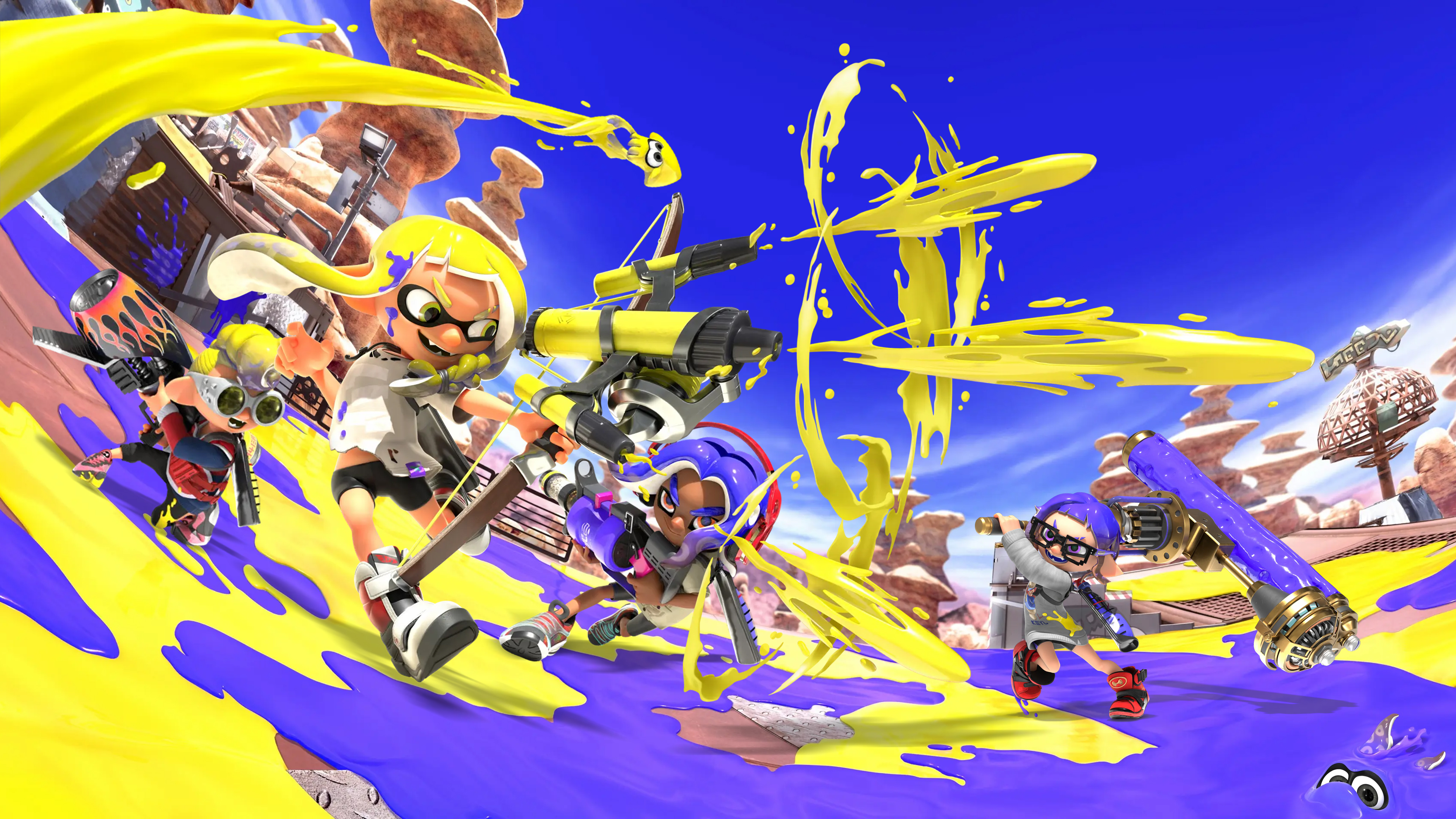
Nintendo has once again proven its knack for surprise, but this time, our reaction at In Game News is less about delight and more about a furrowed brow. This week's unexpected 11.0.0 patch for Splatoon 3, arriving well over three years post-launch, introduces changes that fundamentally challenge the game's core identity. While we appreciate ongoing support for a live-service title, the eleventh-hour addition of visible health bars and the "Aura Flow" feature feels less like a quality-of-life update and more like a live-fire experiment with the very soul of the franchise.
The Health Bar Conundrum: A Question of Identity
Let's address the giant Kraken in the room: health bars. Nintendo's decision to implement explicit health bars for both opponents and teammates, allowing players to "see an opponent's remaining health when they've been hit," is a move that has left many, including ourselves, scratching our heads. For over a decade and across three main titles, Splatoon pioneered a brilliantly diegetic damage system:
- Unique Visuals: Damage was intuitively represented by the amount of ink splattering an opponent. The more ink, the closer they were to being splatted.
- Low TTK (Time-To-Kill): With most weapons splatting foes in 3-4 hits, combat has always been fast and fluid, often relying on quick reads and positioning rather than precise health tracking.
Nintendo states this change helps players "support your allies or chase down weakened foes." However, our analysis suggests this is a solution to a problem Splatoon never truly had, and in doing so, it risks diluting the unique visual language that made the game special. As one fan aptly put it, the original ink splattering was the health bar. The visual feedback was organic, embedded in the world, not an overlaid UI element. Furthermore, community sentiment has been vocal, with many decrying the health bar's aesthetics and, controversially, the inability to toggle it off. This isn't just a minor tweak; it's a significant alteration to the game's immediate feedback loop and visual philosophy.
Aura Flow: Shifting the Meta Towards Aggression
Alongside the health bars, Patch 11.0.0 also introduced "Aura Flow." This new feature rewards competitive splatting with an area-of-effect ink burst and a 30-second stat buff to speed and other attributes. On the surface, it sounds like a classic buff for high-skill aggressive play. But in a game fundamentally built on territory control through inking, we foresee this having profound implications for the meta:
- Incentivizes Combat Over Control: Splatoon matches are a delicate balance of combat and inking. While splatting enemies clears paths and creates opportunities, the core objective remains covering the map. Aura Flow explicitly rewards multi-splats, potentially pushing players to prioritize enemy engagements over strategic inking.
- Amplified Snowball Effect: Skilled players who can chain splats will now not only clear the field but also gain significant buffs, making them even harder to counter. This could lead to more lopsided matches, where a dominant team can snowball leads even faster.
This isn't necessarily a "nerf" to inking, but it's a clear "buff" to aggressive combat, aligning with observations that Splatoon 3's map design already pushed players into more frequent engagements. We believe this further entrenches a combat-heavy playstyle, which may alienate players who gravitated to Splatoon for its unique blend of shooter mechanics and objective-based turf war.
Why Now? The "Splatoon 4 Test Lab" Theory
The biggest question hanging over these changes is not "what," but "why now?" Implementing such fundamental gameplay shifts years after a game's release, especially for a series with a well-established design philosophy, is highly unusual. Our experience in the gaming industry leads us to a compelling, if speculative, conclusion: Splatoon 3 may be serving as a live test environment for future iterations.
We've seen Nintendo use existing titles to test features for upcoming releases before. The belated addition of online multiplayer to Super Mario Party, for instance, was widely seen as a trial run for Superstars. It stands to reason that with a Switch 2 single-player spin-off, Splatoon Raiders, on the horizon, and Splatoon 4 an inevitable future title, Nintendo could be using Splatoon 3 to gather real-world player data on these new mechanics. Are they gauging player reaction to more explicit health information? Are they experimenting with features that further reward aggressive play in preparation for a potentially more combat-focused sequel?
While this might explain the timing, it does little to assuage the concerns of the current player base. To use a beloved, established title as a testing ground for potentially radical design shifts, without the option to revert or customize, feels like a misstep. Our trust in Nintendo's design prowess is high, but these changes create a significant fork in the road for the Splatoon franchise. We’ll be watching closely to see if these eleventh-hour additions are fleeting experiments or the harbinger of a new direction for our favorite ink-slinging series.