
| Game Title | Developer | Demo Availability | Platforms |
|---|---|---|---|
| Battleplan | Foolish Mortals Games Inc. | Steam Next Fest (Feb 23 - Mar 2) | PC (Steam) |
Alright, gamers, listen up. As your Lead Tech Analyst here at In Game News, and a veteran of countless digital campaigns, I've had my eyes on Battleplan since its announcement. And after getting hands-on with the demo during Steam Next Fest, I can tell you this isn't just another RTS or grand strategy title. This Canadian outfit, Foolish Mortals Games Inc., which previously gave us 2020's Radio General, is clearly upping their game with a strategic experience that truly scratches an itch most strategy titles simply miss.
The Map Room: Where High Stakes Meet High Strategy
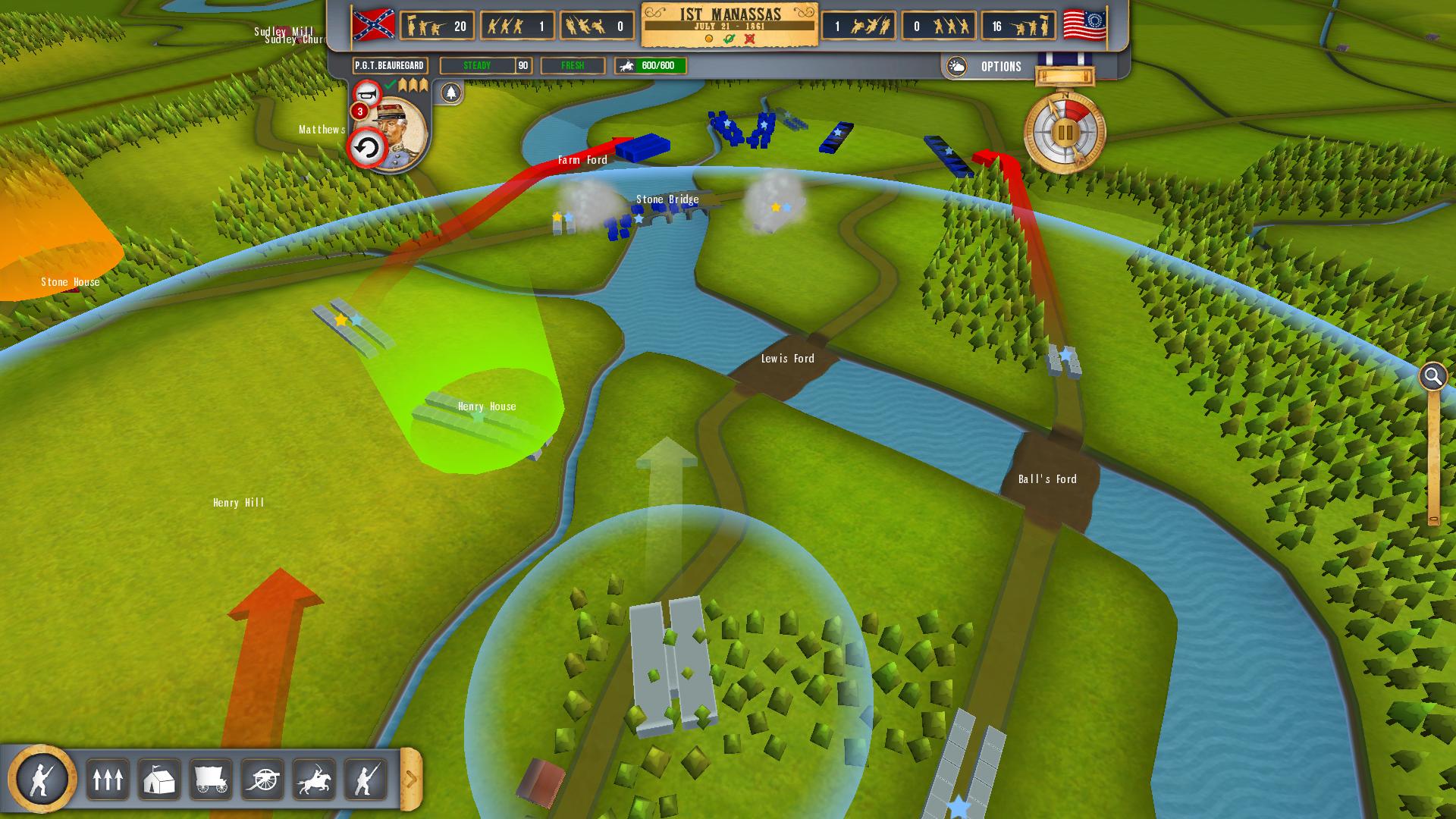
The year is 1944. Operations Overlord and Bagration are underway, and Battleplan plunges you directly into the nerve center of the Allied war effort, post-Normandy landings. Your mission? Not to micromanage individual platoons, but to operate at the echelon of a true general. We're talking about drawing arrows on a map, setting the grand strategic vision for multiple divisions across operational areas so vast that every success or failure has a tangible, war-altering impact. The source material is clear: do it right, and the war could be over by Christmas; botch it, and the human cost is catastrophic. This isn't just compelling; it's a level of immersion in strategic command we rarely see.
We've often lamented how many strategy games force a choice between discrete unit displays or purely abstract map control. Battleplan tries to combine these, and for the most part, it nails the assignment, though we've observed some of those classic scope creep struggles.
Boot Camp & The Art of Command
The demo's campaign starts with D-Day dress rehearsals, and we found the scaling surprisingly beginner-friendly. Rather than overwhelming players with thirty orders at once, the game gradually introduces each command, building you up to full operational capability. This is crucial because Battleplan isn't about live-action reactions; it's about meticulous planning. At the start of each day, you enter a dedicated planning phase. You draw your arrows, set your objectives, and issue your commands. After that, it's out of your hands. You watch your plan unfold, a true testament to the "formulate and let execute" philosophy of higher command. Sure, you can set triggers or timed actions, but for the most part, once the day begins, your fate is sealed by your earlier decisions. And for those moments when the pressure gets too much? There's a button to have your officers craft complex plans for you. The coward's way out, I say, but useful for newcomers.
A nice touch for replayability is the choice between historical units or building your own army based on supply points. While custom armies offer continuity, we're partial to the historical mode. It forces you to work with what's available, mirroring the harsh realities of wartime logistics rather than just min-maxing your dream force.
Trial by Fire: Creative Carnage
Missions often appear deceptively simple: capture this, defend that, manage casualties. But the beauty, and perhaps the genius, of Battleplan lies in its utter disregard for *how* you achieve those objectives. The maps are massive, offering immense creative freedom. Take the battle for Caen: hold Bayeux, then capture the "virtual fortress" of Caen. Do you pull all forces back for a defensive siege? Zerg rush Caen head-on, risking attrition? Or opt for a more nuanced approach, shaping operations to isolate and weaken the enemy before the main push? The game empowers you to experiment. Our own playthrough saw us digging in the 50th Infantry Division defensively around Bayeux, while other units forced the Orne River and launched drives south to pin German forces in Caen, all while keeping our sole armored division as a mobile reserve for counterattacks. What sounds like a busy strategic ballet in text translates into elegant arrows and lines on the map—exactly how a general would view it.
The Debrief: Hits, Misses, and Future Potential
Battles themselves flow smoothly in Battleplan. Despite some initial interface bloat in the default view, the core experience is streamlined. However, the moments between missions reveal some friction points. The army builder, while functional, feels standard; a dedicated replenishment system for losses would elevate it. The officer system, where each gentleman has a personality and trait affecting units, is solid. But the tacked-on RPG skill tree for officers? That feels foreign, an unnecessary layer of complexity in what is otherwise a refreshingly direct gameplay loop. You can ignore it, but it's an occasional "overcomplicated bit" that betrays the game's otherwise elegant simplicity.
We did notice a few balance quirks: artillery feels underwhelming, and aircraft are decidedly meek. However, these are minor quibbles in the face of what Battleplan gets fundamentally right: the core mechanics of infantry taking and holding ground are executed better than most existing games at this scale.
The fact that no two missions play out the same is a massive win for replay value. This isn't a title you'll play once and shelve. This game is bound to leave its mark once the developers finish polishing it.
If you have even a passing interest in strategy games or military history, and you've been craving a title that puts you squarely in the map room rather than in the foxhole, the Battleplan demo is a must-play during this Steam Next Fest. Go try it, general. Your war awaits.