
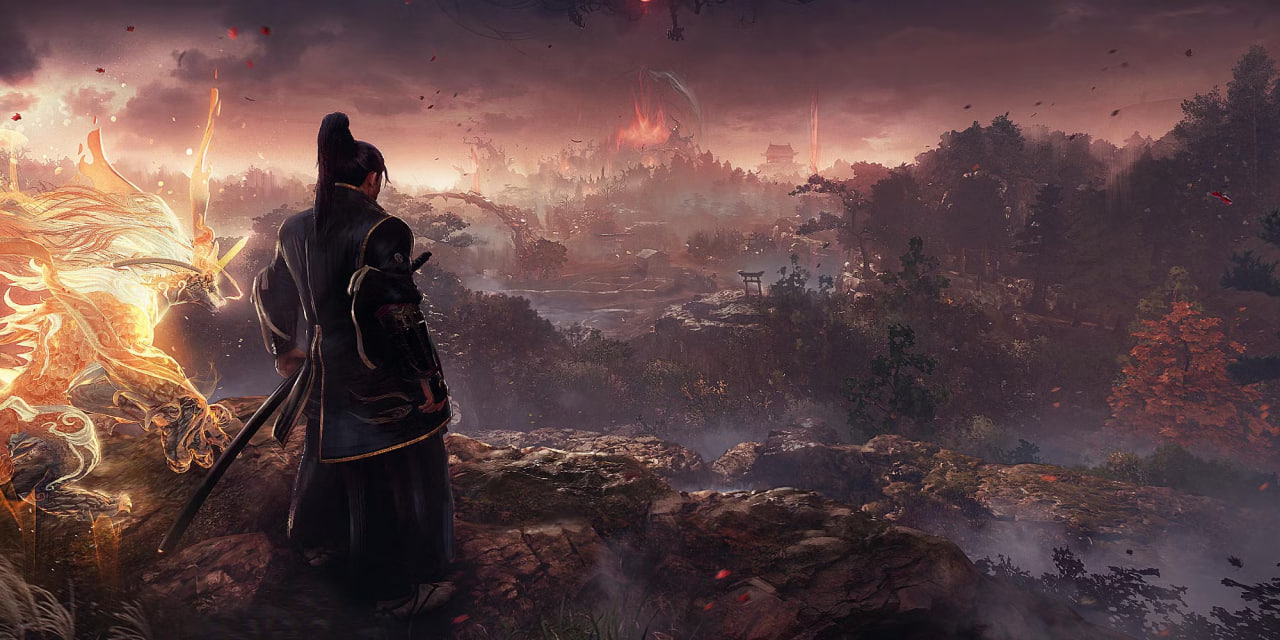
Nioh 3: Team Ninja's Masterpiece Challenges the Soulslike Crown
In Game News has spent significant time in Nioh 3, and our verdict is clear: Team Ninja has not only delivered the definitive evolution of its action-RPG formula but has also set a new benchmark for the soulslike genre. This isn't just a great sequel; it’s a confident, open-world powerhouse that takes direct aim at FromSoftware’s throne, and in many respects, lands a critical blow. We believe Nioh 3 will redefine expectations for what an action-forward soulslike can be, and our analysis suggests it might just be the new king of the hill.
Essential Intel: Nioh 3 at a Glance
| Detail | Specification |
|---|---|
| What is it? | An open-world soulslike overflowing with samurai, ninjas, and demons. |
| Release Date | February 6, 2026 |
| Price | $70 / £65 |
| Developer | Team Ninja, Koei Tecmo Games |
| Publisher | Koei Tecmo |
| Reviewed On | Ryzen 7 7700X, RTX 4080, 64GB RAM |
| Steam Deck | TBA |
Combat: A Skill Ceiling Soaring Beyond Expectation
For years, we've debated the Mount Rushmore of soulslikes, and our consistent gripe has been the omission of Nioh 2. Despite its minor flaws—the sometimes obtuse mechanics and frustrating map recycling—its combat system stood a head above the competition. Nioh 3 not only preserves that core combat excellence but elevates it to an entirely new level.
Team Ninja wisely refused to fix what wasn't broken. The signature **action-forward combat** remains, offering 14 distinct melee weapon types, each boasting multiple stances and deeply customizable skill trees. This granular approach to weapon mastery remains a critical differentiator, providing a depth of engagement that even Elden Ring’s wider array of unique weapons can't match. We appreciate the ability to **respec builds for free** at any time, a crucial quality-of-life improvement that encourages experimentation and min-maxing without punitive costs. It’s a smart move that ensures players can always find something new to explore in the combat sandbox.
The Game-Changer: Style Shift
The most significant shake-up to Nioh 3's combat, and arguably its greatest innovation, is the introduction of **Style Shift**. This isn't just a new mechanic; it's a fundamental reimagining of how players engage with every encounter. Style Shift divides combat into two distinct halves:
- Samurai Style: The classic Nioh experience, featuring three weapon stances and the vital "ki pulse" for stamina management. This is where your melee mastery truly shines.
- Ninja Style: A swift, agile approach focused on dodging, aerial combos, and, crucially, all the ninjutsu abilities from previous titles.
The immediate, button-press swap between these styles is a marvel of design. While it presents a steeper learning curve initially, particularly for purists, our experience indicates it rapidly becomes second nature. Boss encounters are ingeniously designed around this duality, demanding players seamlessly transition between deflect parries in Samurai style and evasive maneuvers or jutsu in Ninja style. This dynamic system amps the game's already blistering pace to eleven, creating a rhythm-action flow that feels miles removed from the more deliberate combat of other soulslikes. The satisfaction derived from reading the 'Matrix code' of a boss's attack patterns and fluidly shifting styles to counter them is, frankly, unmatched.
The Open World: A Bold New Frontier
Team Ninja has clearly been taking notes from FromSoftware's recent successes, and the biggest revelation for Nioh 3 is its conversion to an **open-world structure**. This isn't a true interconnected world like Elden Ring, but rather four expansive, visually distinct, and independent maps. This design choice directly addresses Nioh 2's most glaring flaw: the repetitive use of smaller, recycled locations for side content. Our analysis finds this a massive improvement, transforming what felt like a technical limitation in Nioh 2 into a natural expansion of the game’s scope.
Content Density: A Double-Edged Katana
While the new open world offers fantastic exploration, we must temper our praise with a note of caution regarding **content density**. The maps are absolutely packed with collectibles and activities: kodamas, scampusses, sudamas, jizo statues, hot springs, chijikos, enemy bases, and crucibles. For the first map, this abundance is engaging. However, as the game progresses, it risks becoming overwhelming, verging on the "Ubisoft-esque excesses" of cramming every inch of a map with 'stuff.' While it contributes to the game's impressive 100-hour completion time, some of this feels like padding rather than meaningful engagement.
Aesthetically, Nioh 3’s world-building embraces an intentionally ridiculous retelling of Japanese history mixed with horror folklore, a stark contrast to FromSoftware’s subtle, environmental storytelling. While it doesn't achieve Elden Ring's narrative depth, the **art design for bosses and weapons** is genuinely outstanding, matching FromSoftware's unique brand of "freak" and often surpassing its graphical fidelity. The visual spectacle alone is a significant draw.
Performance and Presentation
On our high-end review rig (Ryzen 7 7700X, RTX 4080, 64GB RAM), Nioh 3 ran near-flawlessly at 240fps with max settings. Frame drops were almost non-existent. However, it's crucial to note that other team members reported more choppy results on different hardware. Players should be prepared for potential performance variances at launch, though we anticipate typical post-release patches will iron out these kinks.
The Boss Gauntlet: Hall of Fame Status
If there’s one area where Nioh 3 truly shines and plants its flag, it’s the **boss design**. The game features a huge variety of enemies, with even common fodder surprising us with new movesets and elemental attacks. But the bosses? They are, without exaggeration, some of the most challenging and satisfying encounters in soulslike history. We were never frustrated, only motivated. The sheer inventiveness of their designs and the fluidity of Nioh 3's combat mechanics made every defeat a learning opportunity, not a roadblock.
Our favorite, a secret boss we can’t spoil, boasts stylishly bizarre, never-ending combos that demand Sekiro-levels of parry timing and adaptation. Overcoming it was an endurance test, but the raw satisfaction of finally emerging victorious was some of the purest joy we've felt in the genre in years. This is where Team Ninja's commitment to action-first design pays off in spades, solidifying Nioh 3's place among the elite.
The Final Verdict: A New Heir Apparent
Nioh 3 is not merely a sequel; it is the realization of Team Ninja’s vision for an unparalleled action-soulslike experience. The refinements to existing mechanics, the audacious introduction of Style Shift, and the ambitious embrace of an open-world structure address past criticisms while simultaneously pushing the genre forward. This isn't just our new favorite soulslike; it's a confident, polished, and brutally fun title that dares to challenge the very definition of genre supremacy. FromSoftware, consider this Team Ninja's mic drop. It's time for them to copy *our* homework.