
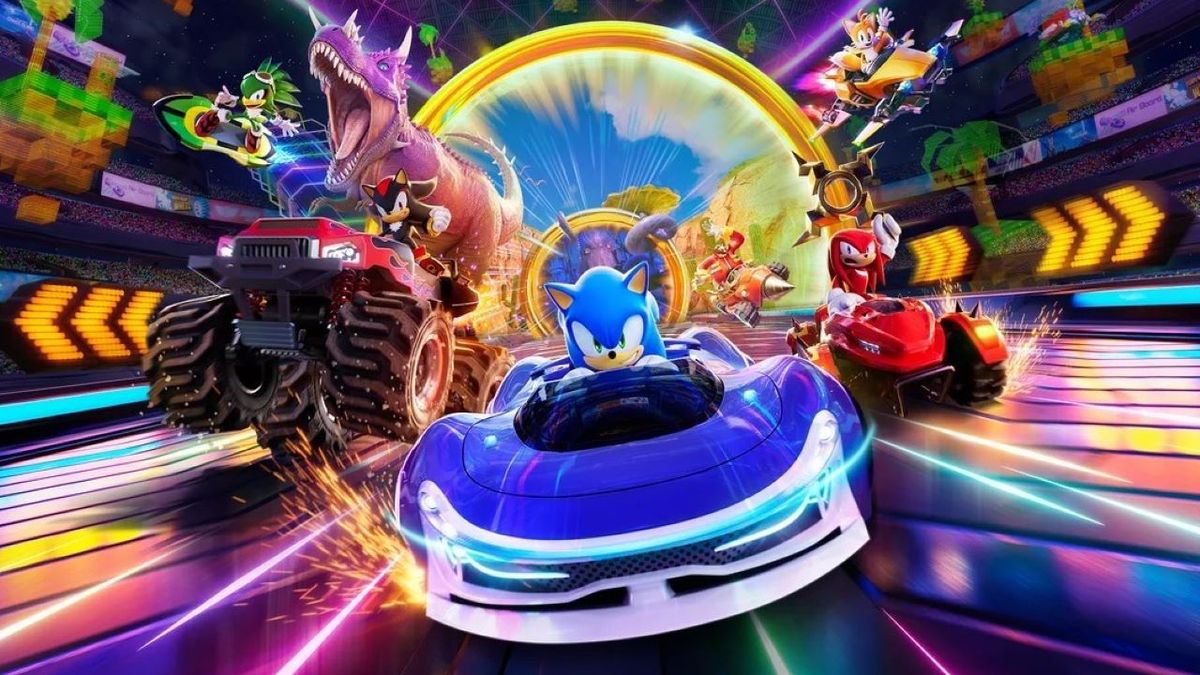
We've always kept a keen eye on the pulse of the industry, and SEGA's recent revelations regarding Sonic Racing: CrossWorlds are a prime example of ambition colliding with market realities. While hitting 1 million units sold by November 2025 is a commendable feat for any title, SEGA's own admission that "initial performance did not meet our expectations" clearly signals a miss on internal targets. This isn't just a slight deviation; it's a stark indicator that their kart racer, despite its polish, is facing an uphill battle in a brutally competitive genre.
For a publisher to openly state that a million sales don't cut it speaks volumes about their initial projections. It tells us that SEGA had significantly higher hopes for CrossWorlds, perhaps aiming for numbers that frankly, few outside of Nintendo ever achieve in this space. This isn't a surprise to seasoned observers; the kart racing market has long been dominated by a singular titan, a reality many publishers have learned the hard way over the decades.
The Mario Kart Shadow
The elephant in the room, of course, is Mario Kart World. Its staggering 9.5 million copies sold by last September dwarfs CrossWorlds' performance. This isn't merely competition; it's a market monopoly, and SEGA's attempt to carve out a significant slice of that pie was always going to be an immense challenge. One million units is a decent launch for many games, but placed against Mario Kart's juggernaut status, it highlights the immense chasm SEGA needs to bridge.
The Live-Service Gamble
SEGA's strategy to hit its revised target of "approximately another 1 million units within this fiscal year" (by March 2026) hinges entirely on sustained post-launch support. We've seen this play out before: publishers attempting to bolster sales and player retention through a steady drip of content. CrossWorlds has already implemented this, offering free characters and several premium DLC packs featuring other brands.
Here’s a snapshot of their content strategy:
- Launch (September previous year): Base game with initial roster.
- Ongoing Support: Multiple free character updates.
- Premium DLC: Several packs already released, adding characters, cars, and tracks from other brands.
- Upcoming DLC: Introducing Nickelodeon's Teenage Mutant Ninja Turtles and Avatar properties.
While the inclusion of popular IP like TMNT and Avatar is a smart move, leveraging external brands to push sales is often a signal that the core game's momentum didn't carry as far as hoped. This live-service model, especially when trying to reignite interest after an underperformance, requires significant ongoing investment and a sustained player base, which is notoriously difficult to cultivate when initial buzz fades.
Our Take: An Uphill Battle Continues
We believe that hitting another million units by March 2026 is an ambitious, perhaps even optimistic, target given the initial sales trajectory and the competitive landscape. Continuous DLC is a necessary evil in today's market for many titles, but it's rarely a magic bullet for a game that missed its mark out of the gate. For CrossWorlds, the question isn't just about adding new content; it's about whether that content can truly reignite player engagement and attract new players in a genre where one king rules supreme.
Ultimately, while SEGA's commitment to supporting CrossWorlds is clear, our analysis suggests they'll need more than just a few high-profile crossovers to truly move the needle. The race is far from over for Sonic Racing: CrossWorlds, but reaching that 2 million mark will be a testament to aggressive marketing and truly compelling content, rather than initial momentum.