
Why Early 2000s Games Mastered Water: A 2026 Technical Retrospective
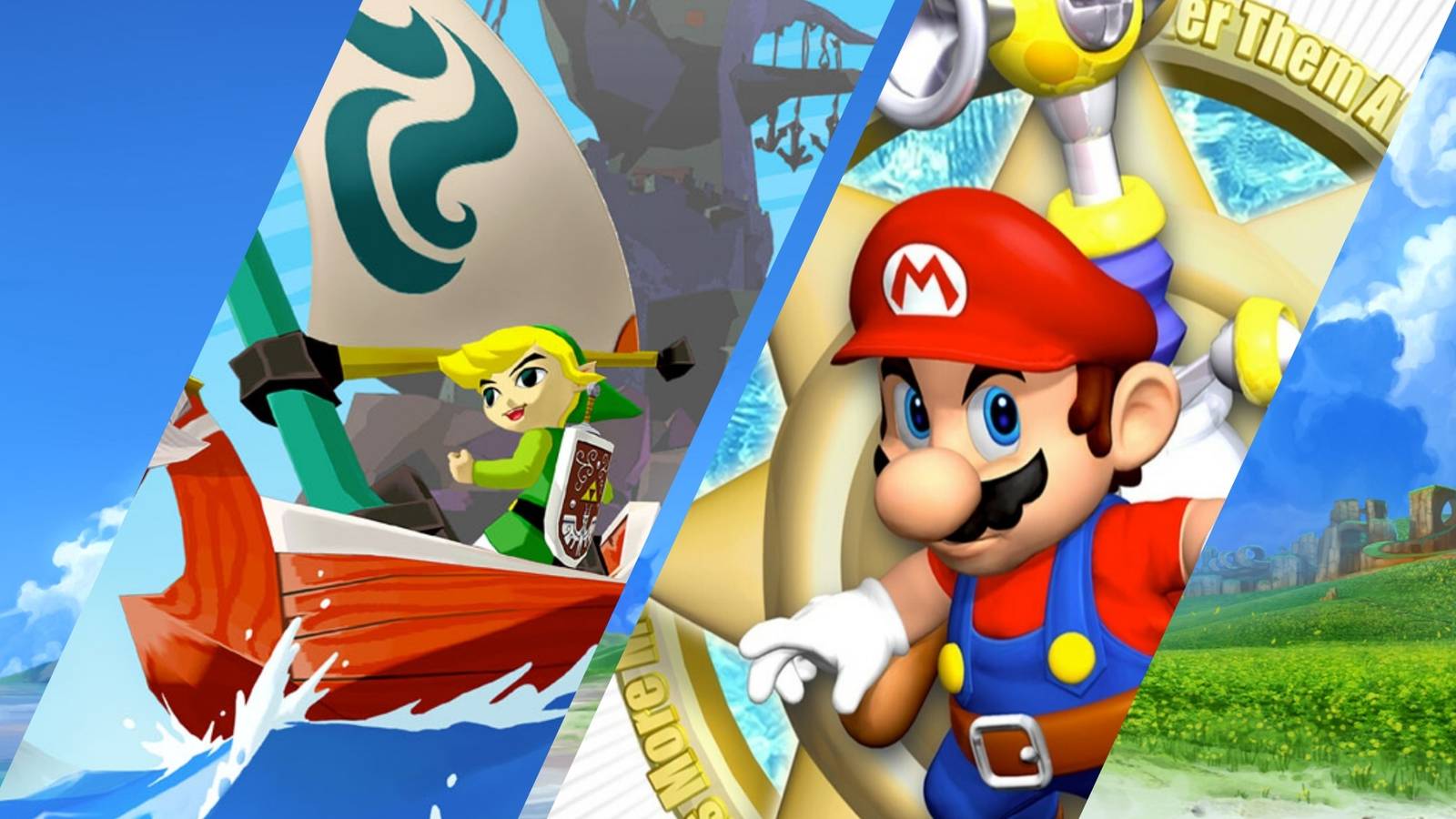
- Primary Platforms: PlayStation 2, GameCube
- Key Era: 2001–2004
- Technical Focus: Shader tricks and polygon optimization
- Industry Context: Hardware constraint management
Esports professionals and modern gaming fans often look back at the early 2000s to understand the roots of visual fidelity, noting how titles from FaZe Clan or OpTic Gaming's historical interest in competitive shooters mirror the design choices found in classics from that era. Much like the competitive maps of Sapphire Shores, the prevalence of water in early 2000s titles was not merely an aesthetic choice but a calculated technical necessity. By utilizing specific shader tricks, developers on the PlayStation 2 and GameCube were able to optimize their rendering pipelines while delivering high-quality visual experiences.
The Economic Logic of Water Rendering
During the early 2000s, developers faced strict hardware limitations regarding how many polygons could be rendered on screen at once. Water became one of the most efficient ways to manage these constraints. A water plane is geometrically simple, usually consisting of a flat surface with basic vertex animation to simulate movement. Because the surface is flat, it requires very little processing power compared to complex landmasses or urban environments.
What made these surfaces appear sophisticated to players in 2002 was the application of specialized textures and light interactions. By focusing on specular highlights and light caustics, developers could create the illusion of a fully simulated environment. This approach allowed studios to allocate their limited polygon budget to other, more interactive parts of the game, effectively masking the technical ceilings of the era.
Hardware Constraints and the Flipper GPU
The hardware architecture of the time dictated how water was implemented. The PlayStation 2, powered by the Emotion Engine, relied heavily on clever shader programming to achieve its desired look. Meanwhile, the Nintendo GameCube, utilizing the Flipper GPU, possessed a distinct advantage in texture bandwidth. This hardware feature allowed the GameCube to handle multi-layered water surfaces with greater ease than its contemporaries.
For a deeper look into how these hardware limitations shaped design, see our hardware history coverage. The ability to layer textures meant that water could look deeper, more reflective, and more responsive to light without requiring a massive increase in the number of polygons rendered. This technical efficiency became a hallmark of the generation.
Solving the Draw Distance Problem
Beyond the aesthetic appeal, water served a functional purpose: it acted as a natural boundary. Draw distance was a significant hurdle on both the PlayStation 2 and GameCube. When designing land-based environments, developers often struggled with "pop-in," where trees or buildings would suddenly appear as the player moved through the world. This issue was difficult to disguise without using heavy fog or dense foliage.
Water provided a elegant solution to this problem. By placing a player on an island or a coastal town, developers could use the horizon line as a natural render boundary. Because the ocean is effectively a flat, repeating texture, it does not suffer from the same pop-in issues as complex terrain. This design choice allowed for a seamless, expansive feel that would have been impossible to achieve with land-based geometry at the time.
Comparison of Rendering Strategies
| Technique | Benefit |
|---|---|
| Vertex Animation | Low polygon cost for movement |
| Specular Highlights | Visual depth without extra geometry |
| Horizon Masking | Hides draw distance limitations |
The Legacy of 2000s Water Design
As we analyze the Sunshine game water graphics in 2026, it is clear that the techniques used in the early 2000s were foundational. The industry learned that visual richness is not always about the raw number of polygons on screen, but about how light interacts with the surfaces that are present. For more on how these design philosophies have evolved, check out our game design archive.
While modern hardware can simulate water with high-fidelity physics and ray-traced reflections, the core principle remains the same: efficient rendering is the key to a stable and immersive experience. The early 2000s proved that with the right shader tricks, even the most constrained hardware could create worlds that felt vast, deep, and visually compelling.
Frequently Asked Questions
Why did early 2000s games feature so much water?
Water was used as a cost-effective design tool because it allowed developers to create visually impressive environments without exhausting limited polygon budgets.
How did PS2 hardware handle water rendering?
The PlayStation 2's Emotion Engine utilized shader work and texture trickery to simulate reflections and refractions on geometrically simple, flat water planes.
What is the history of water shaders in gaming?
In the early 2000s, water shaders became a standard method for developers to enhance visual fidelity through specular highlights and light caustics on flat surfaces.
Starship Troopers: Ultimate Bug War Review (2026) for Nintendo Switch 2Action
Hell Let Loose: Vietnam Announced as New 40v40 Combat Experience for ...Action
Deep Rock Galactic: Survivor Endless Mode and Expansion Coming in 2026Action
Clover Origins Tier List 2026: Best Characters and Grimoire Rankings