
Duke University’s Argus Robot: Advancing Robotics Tech in 2026
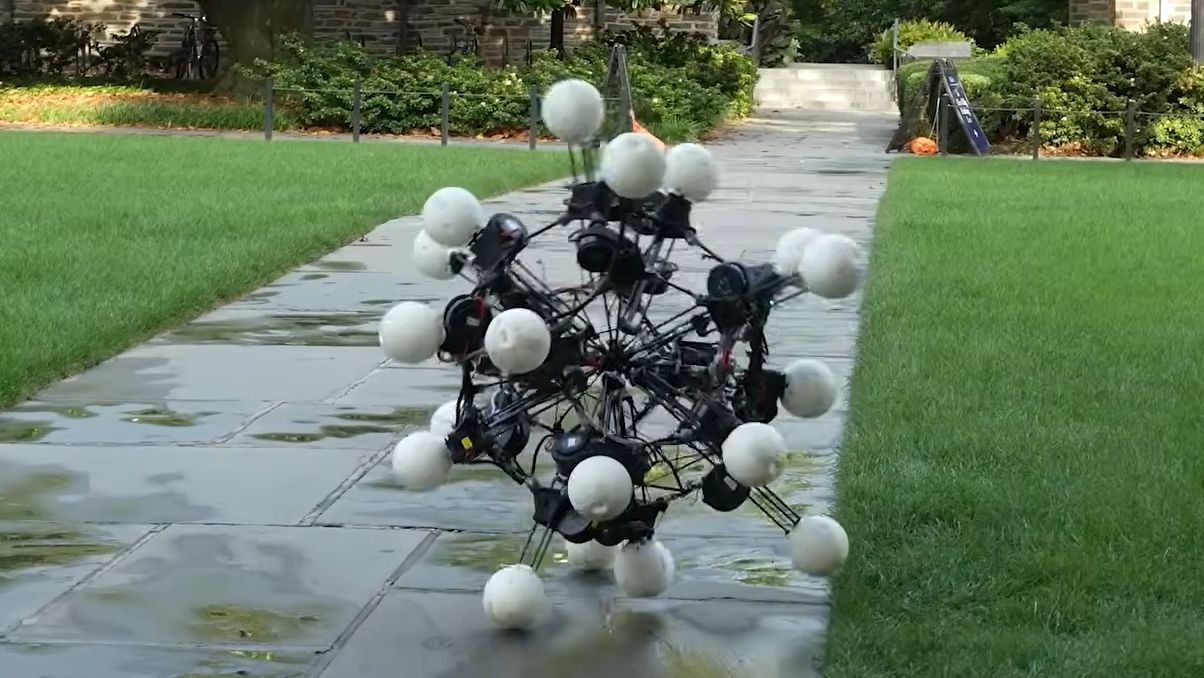
- Project: Argus Robot
- Developer: General Robotics Lab at Duke University
- Primary Focus: Dynamic symmetry in robotics
- Key Capability: Multi-terrain traversal and wall climbing
Gaming news and updates regarding advancements in robotics often intersect with the engineering principles seen in modern Video Games, and the latest project from the General Robotics Lab at Duke University provides a clear example of this crossover. The Argus robot, a series of spherical machines, utilizes specialized design principles to navigate complex environments, offering a look at how mechanical movement can be optimized for both efficiency and agility.
Understanding the Argus Robotics Project
The Argus project focuses on a specific family of spherical robots created to explore the impact of increasing dynamic symmetry. According to the research team at Duke University, dynamic symmetry is defined as the uniformity of a robot’s attainable center-of-mass accelerations. By prioritizing this uniformity, the developers have created a machine that maintains stability while moving across varying surfaces. This approach mirrors the technical innovations often discussed in our hardware coverage, where efficiency is prioritized to ensure performance consistency.
Design and Mechanical Functionality
The physical design of the Argus robot is characterized by its multiple expandable legs. These legs are equipped with cameras that allow the machine to track its trajectory effectively regardless of the terrain. The movement pattern is distinct; the robot extends its arms rapidly, a motion that resembles the expansion of a Hoberman sphere. This mechanism allows the robot to move across floor surfaces and climb vertical walls with a high degree of success.
The scientific paper associated with this project highlights that the integration of dynamic symmetry provides a pathway toward agility and multifunctionality. By ensuring the robot is balanced from its initial design phase, the researchers have created a platform capable of operating in both terrestrial and extraterrestrial environments. The ability to maintain trajectory tracking in uncertain conditions is a primary goal of the Argus design, ensuring that the robot remains on its intended path even when faced with uneven surfaces.
The Role of Symmetry in Robotic Performance
In the context of engineering, symmetry in morphology—the shape of the robot—is often insufficient for high-level performance. The Duke University team argues that symmetry must also be applied to the robot’s attainable dynamics. This means that as the robot moves, its ability to accelerate its center of mass should remain consistent in all directions. When these two forms of symmetry are combined, the resulting machine displays improved resiliency and energy efficiency.
For those tracking the intersection of Gaming News and robotics, the Argus project serves as a practical demonstration of how software and hardware can work in tandem to solve navigation problems. The robot’s bumbling yet effective gait is a byproduct of its mechanical constraints being optimized for specific outcomes, such as climbing and stability. This level of technical detail is often what separates high-performance systems from standard prototypes.
Comparison of Robotic Movement Strategies
To understand the Argus robot's performance, it is helpful to look at how different robotic movement strategies compare in terms of task success and efficiency:
| Strategy | Primary Benefit | Application |
|---|---|---|
| Dynamic Symmetry | Consistent trajectory tracking | Uncertain terrain traversal |
| Morphological Symmetry | Structural balance | Stationary or simple environments |
| Asymmetric Design | Specialized, non-uniform tasks | Fixed-path robotics |
Broader Implications for Future Tech
The findings from the Duke University General Robotics Lab suggest that the principles applied to the Argus family could be scaled to more complex systems. As we continue to follow these developments at In Game News, it is clear that the focus on energy efficiency and robustness is a recurring theme in modern engineering. By simplifying the variables involved in movement, researchers can create machines that are not only more capable but also more predictable in their behavior.
The Argus robot’s ability to traverse diverse floor plains while maintaining its path suggests that the future of robotics may rely on these types of symmetrical, expandable designs. Whether these machines are used for exploration or other tasks, the core principles of dynamic symmetry provide a foundation for future iterations. We will continue to monitor the progress of these studies to see how they influence the broader field of robotics and potential applications in future interactive media and simulation technology.
Frequently Asked Questions
The following questions address common inquiries regarding the Argus robotics project and its technical specifications as reported by the research team at Duke University.
- What is the Argus robot?
Argus is a family of spherical robots developed by the General Robotics Lab at Duke University designed to test the effects of dynamic symmetry in movement. - How does the Argus robot move?
The robot utilizes multiple expandable legs that jut out rapidly to traverse various floor plains and climb walls, similar to the movement of a Hoberman sphere toy. - Why is dynamic symmetry important for robotics?
Research indicates that designing robots with dynamic symmetry improves trajectory tracking, task success, and energy efficiency across uncertain terrestrial and extraterrestrial environments.
Big Bad Soccer Release Date and Linux Launch Details for 2026Adventure
Devolver Digital Delays Dark Scrolls: New 2026 Release Window DetailsAction
Tekken 8 Really Is Getting Back on Track After a Truly Terrible Start...PC Gaming
A Deeper Look Inside Planet Zoo 2 and Announce Trailer This October 2026