
How Rockstar Games Built Liberty City: A 2026 GTA 3 Technical Analysis
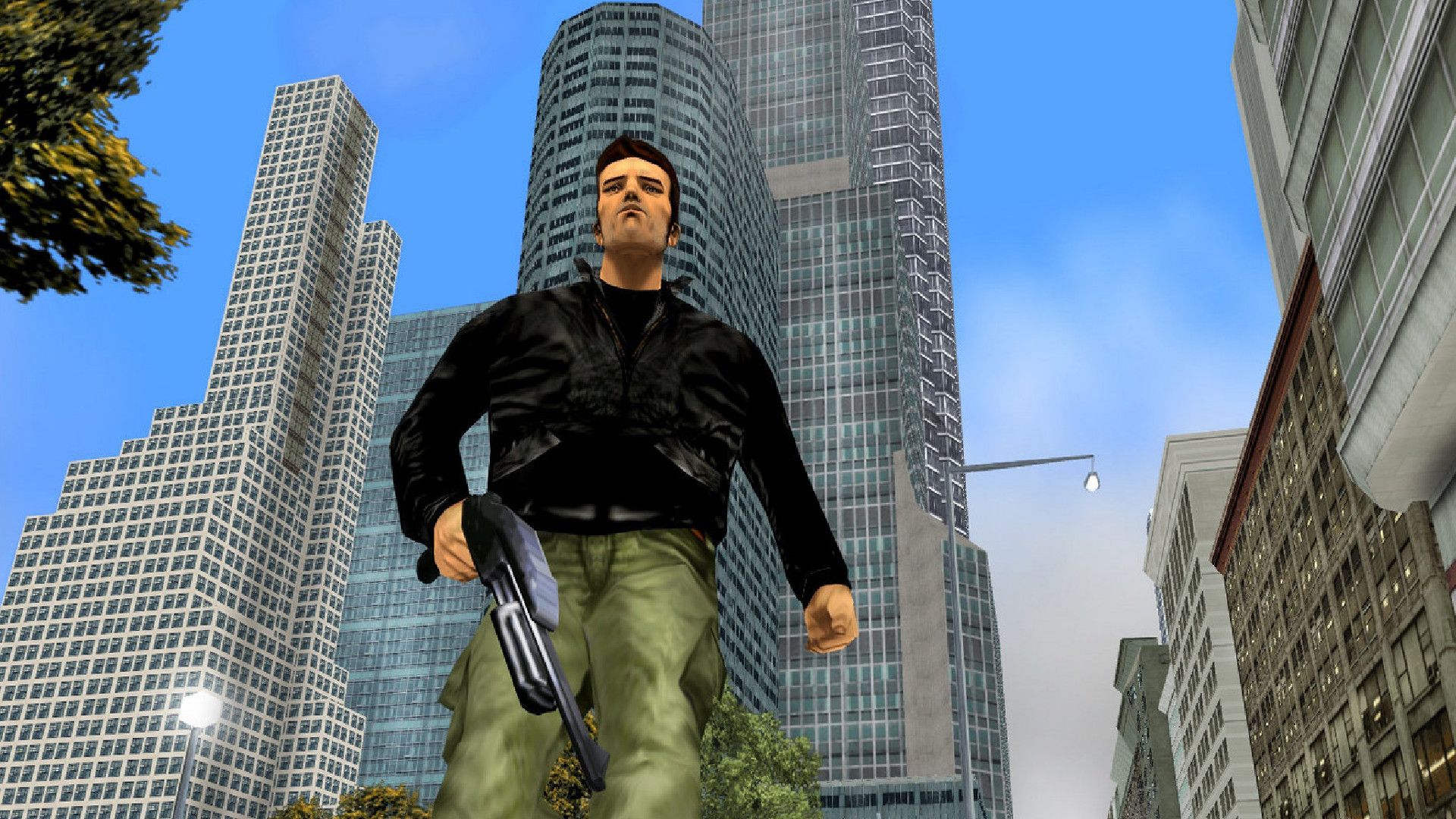
- Game: Grand Theft Auto III
- Developer: DMA Design (now Rockstar North)
- Publisher: Rockstar Games
- Platform: PlayStation 2
- Release Date: October 22, 2001
- Metacritic Score: 93
While industry attention in 2026 remains heavily focused on the upcoming release of Grand Theft Auto VI, the technical foundations established by Grand Theft Auto III continue to provide a blueprint for modern open-world design. Developed by Rockstar Games, the title successfully brought the massive urban environment of Liberty City to the PlayStation 2, a console limited by 32MB of system memory. By examining the game's architecture, we can better understand how early developers solved the impossible task of rendering expansive cities on hardware that lacked the capacity to hold them in their entirety.
Understanding Liberty City Memory Management
The core challenge for the developers at DMA Design was the sheer volume of data required to render a city. Liberty City, in its entirety, consisted of approximately 130MB of assets, far exceeding the 32MB of memory available on the PlayStation 2. Even a single segment, such as the starting island of Portland, required between 40MB and 50MB of data. To bridge this gap, the team implemented a system of data management that remains a standard in gaming tech today.
The solution was to divide Liberty City into thousands of small, manageable sectors. Instead of loading the entire map, the game only initialized the assets for the specific sectors in the immediate vicinity of the player character. As the player moved through the streets, the engine performed a constant cycle of loading assets ahead of the player and deleting them once they were no longer within the active window. This process, known as streaming, allowed the engine to maintain the illusion of a seamless urban environment while operating within strict hardware limitations.
GTA 3 Source Code Technical Analysis 2026
Recent efforts to deconstruct the game's internal logic have provided a clearer picture of how this streaming mechanism functions. By obtaining the original source code and rewriting specific sections, developers have been able to visualize the "moving window" of assets that the game maintains. This analysis confirms that the game does not store the city as a static object, but rather as a collection of data chunks that are swapped in and out based on spatial coordinates.
The following list outlines the primary techniques identified in the source code analysis that allowed for the successful deployment of Liberty City:
- Sector Partitioning: Dividing the map into thousands of small, granular sectors for independent loading.
- Dynamic Streaming: Loading and unloading assets in real-time based on the player’s current position.
- LOD (Level of Detail) Scaling: Utilizing lower-detail models for distant objects to reduce memory overhead.
- Asset Swapping: Replacing low-detail models with high-resolution versions as the player approaches, effectively masking the load process.
Why Did Rockstar North Split Liberty City into Islands?
The decision to split Liberty City into three distinct islands was not merely a narrative choice; it was a functional requirement for memory management. By separating the city into isolated zones, Rockstar North ensured that the engine only needed to contend with the assets for a single island at any given time. This segmentation provided a buffer, preventing the system from attempting to load excessive data that would exceed the 32MB limit. For more on how developers manage complex game worlds, see our game development coverage.
This approach effectively created a controlled environment where the streaming system could operate without interference from unrelated assets. When a player crossed a bridge or transitioned between islands, the game could trigger a more significant load event, clearing the previous island's data and preparing the next. This structural design allowed the developers to maintain high visual fidelity in the immediate area while keeping the overall memory usage within the constraints of the PlayStation 2 hardware.
Visual Fidelity and the Pop-in Illusion
One of the primary concerns with an asset-streaming system is the potential for visual artifacts, specifically "pop-in," where objects appear or disappear abruptly in the player's view. To mitigate this, the developers implemented a multi-tiered level of detail system. Distant buildings and props were rendered using simplified, low-polygon models that occupied minimal memory. As the player moved closer, the engine would swap these placeholders for high-fidelity assets.
This technique is a cornerstone of modern game optimization. By ensuring that the player only interacts with high-detail models when necessary, the engine can dedicate its limited resources to the immediate surroundings. The success of this implementation in Grand Theft Auto III is a major reason why the game holds a 93 on Metacritic, reflecting a level of technical polish that was considered advanced for its time. Even in 2026, these fundamental principles remain relevant as developers continue to refine how they manage asset density in massive open-world environments like those expected in upcoming Rockstar Games titles.
Frequently Asked Questions
How did Rockstar Games fit GTA 3 on PS2 memory?
Rockstar Games utilized a sector-based streaming system that loaded and unloaded small chunks of the environment in real-time, rather than attempting to store the entire city in the PlayStation 2's 32MB of memory.
Why did Rockstar North split Liberty City into islands?
Rockstar North split Liberty City into three distinct islands to manage data constraints, allowing the game to load and unload specific assets independently as the player moved through the world.
What is the GTA 3 source code rewrite analysis?
A recent technical analysis involved rewriting sections of the Grand Theft Auto III source code to visualize how the game's engine dynamically manages asset streaming and memory allocation.