
Gaussian Splatting: Is This the Future of Photorealistic PC Games?
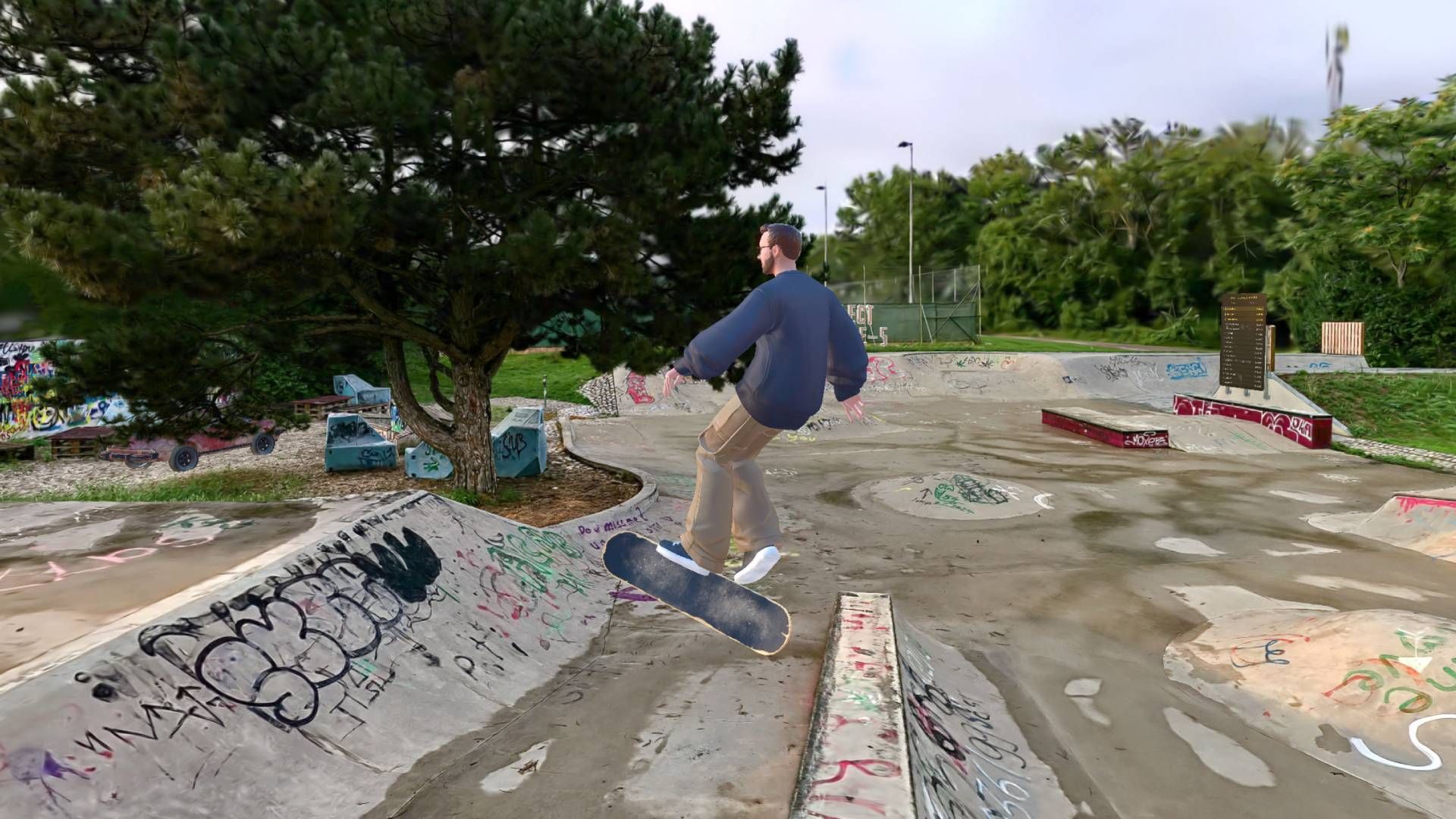
If you've been keeping an eye on the latest Gaming Hardware developments, you might have noticed a shift in how photorealistic environments are being rendered. Lately, Gaussian Splatting (GS) has moved from a technical curiosity to a genuine tool for independent creators looking to bypass the resource-heavy demands of traditional mesh-based 3D assets.
I sat down with scan artist Christoph Schindelar, who has been working with GS since 2024, to look past the buzzwords. Schindelar, formerly of the Epic-owned asset library Quixel, describes the tech as a "modern capture-and-rendering method" that functions similarly to an advanced point-cloud system. Instead of building a scene out of polygons, the engine renders millions of small, semitransparent 3D Gaussians. Each splat contains data on its position, size, orientation, and opacity, which the GPU projects and blends to create a coherent image.
Why Indie Developers Are Turning to Splats
The primary appeal for smaller studios is accessibility. Traditional photogrammetry can be a massive drain on development resources, but Gaussian Splatting offers a route to high-fidelity visuals that are often less taxing on hardware during playback. Schindelar notes that the tech is already implemented in nearly every major engine, either natively or via plugins, making it a viable option for teams without the budget of a AAA studio.
- Primary Hardware Need: VRAM is the most critical factor for training.
- Capture Method: Uses DSLR or camera-rig photos, with training taking one to three days.
- File Sizes: Raw datasets can reach 1.5 TB, but exported scenes are often compressed to 2–4 GB.
- Key Strength: Exceptional at capturing complex, thin structures like wires, hair, and foliage.
The "Splat Sausage" Pipeline
Creating these environments is a multi-step process. Schindelar points out that high-end projects require meticulous data collection, sometimes involving thousands of images captured with a DSLR. Once the images are collected, the "splat training" begins. The system starts with a chaotic cloud of points, which is gradually optimized until the rendered views align with the original photographs.
Hardware-wise, Nvidia GPUs are the current standard for this training phase. Schindelar personally uses an RTX 5090, but he stresses that you don't need a top-tier workstation to get started. "GPU power matters, of course, but in production I would say VRAM is the thing you always want more," he says. For those without the hardware, cloud-based processing services like Varjo Teleport, KIRI Engine, and XGRIDS are already available to handle the heavy lifting.
Limitations and the Road Ahead
While the visual results are striking—as seen in the 2025 Polys Immersive Award-winning 'Pfarrkirche Kefermarkt' scene—the technology isn't without hurdles. Because these scenes are constructed from static images, dynamic lighting is not natively supported. Developers have to get creative, using hidden meshes or shadow catchers to integrate interactive elements like bullet holes or moving light sources.
Schindelar remains optimistic about the future of the tech in PC Gaming. Testing his own experiments on a Steam Deck has convinced him that with further optimization, this could be a major shift for handheld performance. "We are not quite there performance-wise, but really, really close," he says. "Some more optimizations down the line and this is a game changer."