
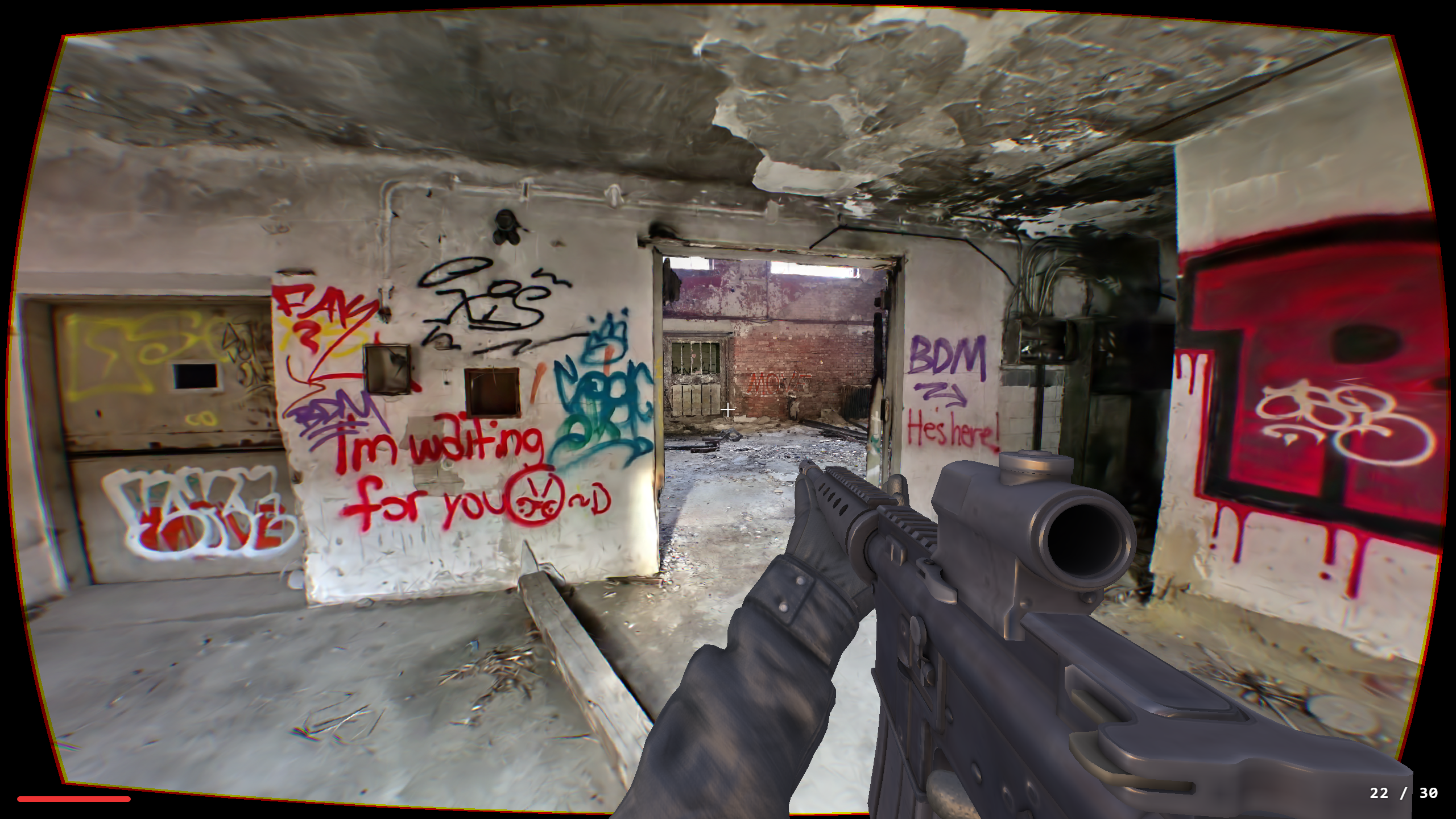
- Game: Snap & Grab
- Developer: Iakov Sumygin
- Rendering Technique: Gaussian Splatting
- Platform: PC
Gaussian Splatting is a rendering technique currently shaping the visual fidelity of PC titles like the heist-themed game Snap & Grab in 2026. By utilizing this method, developers can achieve photorealistic graphics while maintaining a significantly lower resource footprint compared to conventional industry standards.
Understanding Gaussian Splatting in Game Development 2026
The term Gaussian Splatting refers to a mathematical process derived from the work of German mathematician Johann Carl Friedrich Gauss. In the context of modern game development, it serves as an alternative to traditional polygon-based modeling. Unlike standard 3D meshes that rely on complex geometry, Gaussian Splatting functions by projecting thousands of individual points into a 3D space. Each point, or 'splat,' acts as a 3D Gaussian that projects an elliptical footprint onto the screen.
For those tracking industry trends, this technique represents a shift in how environments are rendered in real-time. Christoph Schindelar, a scan-specialist formerly of Quixel, describes the process as being comparable to an advanced sprite-based particle system. When viewed individually, a single Gaussian splat appears as a soft, opaque point with a fuzzy edge, similar to a dandelion tuft. When thousands of these splats are aggregated, they form a cohesive, high-resolution image that provides a photorealistic appearance without the high computational overhead typically associated with high-poly models.
How Does Gaussian Splatting Work in Snap & Grab?
The implementation of this technology in Snap & Grab demonstrates its potential for browser-based and PC gaming. The game logic was developed by Iakov Sumygin, a software engineer at Snap Inc. The environment design relies on the accumulation of these Gaussian points to construct scenes that appear dense and detailed. Players may notice an impressionistic or pointillist quality in certain environmental textures, which is a visual indicator of the underlying splatting technique.
The technical process involves projecting these 3D Gaussians to create elliptical shapes that fill the screen space. This method allows for a high degree of visual detail while bypassing the need for traditional, memory-intensive mesh rendering. Because each splat is relatively lightweight, the engine can manage complex, photorealistic environments that would otherwise require significant hardware resources to render at the same level of fidelity.
Comparing Rendering Techniques: Is Gaussian Splatting Better?
The debate regarding whether Gaussian Splatting is better than photogrammetry often centers on resource efficiency. Photogrammetry, which involves creating 3D models from real-world photographs, has long been the standard for hyper-realistic assets. However, it requires massive asset libraries and significant storage space. Gaussian Splatting offers a different path by focusing on the projection of point-based data rather than the storage of complex geometric structures.
- Efficiency: Gaussian Splatting requires fewer resources than traditional high-poly photogrammetry.
- Visual Style: It creates a soft, high-resolution look that mimics real-world photography.
- Implementation: Early versions have been integrated into engines like Unreal Engine via particle systems such as Niagara.
- Accessibility: The technique allows for complex, realistic environments to run in browser-based formats.
As we continue our coverage of game engine advancements, it remains clear that developers are looking for ways to balance visual quality with performance. The use of Gaussian Splatting in titles like Snap & Grab suggests a move toward more flexible rendering pipelines that prioritize efficiency without sacrificing the aesthetic goals of the project.
Benefits of Gaussian Splatting for Indie Games
For independent developers, the primary benefit of Gaussian Splatting is the ability to achieve high-fidelity visuals without the support of massive, AAA-level asset pipelines. By using scan-based data and converting it into Gaussian splats, smaller teams can create immersive, realistic environments that are optimized for a variety of hardware configurations. This democratization of high-end rendering technology is a notable development for the 2026 gaming market, as it lowers the barrier to entry for creating visually striking, photorealistic experiences.
Frequently Asked Questions
In Game News provides the following answers to common queries regarding this rendering technology:
What is Gaussian Splatting in game development 2026?
Gaussian Splatting is a rendering technique that creates photorealistic 3D environments by projecting elliptical points, or splats, to form high-resolution visuals at a lower resource cost than traditional methods.
How does Gaussian Splatting work in Snap & Grab?
In Snap & Grab, the environment is constructed from thousands of individual 3D Gaussian points that, when combined, create a detailed, high-resolution scene that functions similarly to an advanced particle system.
Is Gaussian Splatting better than photogrammetry for games?
Gaussian Splatting offers a different approach to photorealism by reducing the resource demand compared to traditional photogrammetry, which relies on heavy, static asset libraries.