
Be Quiet! Dark Rock 6 and Pro 6 Review: Great Performance, Terrible Value
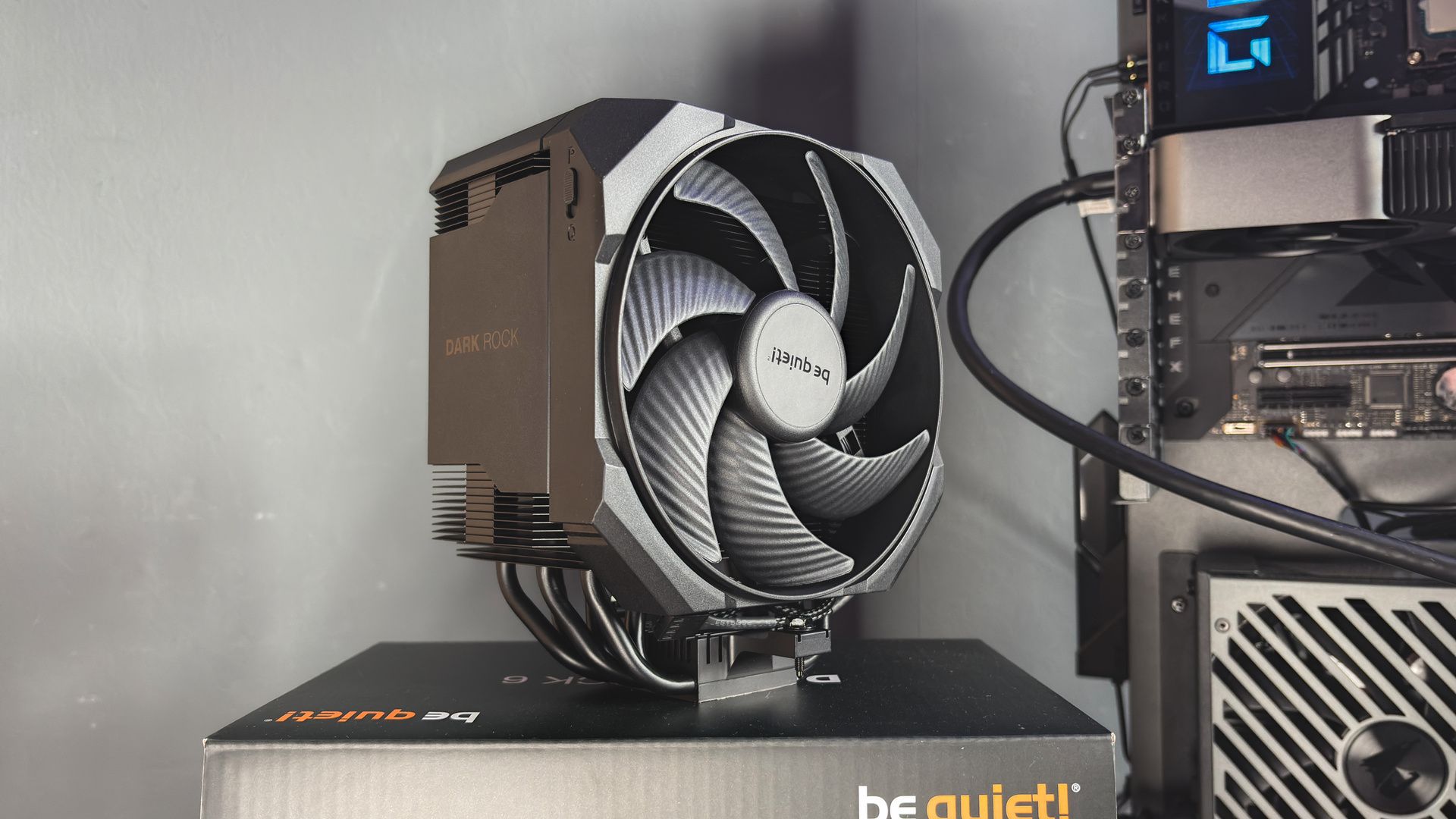
The new Be Quiet! Dark Rock 6 and Dark Rock Pro 6 represent a massive overhaul of the company's air cooler lineup. With improved aesthetics and thermal performance that finally keeps pace with top-tier cooling solutions, these units are impressive pieces of hardware. However, that appreciation comes with a massive caveat: the price. At $110 for the Dark Rock 6 and $130 for the Pro 6, these coolers are far too expensive to earn a recommendation in a market where significantly cheaper alternatives perform just as well.
Performance and Aesthetics
Be Quiet! has successfully turned a bulky mass of aluminium into a visually striking component. The all-black design is cleaner than previous generations, and the performance leap over the older Dark Rock 5 is significant. In testing with a Core i7 14700K, both coolers managed to keep temperatures well under control. The Dark Rock Pro 6, in particular, performs excellently, falling only slightly behind the budget-king Thermalright Peerless Assassin 120 SE.
The standard Dark Rock 6 features a new 135 mm fan that can push more air at lower RPMs than the smaller fans found on previous models. It also includes a handy 'P' and 'Q' switch on the fan shroud, allowing users to toggle between a performance mode and a quiet mode that shuts the fan off entirely below 40% duty cycle.
The Value Problem
Despite the build quality and performance, the math simply doesn't add up. The Thermalright Peerless Assassin retails for around $40, yet it remains one of the most capable coolers on the market, matching the Dark Rock 6 in most thermal scenarios. Charging $110 to $130 for an air cooler puts these Be Quiet! models in a bracket where they cost more than some high-end liquid cooling options. When air cooling is historically chosen for its affordability and simplicity, this 50-70% price increase over the previous generation is hard to justify.
Installation and Compatibility
Be Quiet! has moved to entirely cardboard packaging, which is a welcome change from the foam used previously. The installation process is fairly standard, utilizing a long screwdriver included in the box. While the mounting process for Intel systems is slightly fiddly due to the O-ring and screw setup, AMD installation is straightforward. One minor drawback is the fan mounting system; because these are custom fans, they slide into place rather than using standard clips, making third-party fan replacements virtually impossible without jury-rigging.
- Top-tier thermal performance
- Improved, sleek all-black aesthetics
- Easy fan attachment
- Very expensive compared to the competition
- Proprietary fans are difficult to replace
- Poor value proposition