
Why Beamdog’s Baldur's Gate 3 Never Happened
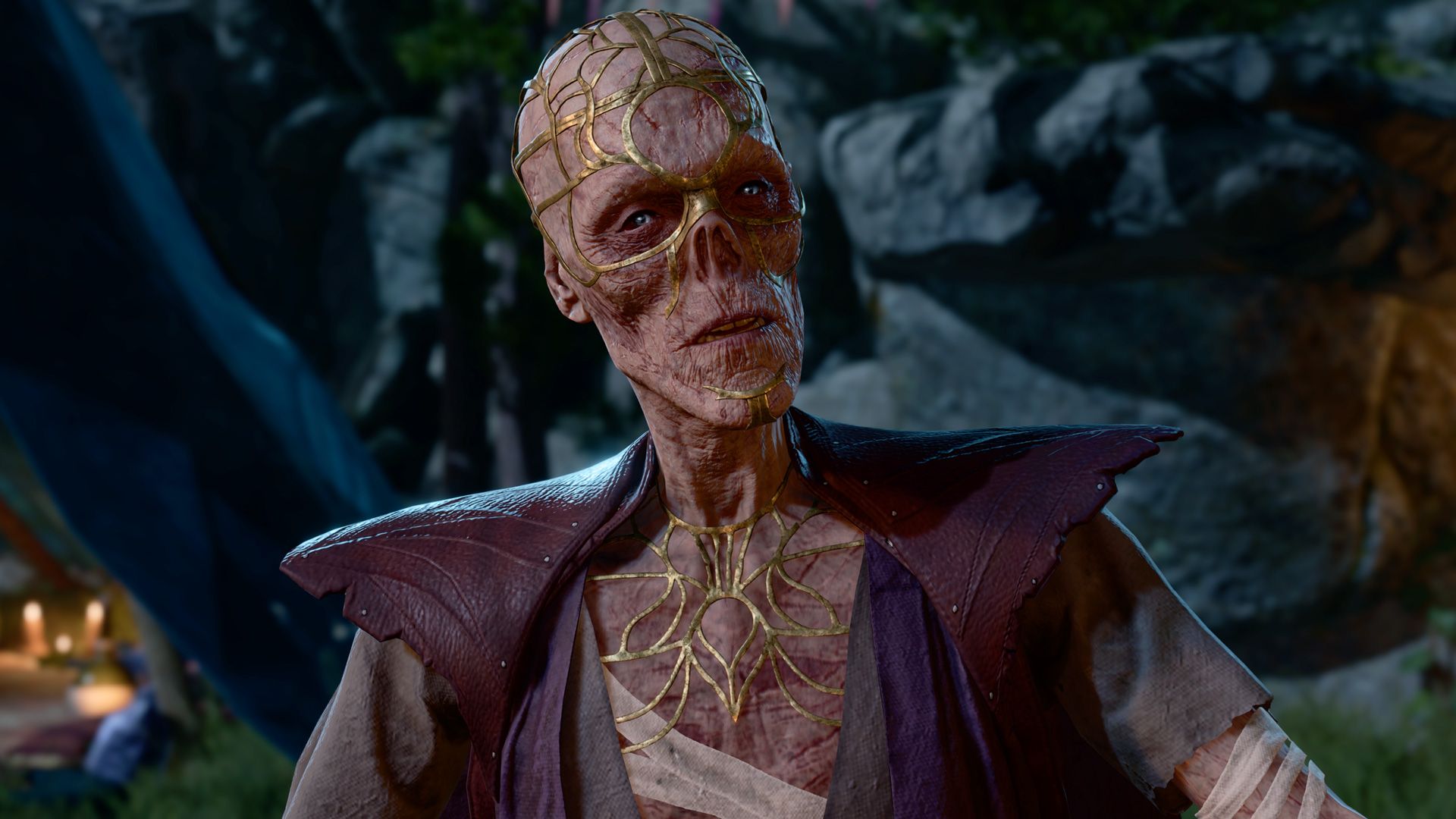
"We could not convince people to fund Baldur's Gate 3," says Trent Oster. It is a blunt admission from a man whose career has been defined by his role as the de facto custodian of BioWare’s early works. Long before Larian Studios turned the franchise into a pop-culture juggernaut, the path to a third entry was littered with failed attempts from various developers.
For two decades, studios chased the idea of a Baldur's Gate 3. Black Isle famously attached the title to a doomed project in the early 2000s, and later, Obsidian Entertainment explored a third-person, party-based RPG that shared some DNA with Mass Effect before the sale of Atari Europe to Bandai Namco shuttered those discussions.
The Beamdog Pitch
Oster, a co-founder of BioWare and director of Neverwinter Nights, made his own push through his studio, Beamdog. The team had already established themselves by releasing the Enhanced Editions of classic BioWare titles and the Siege of Dragonspear expansion in 2016. The latter, however, left the team fractured following a series of targeted Gamergate attacks.
Despite these internal struggles, Beamdog regrouped and brought on former Dragon Age scribe David Gaider to help pitch a vision for a third game. Unlike the massive, high-fidelity project eventually produced by Larian, Beamdog’s proposal was far more modest.
"Our Baldur's Gate 3 wasn't as big picture as what Larian pitched," Oster explains. "It wasn't going to be a $100 million game. I think we were pitching it in the $20 million range."
The Problem with Real-Time with Pause
Beamdog’s vision for the gameplay would have remained close to the original formula. They intended to utilize an Unreal engine to render an isometric perspective, sticking firmly to the real-time with pause combat system rather than the turn-based approach Larian eventually popularized.
Oster acknowledges that the real-time with pause system is a "sticky mess" that requires constant pausing to remain tactical. However, he maintains that it is a necessary compromise for those who prefer faster-paced gameplay. "If you're rolling into a fight and it's just some goblins, you mow them down, it takes six seconds," Oster says. "Whereas in a turn-based game, you allocate 20 minutes to just beating up six goblins."
Why the Funding Dried Up
Ultimately, the reason Beamdog’s project never left the concept stage was a lack of financial backing. Publishers were wary of investing in a single-player RPG where they didn't own the underlying IP.
"All the companies out there were like, 'It's a singleplayer RPG, it's not going to do that big in numbers, and Wizards owns the IP. So why are we spending our money to increase the value of their IP? Why don't we do our own IP?'"
Unable to secure the funds for Baldur's Gate 3, Beamdog pivoted to a different project titled Cold West—a premise featuring wild west-style fairies, vampires, and ghouls—but publishers remained hesitant. Today, much of the Beamdog team works in co-development with Obsidian on titles like Avowed and The Outer Worlds 2, while Oster continues to look for ways to capture the "weird and dangerous" feeling of early tabletop D&D campaigns.
Baldur's Gate 3 Cosmic Vessel Expansion Gets Massive Update in 2026Adventure
Baldur's Gate 3 Shadowheart Moaning Bug Explained: 2026 Status ReportAdventure
Baldur's Gate 3 Adamantine Forge Guide: Best Items to Craft in 2026Adventure
Baldur's Gate 3 Quiz Guide: Romance, Lore, and Classes for 2026