
I Tried to Game on North Korea’s RedStar OS and It Was a Disaster
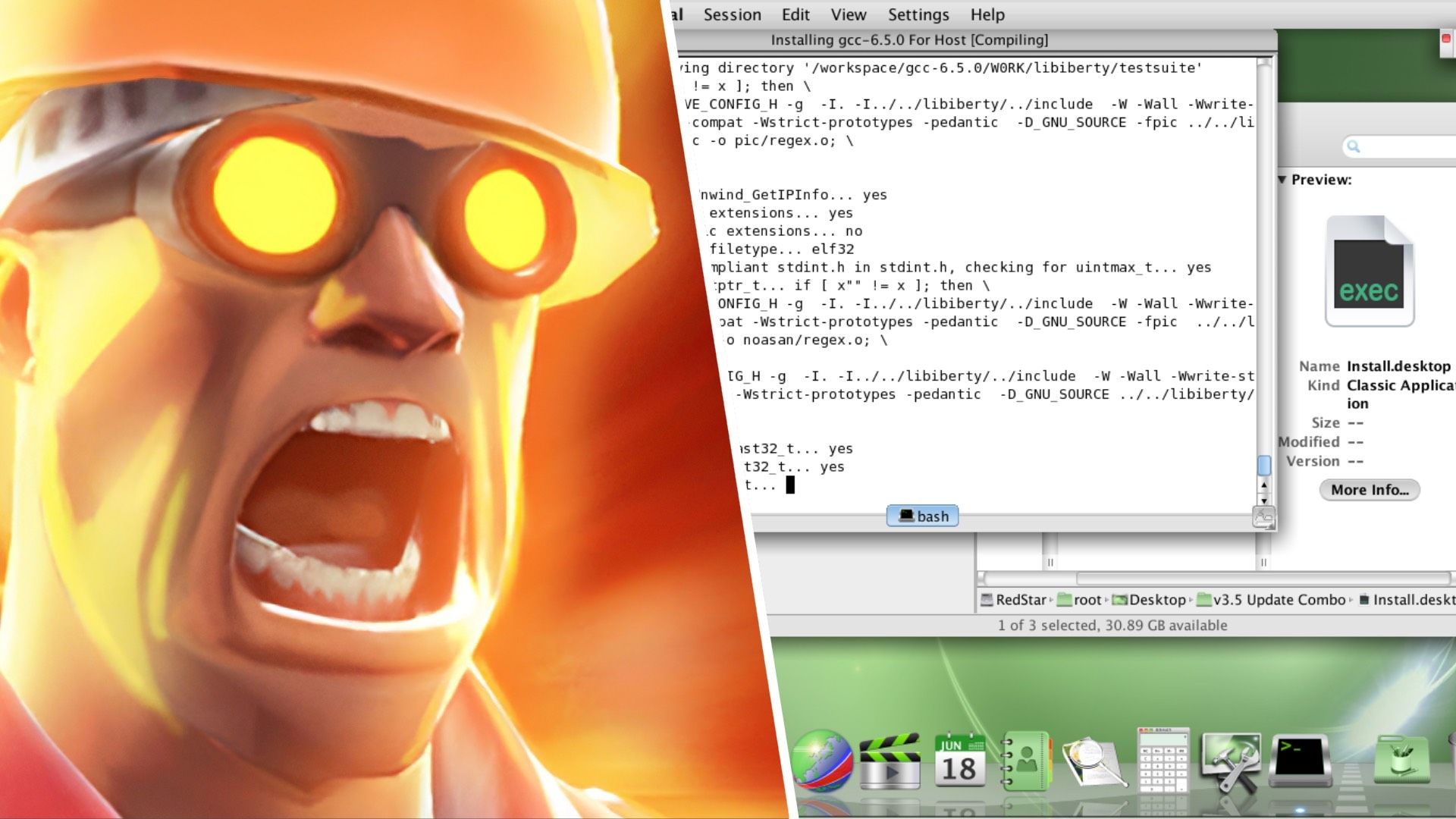
If you have ever spent time in mandatory corporate cybersecurity training, you know the golden rule: if you find a random USB stick, you should probably leave it alone. But if that drive happens to be labeled 'From North Korea'? My instinct is to plug it into the nearest port and see what happens. That curiosity is exactly what led me to spend an entire day wrestling with RedStar OS 3.5, a fan-modified version of the Democratic People's Republic of Korea’s homegrown Linux distribution.
I’ve been down this road before. Back in December 2022, I attempted to find out if any pariah state OS was actually viable for gaming. My return to the project in 2026 was fueled by two things: a newfound confidence in my own Linux skills after becoming a regular openSUSE Tumbleweed user, and the promise of the 3.5 fan mod. This version claims to strip out the OS's infamous spyware, enable root access, and introduce a 64-bit kernel and libraries to replace the ancient Fedora 15-based architecture from 2011.
The Virtual Machine Gauntlet
Getting RedStar OS to actually boot is the first boss fight. My initial attempts in QEMU resulted in a graphical crash that turned the login screen into a glitchy mess of green and blue. After failing to force a login via the command line, I realized the login manager was specifically flagging my QEMU-based virtualization. Switching to VirtualBox finally allowed me to reach the desktop, but the stability issues were far from over.
The 3.5 mod is designed to install in two stages. The first stage, which removes the spyware, worked flawlessly. However, the second stage—the one promising the 64-bit kernel and modern libraries—refused to complete. I spent roughly six hours across three separate attempts, each ending in a crash. I was left with a spyware-free system that remained as archaic and inert as the original version.
A Dead End for Gaming
The core issue is that RedStar OS is built to live on the Kwangmyong, the DPRK’s domestic intranet. It is not built for the modern, global internet. While the modded version allows for basic connections, the built-in browser—a modified, ancient version of Firefox—is essentially incapable of loading anything other than Google. Even the package manager, 'yum,' only points to a limited repository of Korean-language software.
I made a valiant effort to run Tux Racer by creating a custom ISO, but the system’s Makefile refused to compile the files, even after I manually installed a series of new libraries. Aside from a music notation program, a GIMP reskin called Hwansang, and a game of Korean chess, I was left with nothing to play. Even Google Gemini couldn't help me navigate the bizarre technical hurdles of running software on a decade-and-a-half-old national OS.
As much as I love the idea of a retrofitted version of RedStar OS that functions on modern hardware, it isn't a Windows killer—or even a viable gaming platform—in 2026. My 2022 struggles were mostly due to my own inexperience; my 2026 struggles are entirely due to the OS itself. It was an exhausting day, but it served as a solid reminder that while Linux is finally ready for the desktop, a state-controlled relic from 2011 certainly isn't.
Why The Witcher 4 Needs to Bring Back The Witcher 2's Branching ChoicesAdventure
Swordflight: The Hardcore Neverwinter Nights Mod Still Going StrongAction
Path of Exile: Return of the Ancestors Event Combines Legacy ClassesAction
Control Resonant Hands-On: Remedy Shifts Gears for a New Supernatural...