
War Thunder Heavy Cavalry Update Overhauls Missile Flight Physics
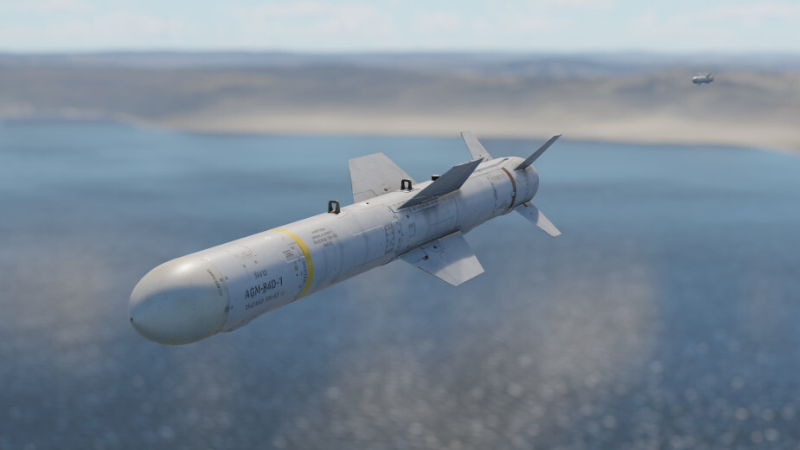
War Thunder developers are rolling out a significant technical overhaul for aerial weaponry in the upcoming Heavy Cavalry update. The changes focus on bringing missile and bomb performance closer to real-world data, with new physics simulations for rocket engines, turbojets, and flight path management.
New Pressure-Dependent Rocket Thrust
The most fundamental change arriving with Heavy Cavalry is the introduction of atmospheric pressure simulation. Previously, rocket engines operated at a static "average" thrust regardless of altitude. Now, thrust will scale based on external pressure—as altitude increases and pressure drops, rocket engines will produce more thrust. The AIM-54 Phoenix family will be the first to utilize this mechanic, with plans to roll it out to all missile systems in future updates.
AIM-54 Phoenix Performance Buffs
Following player reports, the flight model for the AIM-54 has been reworked. Beyond the new altitude-based thrust, these missiles are becoming more agile. The AIM-54A now reaches a maximum of 22G, while the AIM-54C hits 25G. Additionally, the maximum trim angle of attack has been increased from 12.5 to 25 degrees, allowing the missiles to track targets more effectively at shorter ranges.
Turbojet and Dual-Pulse Engine Updates
Missiles equipped with air-breathing engines, such as the AGM-84 and Kh-59M, are shifting away from constant fuel consumption. Post-update, their thrust and fuel usage will fluctuate based on flight speed and altitude—faster, higher flight will result in lower fuel consumption but decreased thrust.
The dual-pulse engine system, previously seen on the I-DERBY ER, is expanding to the British ALARM anti-radiation missile. While the ALARM is capable of loitering in reality, its in-game implementation will focus on maximizing range and terminal velocity via the second pulse. Furthermore, a delayed engine start mechanic is being added to the PGM-500, PGM-2000, and AGM-130A-12 guided bombs to significantly extend their reach.
Cruising and Altitude Control
To make certain munitions harder to intercept, the update introduces an "altitude hold" feature. Instead of climbing and diving, specific bombs and missiles—including the SPIKE-ER, LMUR, and AJ.168—will maintain a consistent cruising altitude. The developers also confirmed that while man-in-the-loop capabilities for helicopter ammunition are not included in this update, they are slated for the following major release.
Looking ahead, the team is working on a lift coefficient mechanic that adjusts based on Mach number, which will eventually be applied to all missiles. The AIM-7 and R-27 series are expected to be the first to feature this physics update once flight model refinements are finalized.